-
Osmond Brothers: One Bad Apple
 Continuing the “Top 40” music alluded to in the novel The Ten Weeks is the Osmond Brothers’ “One Bad Apple.”
The Osmond Brothers were certainly the main “competitors” to the Jackson 5 at the time. It’s interesting to note that, while the Osmonds were (and are) Mormons, the Jackson 5 were Jehovah’s Witnesses, and that makes an interesting “head to head.”
-
Making a Movie about Muhammad is Risky Business
But that won’t stop LOTR producer Barrie Osborne from trying:
Producer Barrie Osborne cast Keanu Reeves as the messiah in The Matrix and helped defeat the dark lord Sauron in his record-breaking Lord of the Rings trilogy. Now the Oscar-winning American film-maker is set to embark on his most perilous quest to date: making a big-screen biopic of the prophet Muhammad.
Budgeted at around $150m (£91.5m), the film will chart Muhammad’s life and examine his teachings. Osborne told Reuters that he envisages it as “an international epic production aimed at bridging cultures. The film will educate people about the true meaning of Islam“.
 But the fact that he plans to stick with a “softer” presentation of the subject doesn’t guarantee lack of controversy. As the article notes, the last time this was tried (with the 1976 film The Message,) it “…sparked a fatal siege by protesters in Washington DC.”
I watched that film in London, and it was a memorable experience, as I note in There Was a Rush Along the Fulham Road…
By the time the film was released in the US, extremist Muslims were sure that sacrilege had been done, so they threatened to blow up the theatre where it was supposed to open. But Muslim leadership in Britain had a better handle on the situation, so we were able to see it in London.
And “we” were quite a group. As the moviegoers filed into the theatre for the showing, that sudden realisation came over me: “I’m the only white guy in this place.” The rest of the viewers were obviously immigrants, probably mostly Pakistani. Once everything went dark and the film started, it was pretty interesting. So was the crowd; they cheered when the Muslims won a full battle or killed an infidel. I thought that they might get fired up to start “jihad” in the theatre and I would be their first victim. But they didn’t, the film ended peacefully, and the happy Muslims filed out.
-
Happy Halloween from Positive Infinity

It’s that time of year again. Everywhere we see these Halloween decorations with all of these fake black cats and pumpkins. So we wanted to show you a real black cat and a real pumpkin together, and we think they’re a big improvement over the fake stuff.Fact and fantasy have a strange way of running together at this time of year. Our fantasy work The Island Chronicles reminds us that Halloween is one of the eight Wiccan holidays. Is Halloween a religious holiday? Of course! Should Christians be celebrating a pagan holiday? We don’t think so.
On 1 November, our Anglican Calendar will announce All Saints’ Day. Cats such as the one pictured above will be happy too; many of them are confined to quarters by their owners so they won’t end up on some ritual altar (or in the hands of the neighbourhood’s foremost morons.) Satan’s minions have no problem torturing and sacrificing their “mascot” on their holiday, a sad reminder that all of God’s creatures need protection from him who “comes only to steal, to kill, and to destroy,” but Jesus came “that they may have Life, and may have it in greater fullness.” (John 10:10)
-
The Moonies are Still On the March
And they are looking ahead to a generational leadership transition, complete with Ivy Leaguers:
This month, the Reverend Sun Myung Moon went to Washington to introduce As a Peace-Loving Global Citizen, his autobiography that, according to the Moon-owned Washington Times, “recounts the joys and challenges, the teachable moments and the monumental experiences of his life – much of it spent as a spiritual leader”.
The newspaper reported that Moon received “congratulatory greetings” from Senator Joe Lieberman, former secretary of state Alexander Haig and former president George H W Bush, “hand-delivered by his son Neil Bush”.
The younger Bush, who has a long track record of working with Moon-sponsored organizations, told the audience of 1,300 that “Reverend Moon is presenting a very simple concept. We are all children of God.”
In January, Moon will turn 90, and while he’s alive and apparently well, he is deeply involved in charting his group’s future.
Last year, Moon named his Harvard-educated youngest son, the 30-year-old Hyung Jin Moon, as the president of the World Unification Church. Another son, Hyun Jin Moon, Moon’s oldest, is also in the mix. Whenever he dies, Moon’s death will nevertheless usher in a major period of adjustment.
It’s interesting to note that Neil Bush was the one that, during the 1988 presidential primary campaign, referred to Evangelical Christians as “cockroaches,” doubtless because they had the bad taste to support Pat Robertson against his father. It’s one thing to attack evangelicals from the left; it’s quite another to do so as a supporter of Sun Myung Moon.
Old time soulwinners will remember going up against the Moonies. Today they’re mostly forgotten in the church world. But they are still out there, and still on the march.
-
The Will of God and the Green Bananas
“American as Mother, apple pie and the flag” used to be an expression of things that united us in this country. Maybe that’s why life in these United States has been a little too interesting for me: my mother and I didn’t see eye to eye on many things, and when we were in the family business together it could get intense.
That state of affairs spilled over into personal matters, too. One evening my mother, wife and I were out and about and stopped at the grocery store. I was gathering a quick list of things to buy for her while she sat in the car. Her confidence in me was at a nadir at that moment, and she was belligerently insistent: “I want the greenest bananas in the place!”
I was dutiful: I went into the store (she had, after all, taught me how to shop) and found some very green bananas. I bought them, checked out, and she took them home, satisfied.
Satisfied, that is, until she realised they wouldn’t ripen. They just sat in the bowl, green as when I had bought them. Her hope for ripe but unrotten bananas vanished, and she was eventually forced to pitch them out as green as when they came home.
Today we live in a Christian world where “God on demand” is the norm. We’re supposed to pray “the prayer of faith” (note the definite article) and get the result we ask for. When it doesn’t go our way, the blame game begins: on God, on our alleged lack of faith, on an incorrect form of prayer, on whatever. It never occurs to us that God is sovereign, that he has the power to say no, and that our first task isn’t to just get what we want but for our will to be synchronised with his.
Sometimes the way he reminds us of this is when he allows us to have our way, only for us to wish we hadn’t. We end up with a result like the green bananas: it’s what we wanted, but not what was best for our life.
The Lord’s Prayer puts it this way: “Thy Kingdom come, thy will be done–on earth, as in Heaven.” (Matthew 6:10, TCNT.) Ultimately it’s his will that counts. He’s not only mindful of our needs, but knows them in advance: “When praying, do not repeat the same words over and over again, as is done by the Gentiles, who think that by using many words they will obtain a hearing. Do not imitate them; for God, your Father, knows what you need before you ask him.” (Matthew 6:7, 8, TCNT.)
When his desires are ours, we can experience this:
Here, therefore, is the greatest miracle of Jesus Christ. Not only is he all-powerful, but here he renders them all-powerful and, if possible, more power than he himself is, constantly performing greater miracles, and all through faith and through prayer: “and all things whatsoever you shall ask in prayer, believing, you shall receive.” Faith, therefore, and prayer are all-powerful, and they clothe man with the omnipotence of God. “If you can believe,” said the Saviour, “all is possible to him who believes” .
The performance of miracles, therefore, is not the difficulty. Rather, the difficulty is to believe. “If you can believe.” That is the miracle of miracles; to believe absolutely and without hesitation. “I believe, Lord, help my unbelief”…
Thus the great miracle of Jesus Christ is not to make us all-powerful men. Rather, it is to make us courageous and faithful believers who dare to hope all from God, when it is a question of his glory…
Let us dare all things, and no matter how slight our faith may be, let us fear nothing. A small grain of faith, the size of a mustard seed, enables us to undertake anything. Grandeur has not part in it, said the Saviour. I ask only for truth and sincerity; if it becomes necessary that this small grain grow, God who has given it, will make it grow. Act then with the little you possess, and much will be given to you: “And this grain of mustard seed” and this budding faith “will become a great tree, and the birds of the air will dwell in the branches thereof.” The most sublime virtues will not only come there, but will make their abode therein. (Jaques Bénigue Bossuet, Meditations on the Gospel.
-
Gordon Lightfoot: If You Could Read My Mind
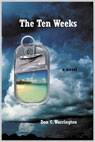
The trip through the music alluded to in the novel The Ten Weeks will take a mellow turn this week with Gordon Lightfoot’s “If You Could Read My Mind.” Lightfoot is the only Canadian represented in this list.
This is a relatively new performance, but this is still a very smooth and beguiling song and performer.
One general observation I’d like to make is that you hear the music from this era piped into malls and shopping centres and reperformed. The first time I noticed this, I was in Boynton Beach, back in the 1990’s. I thought, “has WQAM‘s signal bounced back from some far planet?” But the reality is that this was a very creative era, and not just by really well-known groups such as the Beatles.

Sailing the Last Voyage with Newton and Pascal
 Positive Infinity