Home

  • The Year Passover Was Late

    This is Holy Week.  When Jesus and his disciples gathered together, the Eucharist was instituted, but what they were coming together for (Tyndale’s “Easter lamb” notwithstanding) was the Passover.   Tonight the Passover is celebrated by Jews all around the world, and some Christians even have a Seder meal.  Thus the two events are intertwined, both chronologically and in their significance.

    The Torah was specific for the date of the Passover:

    The LORD said to Moses and Aaron in Egypt, “This month will be the very first month of the year for you. Tell the whole community of Israel: On the tenth day of this month each man must take a lamb or a young goat for his family-one animal per household. A household may be too small to eat a whole animal. That household and the one next door can share one animal. Choose your animal based on the number of people and what each person can eat. Your animal must be a one-year-old male that has no defects. You may choose a lamb or a young goat. Take care of it until the fourteenth day of this month. “Then at dusk, all the assembled people from the community of Israel must slaughter their animals. They must take some of the blood and put it on the sides and tops of the doorframes of the houses where they will eat the animals. The meat must be eaten that same night. It must be roasted over a fire and eaten with bitter herbs and unleavened bread. Don’t eat any of it raw or boiled but roast the whole animal over a fire. Don’t leave any of it until morning. Anything left over in the morning must be burned up. This is how you should be dressed when you eat it: with your belt on, your sandals on your feet, and your shepherd’s staff in your hand. You must eat it in a hurry. It is the LORD’S Passover.  (Exodus 12:1-11)

    Just as the Christians have a certain (with variations between the Eastern churches and the rest of us for calendrical differences) time for Easter,  so also the Jews are very punctilious in celebrating the Passover on the fifteenth day of Nisan, even when Nisan is no longer the “head of the year” in the Jewish calendar (how that came to pass is a complicated business.)

    However, every rule has exceptions.  In 715 BC Hezekiah, King of Judah, had to bend the rules on Passover:

    Hezekiah sent a message to all Israel and Judah and wrote letters to the tribes of Ephraim and Manasseh. He invited them to come to the LORD’S temple in Jerusalem to celebrate the Passover of the LORD God of Israel. The king, his officials, and the whole assembly in Jerusalem decided to celebrate the Passover in the second month. They couldn’t celebrate it at the regular time because not enough priests had performed the ceremonies to make themselves holy and the people hadn’t gathered in Jerusalem. The king and the whole assembly considered their plan to be the right thing to do. So they decided to send an announcement throughout Israel from Beersheba to Dan. They summoned everyone to come to Jerusalem to celebrate the Passover of the LORD God of Israel. These people had not celebrated it in large numbers as the written instructions said they should.  (2 Chronicles 30:1-5)

    Why?  When Hezekiah ascended to the throne the previous year, Judah was coming off of a long period of enforced paganism under Ahaz, a paganism designed to placate Ahaz’s Assyrian lords.  (If you think we’re immune to placating foreign rulers, just wait until our debt reaches critical mass.)   Hezekiah’s “revival” (to use a not entirely applicable Christian term) was both religious and political in nature.  Unfortunately, there was so much to do to restore the integrity of the Temple and of the priesthood itself that a proper Passover was impossible on 15 Nisan, so Hezekiah opted to celebrate it a month late.   In conjunction with his advisers, he decided that it would be better to celebrate the feast properly rather than to do a rush job and meet the schedule.

    There was no real provision in the Law to do this, Numbers 9:6 notwithstanding.  And, in some ways, Hezekiah was stretching his authority in taking such a decision when the priests of the Temple were charged with it.  But extraordinary times deserved extraordinary provisions, and Hezekiah was prepared to do these in order to reaffirm the people’s covenant relationship with God and the integrity of the nation.  Such decisions paid off, even in the face of his own mistakes, i.e., his “flashing of the cash” in front of the rebel Babylonians resulted in Sennacherib’s invasion of Judah, which nearly ended in disaster except for a divinely sent plague.

    Today Easter (and Passover) come with their usual regularity.  The liturgical churches (who decided on the date of Easter to start with) don’t have the inclination to change it, and the evangelicals don’t have the authority to do so.  But what if our circumstance is so extraordinary–or so dire–that it was necessary to put off the celebration of the most important event because of our own mistakes?  Are we that tied to habit or custom?  Or do we refuse to believe that our schedule is less important that our condition before God?  It’s something to think about as we stumble through our routine.

    There are two other messages to come from this.

    The first comes from the first passage to be cited:

    This is how you should be dressed when you eat it: with your belt on, your sandals on your feet, and your shepherd’s staff in your hand. You must eat it in a hurry. It is the LORD’S Passover.  (Exodus 12:11)

    Passover celebrate the Jews’ departure from Egypt.  Subsequent history has shown that the Jews have departed from many places.  Today their situation is perilous, more so than any time in recent memory.  Once again many are dressed for travel.  We as Christians must do what we can to protect them.

    Second, as for us?  The ultimate message of Easter is that the results are enduring and, although celebrated at an appointed time, does not fade with the passing of a holiday:

    Your boasting is unseemly. Do not you know that even a little leaven leavens all the dough? Get rid entirely of the old leaven, so that you may be like new dough-free from leaven, as in truth you are. For our Passover Lamb is already sacrificed-Christ himself; Therefore let us keep our festival, not with the leaven of former days, nor with the leaven of vice and wickedness, but with the unleavened bread of sincerity and truth.  (1 Corinthians 5:6-8)

    Hezekiah delayed his Passover because of excess “leaven” in Judah.  It was that important then to be free of it; it’s important now too.
  • Is the US Really Headed Down the Road of Nazi Germany?

    Recently an “old China hand” friend of mine sent around an email with this piece about the analogies between our current situation and that of Nazi Germany in the 1930’s.  Leaving aside the attribution problems of the piece itself, I’d like to address this issue, because I keep hearing it come up in our discourse.

    I’ve spent the last several years in extended pieces like this one and on this blog banging away at several themes:

    1. The US is a great and successful country when it follows its founding principles.
    2. Changes in the nature of our population and the way they think will make it impossible to continue adherence to these principles.
    3. Our élites want to transform us into another Europe (as I used to.)
    4. Our financial profligacy will make it impossible sooner or later (and I think sooner than later) for them to buy off enough of the population to make this stick.
    5. We as Christians need to decouple the expectations of our faith being fulfilled with the destiny of the nation, put God first and stick together.  We need to learn from our brothers and sisters in totalitarian places (past and present) about how to do this and succeed.  Some of those brothers and sisters will, in due time, rescue us, as they have the Anglicans in North America.

    When I look at my statistics, I can only come to one conclusion: Americans are simply not prepared to alter their thinking.  If they did on a large scale, our current masters would wake up to a serious morale problem.  They rely on those who oppose them to keep things going as they always have, putting the extra effort forth even in the face of higher taxes, more regulations, more restrictions on personal freedom, etc.  At this point our government can more easily deal with the open rebels and renegades than it can with the uninspired (or at least those who are inspired by something or Someone other than them.)

    Turning back to the original piece, if we are headed down an exact analogy to Nazi Germany, emigration is the only answer.   And indeed it may be the best alternative for some.  But anyone who is familiar with the dynamic of modern Germany (as documented in places such as Modris Eksteins’ The Rites of Spring) knows that our country is a different place from Germany to start with.  The end of true constitutional government can certainly happen here, and probably will, but the course–and the best response–will be different.

    It’s going to be a rough ride.  That ride will be made rougher for Christians because they have wasted too much time hog-tying God’s favour with financial success, too much of which has been on borrowed money.   These times will demonstrate whether we really understand the meaning of the phrase “trust God” or not.

  • Government Policy: Giving Way to Bicycles and Pedestrians, and a Photo of the Future

    That’s what our Transportation Secretary said:

    Transportation Secretary Ray LaHood has announced a “major policy revision” that aims to give bicycling and walking the same policy and economic consideration as driving.

    “Today I want to announce a sea change,” he wrote on his blog last week. “This is the end of favoring motorized transportation at the expense of nonmotorized.”

    The new policy, which was introduced a few days after Mr. LaHood gave a well-received speech from atop a table at the National Bike Summit, is said to reflect the Transportation Department’s support for the development of fully integrated transportation networks.

    I guess he means this:

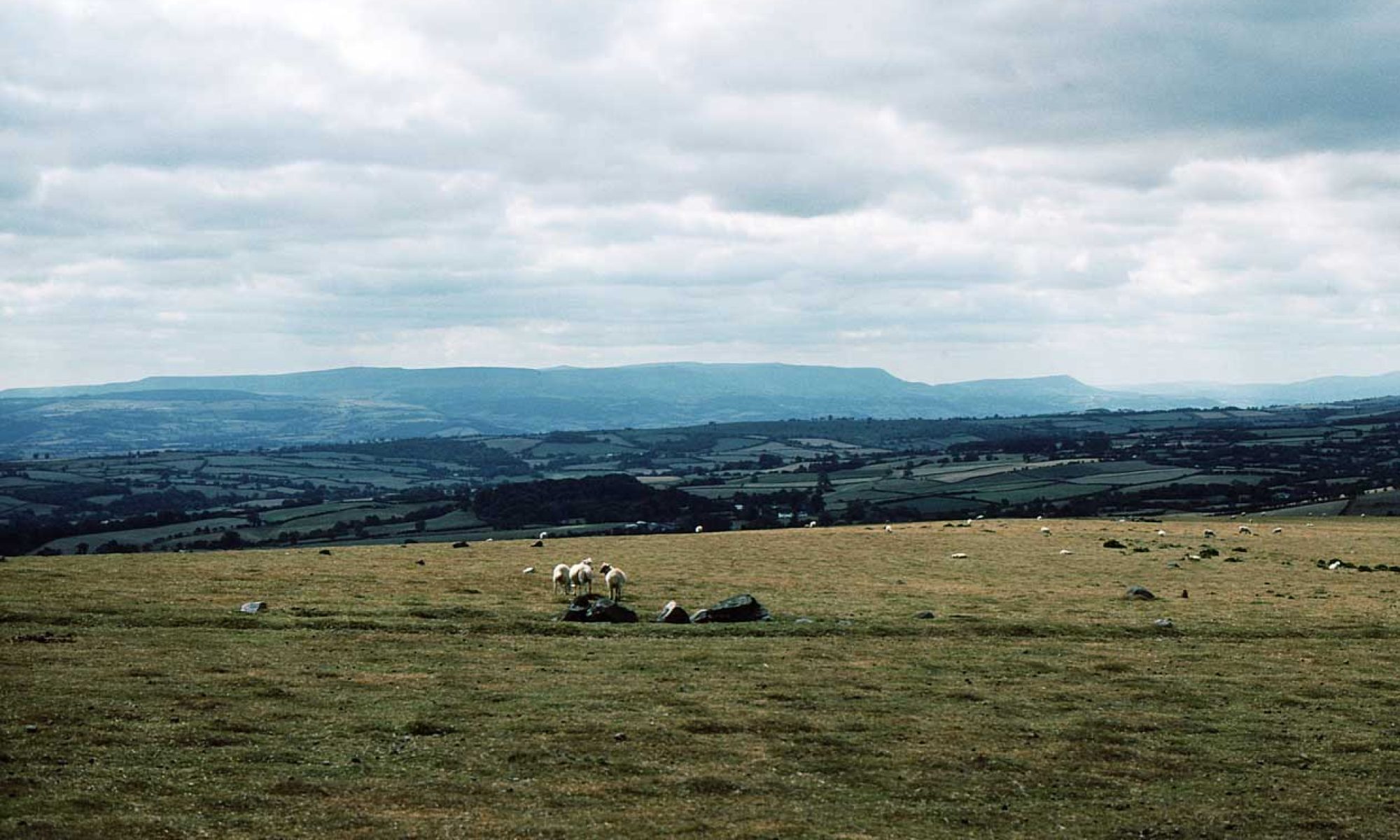
    A view looking west on the Changan Avenue with the corner of the Great Hall of the People on the left.  Beijing, China, 1981.  Taken during the negotiations documented in A Fistful of Yuan.

    I’ll also guess that those who oppose it will be labelled “counter-revolutionary double-dealing capitalist roaders,” but the Chinese received us well in those days.

  • Don't Want Higher Fuel Taxes? Be Seeing You!

    Deputy Transportation Secretary John Porcari assures us that higher fuel taxes aren’t in the cards:

    President Obama remains opposed to raising federal fuel taxes while the economy is trying to recover despite calls in Congress to increase those fees to fund new legislation, said Deputy Transportation Secretary John Porcari.

    The DOT’s second-highest official assured the Senate Environment and Public Works Committee March 24 that the administration’s position has not changed on hiking fuel taxes.

    He had been asked by ranking Republican James Inhofe to restate the policy, in view of new fuel tax proposals being discussed in Congress. Inhofe noted that Transportation Secretary Ray LaHood previously told the committee that Obama and the administration do not believe raising the gas tax is good “for Americans who are out of work and can least afford the gasoline tax raise.”

    This is short-sighted for two reasons.

    The first is that our transportation system needs the investment.  It is one of the more productive things our government does.

    The second is that advocates of the “mileage tax” (enforced by satellite monitoring of all vehicles, which would be equipped with a transmitter to verify their location) are using the public’s resistance to higher fuel taxes as a springboard to the mileage tax.  Obviously a system which can track mileage in this way can track location.

    So if you tax-haters play into the hands of the mileage tax advocates, as they used to say on The Prisoner, “Be seeing you!”

    P.S. Fuel taxes are a better way to handle this problem for another reason: larger vehicles put more wear and tear on the system.  Global warming advocates would also add that they put more carbon dioxide into the atmosphere, which is true.  This means that a mileage tax would remove an incentive for more fuel efficient vehicles.  It’s a sign of the times that some of our elites are more interested in control than in advancing their environmental agenda, but such a prioritisation speaks for itself.

  • The Importance of Causality

    In his book Introduction to the Differential Equations of Physics, German physicist Ludwig Hopf opens with the following statement:

    Any differential equation expresses a relation between derivatives or between derivatives and given functions of the variables.  It thus establishes a relation between the increments of certain quantities and these quantities themselves.  This property of a differential equation makes it the natural expression of the principle of causality which is the foundation of exact natural science.  the ancient Greeks established laws of nature in which certain relation between numbers (harmony of spheres) or certain shapes of bodies played a privileged role.  The law was supposed to state something about a process as a whole, or about the complete shape of a body.  In more recent times (Galileo, Newton, etc.) a different concept has been adopted.  We do not try to establish a relation between all phases of a process immediately, but only between one phase and the next.  A law of this type may express, for example, how a certain state will develop in the immediate future, or it may describe the influence of the state of a certain particle on the particles in the immediate neighbourhood.  Thus we have a procedure for the description of a law of nature in terms of small (mathematically speaking, infinitesimal) differences of time and space.  The increments with which the law is concerned appear as derivatives, i.e., as the limits of the quotient of the increments of the variables which describe the process over the increment of space or time in wihch this development takes place.  A law of nature of this form is the expression of the relation between one state and the neighbouring (in time or space) states and therefore represents a special form of the principle of causality.

    The whole issue of causality is an important one for both scientifc and theological reasons, and I want to touch on one of each.

    Every event that takes place in the universe is a result of an event before it.  Those events in turn are the results of those which have gone before.  All of these events form a chain which leads back to the first cause.  The need for the first cause is one of St. Thomas Aquinas’ proofs of God’s existence:

    The second way is from the nature of the efficient cause. In the world of sense we find there is an order of efficient causes. There is no case known (neither is it, indeed, possible) in which a thing is found to be the efficient cause of itself; for so it would be prior to itself, which is impossible. Now in efficient causes it is not possible to go on to infinity, because in all efficient causes following in order, the first is the cause of the intermediate cause, and the intermediate is the cause of the ultimate cause, whether the intermediate cause be several, or only one. Now to take away the cause is to take away the effect. Therefore, if there be no first cause among efficient causes, there will be no ultimate, nor any intermediate cause. But if in efficient causes it is possible to go on to infinity, there will be no first efficient cause, neither will there be an ultimate effect, nor any intermediate efficient causes; all of which is plainly false. Therefore it is necessary to admit a first efficient cause, to which everyone gives the name of God.

    Although, as Hopf points out, our understanding of how that causality actually works in the physical universe is different from the Greeks (and Thomas Aquinas worked in a Greek concept of natural philosophy) the truth of the importance of causality is undiminished.

    To determine what comes after is a major reason for differential equations, which contain three elements: the equation itself, the initial conditions and the boundary conditions.  Once we have these, we can predict the behaviour of a system.  In some cases we can do so with a “simple” equation, others require discretisation and numerical modelling.  And that leads to our second point.

    It’s interesting that Hopf speaks of “exact natural science.”  Today much of science and engineering is driven by probabalistic considerations, which in turn lead to statistical analysis.  Probability and statistics is a very useful tool, but not a substitute for the understanding of the actual mechanisms by which things work.  The actual mechanisms (physical laws, etc.) are what cause the phenomena which we record as statistics, not the other way around.  The fact that there are variations in these should not blind us to the core reality.

    The advent of computers with broad-based number crunching abilities has only inflated our overconfidence in such methods.  It is essential, however, that we understand the why of phenomena as well as the what.  We must both be able to quantify the results and the correct causes of what is going on around us.  Two recent debacles illustrate this.

    The first is the climate change fiasco we’ve been treated to of late.  Removing the dissimulation (as opposed to simulation) of some involved in the science, the core problem is that we do not as of yet have a model of global climate sufficiently comprehensive so that we can dispense with reliance on the statistics and project what will happen with a reasonable degree of confidence.  Part of the problem is the core problem in chaos theory: minor variations in initial conditions lead to major variations in the results.  But without such a model we are bereft with a definitive “why” as much as “what.”

    The second is our financial collapse.  The models developed of the elaborate credit structure were fine as far as they went.  But ultimately they were divorced from sustainable reality because they did not take in to consideration all of the factors, many of which were obvious to those with raw experience.

    The issue of causality is one that is central to our understanding of the universe.

  • From US to Europe, Without Leaving the Country

    Nolan Finley at the Detroit News hits the nail on the head:

    Passage of a national health care bill begins fulfilling the fantasy of the left of making over America into something resembling its refined and compassionate European cousins.

    Throughout the health care battle, President Barack Obama asked, if European nations can deliver expansive universal health care to every citizen, why can’t the United States do the same. The president, an ardent Europhile, poses that question about everything from high-speed rail to cheap college tuition.

    The answer is that we can — if we’re willing to live a European lifestyle.

    Turning this country into another Europe has been the holy grail (think Monty Python) of American elitists as long as I’ve been on the earth and then some.  And I’ll be honest: there was a time in my own life when I thought this was the deal, too.  But some of us have come to discover what real diversity–and the consequence there-from–is.

    Finley also points out a couple of other downsides that most elitists haven’t given much thought to.

    The first is that level of tax cheating in Europe.  To some extent, this is a game between the people and their masters, and the latter know it, which is why they let it go to the extent they do.  Whether self-righteous American liberals will tolerate this here or simply swell our already excessive incarceration rate (something the left was supposed to fix a long time ago) remains to be seen.

    The second is defence spending.  How does our government plan to ward off power challengers from Asia and the Middle East when they have to keep up a large portion of the population on the dole?  But liberals haven’t been thinking about that since Vietnam.

    But they will…

  • Does Education Kill Creativity?

    Sir Ken Robinson thinks so, from this TED talk.

    This hilarious discourse is all too painfully true, as I have found out in my brief educational career.  But the humour he uses kills a lot of the pain.

  • Shaneen Clarke: The Gospel for the Rich and Famous

    An extraordinary ministry by someone I had the chance to meet last weekend:
    http://downloads.cbn.com/cbnplayer/cbnPlayer.swf?s=/vod/SUS124_ShaneenClarke_060209_WS

    Shaneen attends Holy Trinity Brompton (of Nicky Gumbel and “Alpha” fame) with her husband Martin.  She was also influenced by my superior at Laity Ministries, Leonard Albert.

    Hopefully, Palm Beach is next…

  • Health Care Reform: Our Past is Your Future

    This past Sunday’s passage of the “health care reform” has brought something I heard a long time ago back to mind, and it seems appropriate to repeat it in the wake of this monumental legislation.

    In the wake of the collapse of the old Soviet Union, many American churches attempted to establish a viable presence there.  The Church of God was no exception.  One individual that helped make that a reality was Sergei Ryakovsky, a very sage pastor who gave the church’s leadership a Russian presence, crucial for long-term success (the church still has a legal presence there, in spite of the restrictions that have grown of late.)  One time Sergei visited my own church in the US, and in the course of his sermon he predicted that what had been in the USSR was coming our way, because, as he put it, “our past is your future.”

    The “it can’t happen here” crowd might have dismissed this pessimistic outlook, but it seems now that Sergei was on target (as I suspected when he said it.)  Our current administration has as its desire the alteration of the relationship between the government and its people, and health care reform is the centrepiece of that alteration (which is why they worked so hard to get it.)   All of the Republicans bawling about repeal is rubbish; they may chip around the edges, but they won’t alter the core.

    Beyond that, the reform in its current guise is an expensive kludge, unworkable in practice (especially for the less educated, who can’t navigate the maze of public assistance we have now) and too expensive by any standard.  In time the motley collection of insurance companies and health care providers will find complying with its provisions unprofitable, and so facilitate the outright nationalisation of the health care industry, much like the NHS in the UK.  (And all the Brits I’ve talked to roll their eyes at the thought of the NHS replicated on these shores.)  But then again that’s part of the long-term objective of such a programme.

    The key thing that our overachieving elitist snobs have overlooked is that ordinary people, faced with free services at low income level, will not have the incentive to put the effort into their working careers that they had before, especially considering that many of the “better” jobs include health care that expires when the job does.  That process will start in the health care industry itself: faced with rising paperwork, unrelieved liability and declining reimbursements, we’ll see one or two of them trampled in the rush for the exits, a process which will only accelerate true nationalisation.  Beyond that, it’s possible to make health care a free (or subsidised) benefit at lower income, so why work so hard only to pay taxes?  This calculation applies to rising taxes of any kind, of course.

    It’s certainly true that our counterparts across the Atlantic don’t have to put the effort into their careers as we do in the US to get the same level of benefits (on paper, at least.)  But then again they don’t have the outsized results to show for it.  As one friend from there pointed out to me, the UK is struggling with a similar relative debt level as the US, and the former doesn’t have anywhere near the defence budget of the latter.  That disparity is true for the entire EU, and has been the case since World War II.  Given our current level of indebtedness, it will take a vibrant economy and a hard-working people to service the debt, and in a disincentivised society, that isn’t going to happen.

    And this illustrates the core problem with “welfare societies.”  Over time, none of them can really make their people work to support the lavish welfare state.  Hillare Belloc, in The Servile State, predicted a society that would do just that, and the closest we’ve seen is the high debt level world we live in in the US that makes people slaves of the financial institutions.  But even the Soviet Union, with its gulags and labour camps, couldn’t avoid the running down that comes with not giving people an incentive to work.  That was especially true in the Brezhnev years that ultimately lead up to the collapse of the country.

    But that’s something that the Obama Adminstration–and the country at large–are going to find out the hard way.  And their timing isn’t the best either.  With the Baby Boomers attempting to retire and our debt mounting from all of this “stimulus” and new social welfare spending, a society that “lays out” is only a prelude to national backruputcy, which is ultimately what happened to the Soviet Union.

    And with that event, everyone will have to go back to work again.

  • John Shelby Spong, Surrender Monkey

    That’s the opinion of Bayard Taylor in The Late Great Ape Debate:

    John Shelby Spong, retired Episcopal Bishop of Newark, is a surrender monkey.  His “Call for a New Reformation” is really a call to wave the white flag, throw in the towel, and give up on the God revealed in both Jewish and Christian history.  We need, he says, a new language for God because “most theological God-talk is meaningless.”

    Obviously, the good bishop is excluding his own God-talk from the meaningless category.  He apparently wants us to take his God-talk as a beacon shining in the wilderness of Christian darkness.

    I’m constantly amazed that a bishop, who took vows to uphold the peace and purity of the church and to proclaim the gospel, could spread such blasphemy and contempt for Christian faith’s core beliefs and not receive some kind of censure or discipline.  But there he is today, an ex-bishop in good standing, drawing his pension from a church he tried his best to destroy.

    I’d go easier on Spong if he’d had a faith crisis, realised he could no longer affirm the basic biblical worldview and teaching, and then had the honesty and integrity to step down from his position of leadership.  But that’s not what he did.  Instead, he went on the warpath against anything that smells like traditional Christian faith, and he’s tried to take his whole church down his revisionist road.  Christians who disagree with him he attacks as “fundamentalists,” and in his worldview, that’s about the worst insult you can utter.  Spong ironically exhibits many of the worst attitudes he decries in others: narrow-mindedness, bigotry, and belligerence.  He’s a first-rate fundamentalist for his own worldview. (pp. 109-10)

    An analysis that’s hard to beat. And the author keeps going from here re Spong in the book.   My own review of Taylor’s book is here.

Design a site like this with WordPress.com
Get started