-
Chasing That Elusive Creature Called “Catholicity” in Anglicanism
One following the news in the Anglican Communion will know of the steady stream of persons, including clergy, who have moved to Roman Catholicism or to Eastern Orthodoxy. Fr. Alexander Wilgus thinks we have grossly misunderstood the phenomenon’s roots. The moves do not expose a weak self-understanding and feeble self-confidence in Anglicanism’s Protestant roots—traits which, combined, lead to dabbling in other traditions before jumping ship for them.
As someone who started out in the “Old High Church” and passed through Roman Catholicism just coming out of Vatican II, I find this debate frustrating because there are too many terms which are used “equivocally,” as the Scholastics would say. I have a few observations which may add heat, light, or a mixture of the two to the whole discussion:
- It’s true that High Church Episcopalians/Anglicans have undermined confidence in their own spirituality by leaning on ceremony too much, something I observed in There’s Catholicism and Then There’s…. Over-reliance on ceremony can lead people to think that “If they miss a step in the playbook, the sacraments are invalid,” which may not be the idea but may end up being the impression left. That’s a lesson that Trad Catholics would do well to learn.
- There’s too great a tendency to equate “Protestant” and “Reformed” these days. I’ve said it before and I’ll say it again: Anglicanism isn’t a Reformed religion because both its Articles of Religion and its BCP’s do not support the idea of unconditional perseverance (among other reasons.) Just because the Reformed people have done such a good sales job convincing so many they’re the true Protestants doesn’t make it so. It’s also worth noting that “Catholicity” is also an equivocal term in its own right, as the internal struggles the RCC is going through show.
- As discussed in Book Review: Trevor Gervase Jalland’s The Church and the Papacy, the Church of Rome had one job:
The second is that the principal objective in bishops of Rome exerting this primacy was to insure that the faith which was handed down by the apostles–the paradosis, to use the transliterated Greek term that Jalland employs frequently–was preserved and maintained. That brought a conservatism to the way Rome responded to the many doctrinal crises that came from the East, a salutary one in most cases.
I think it’s fair to ask whether the Occupants of the See of Peter have botched the job or not, especially after the collapse of the Western Empire. The Reformation in its entirety rests on the assumption that they have, and we have a current Occupant who is doing his best to remind everyone of that failure.
Roman Catholicism is certainly capable of making it all work, as I noted in my book review of Bossuet’s History of the Variations of the Protestant Churches:
The Variations were Bossuet’s efforts to show the serious problems inherent in the Reformed churches. So how successful was he? Part of how successful he seems depends upon how you accept his view of Roman Catholicism. A Roman Catholicism which is more like Bossuet envisions it–conscious of Scripture, independent of the state, Augustinian in theology–would be a better entity to adhere to than the one that he had then and we have now. A big part of the problem is that the reverends pères jesuites, or at least one in particular (Pope Francis,) are once again propagating their morale accommodante, as they did in Bossuet’s France (much to its long-term detriment.) Unfortunately then and now the situation is more complicated, but Bossuet tends to ignore this.
But all too often they do not rise to the occasion.
Anglicanism, with all of its institutional problems, was and is a reasonable attempt to bring Christianity back closer to its roots. It is not perfect. If it spent as much time worrying about the calibre of its parishioners and less on how close to Rome or Constantinople it is, we would all be better off.
-
Is Christianity Darwinian?
Recently I did a “link post” to The shadow of Pax Romana —Unherd. It’s an interview with Tom Holland about “Roman sex lives, Christian morality, and the rise and fall of empires.” In it Holland makes an interesting statement the likes of which one doesn’t see very often:
I think that the thing that enables people in the long run to continue feeling Roman, even when the sinews of government have been cut, and the imperial hold has gone, is that they retain a shared identity as Roman which has come to be fused with Christianity. And the reason that Christianity is so successful — the reason, if you’re looking at it in Darwinian terms, why it’s adopted — is that, in this period that Pax covers, this is a world that is full of different cultural centres. You can go and pay sacrifice to someone in northern Britain, or in Syria, and these are all gods. But in the long run, the heft of these cultural centres depends on them being local. I mean, as with the temple in Jerusalem, it’s the fact that they are local that matters. Christianity changes that.
It’s not very often that “Christianity” and “Darwinian” appear together. As Holland notes, there are many who think that Christianity sapped the energy of Rome and led to its collapse. He does not. Christianity managed to fuse Roman identity into itself, something that not even the East-West split changed (the Empire itself had split long before that.) Christianity survived; Rome did not, something that left it behind China. That, in a real sense, is Darwinian.
Today we’re told that the choice is between some kind of theism and some kind of Darwinism. The wedge used to split the two is the theodicy issue. How could a good God allow so much evil in the world? Especially when it happens to me? Unfortunately, turning towards a more secular view doesn’t really solve that problem, it just deprives someone to blame. Bad things continue to happen, some of which is natural but increasingly more of which is self-inflicted, something I pointed out in Wonder Where Evil Comes From? Try the Mirror.
Today we live in a world where many think that things should always go our way and get petulant and upset when they don’t. Unfortunately a Darwinian view doesn’t really buttress this concept of life. The easiest way is to look at the title of Darwin’s best known work: The Origin of the Species. The survival and propagation of a species is the ultimate end game; the loss of individuals, except when enough of them lose at once (as was the case with the dinosaurs) is, to put it coldly, incidental. In some cases the loss of individuals can be seen as a way to advance the rest of the species. In such a system it is ultimately the aggregate advancement which counts; individual survival depends upon and in turn buttresses the survival of the group.
In many ways that was the ethic I was brought up on, something I expand on in my post If I Started the way @BartCampolo Did, I Wouldn’t Believe in God Either. To answer the question of “Why did God not prevent _______ from happening to me?” the reply was “Why should he?” If you get a whiff of Deism out of that, you should. But ultimately the answer to this question goes beyond that and gets to the solution: the offset to the indignities of this life is not found in this life but in the next, infinite one. The “slings and arrows” that the “losers” in this life have to endure are more than made up in the benefit of eternity with God.
Ultimately for all individuals the problems of this life are sorted out in the infinite one that comes after. That wasn’t immediately apparent to God’s chosen people, something that is evident with thoughtful consideration of the Old Testament. As the author of Hebrews puts it, “God, who, of old, at many times and in many ways, spoke to our ancestors, by the Prophets, has in these latter days spoken to us by the Son, whom he appointed the heir of all things, and through whom he made the universe.” (Hebrews 1:1-2 TCNT) That goes against the literalism of atheist and fundamentalist alike (and those who are some of both) but it is consistent with the concept of inspiration given to us in the Scriptures. (Their idea is more consistent with that of Islam, but that has its own difficulties.)
Our problem these days is that Christianity, in its quest to be “relevant,” has let eternity fade in the background to the benefits of the faith in this life. This is a mistake. Christianity has been criticised for being “pie in the sky,” but these days, with the oligarchs and the left hand in hand and real concerns of survival shunted aside for “faculty lounge” issues, the pie in the sky is the only pie really visible. In the hour when we need the comfort of eternity the most those who one would expect to be its most enthusiastic proponents are simply out to lunch.
Worse than this, we hear in Christian circles stuff that would make those “Darwinian” Late Roman Christians wince. It is easy for us to adopt a sub-Christian sexualised and racialised agenda in the face of what is shoved down our throat, but that’s a mistake. Those Darwinian Late Roman Christians, for all of their faults, pushed back against a patronage and sexualised culture, even to the point of keeping civil “servants” out of the priesthood (assuming they lived long enough to get there.) Evangelicals love to trash these people as having corrupted our faith, but they’re not doing much better. And as far as transcending their empire, we have so hog-tied our Christian identity to that of the empire that I can’t see how Christianity in this country will survive its demise in anything like its present form.
Earlier this year at a restaurant I ate a dish called “tacos al pastor.” So I told a Guatemalan friend who actually pastors a church that I ate his lunch. We as Christians need to wake up and stop putting in the back the issues that should be in the front. Otherwise, like some others, we, out to lunch, will find that someone else has already eaten it.
-
Gustav H. Schmidt Describes the Horror of Soviet Persecution of Pentecostals in the 1930’s — Flower Pentecostal Heritage Center
In 1988, my own church took in 24 Ukrainian Pentecostals for resettlement in the U.S. (Well, they were a mixture of Ukrainians and Russians, but they were from the Ukraine, southwest of Kiev.) It was one of those experiences that doesn’t happen often in life. We got to know people who had endured this kind of persecution, including being shipped off to Siberia and becoming “orphans” because their parents were in prison and couldn’t raise them. You can read about some of their family members in the post Overcoming Obstacles: A Reminder For Us All.
But we also found people (especially the younger ones whose persecution wasn’t as hard as their parents and grandparents) who were fun to be around. It was also my first introduction to Russian and Ukrainian people and culture, one what would prove very educational and dominate my life for the next decade.
Today, as the article states, half a million Slavic Pentecostals have settled in the U.S., a living reminder of what happens when the country turns its back on God and hates his followers.
A couple of other lessons from these people are here:
-
Is the Departure of Resurrection Austin the Beginning of a Stampede Out of the ACNA?
I am happy to announce that the parish vote has reached a quorum with more than an 80% majority in favor of disaffiliation with the Anglican Church in North America and pursuing affiliation with the Episcopal Church with the Diocese of Texas.
The last month has been intense for all of us, and it was certainly not the summer we expected. Thank you for leaning in on such a vital discernment process, opening yourselves up for dialog, and being diligent in prayer. I am so proud to belong to a parish that has never been afraid to face complex topics while demonstrating hope and faith in our Good Shepherd to see us through.
My take: although I’m sure there are more of these coming, for better or worse I doubt that it will be a stampede, the inclusion of a church in the home of the Longhorns notwithstanding.
The basic thing that most people overlook is the highly heterogeneous nature of the ACNA itself, which fits Sun Yat-Sen’s description of a “heap of loose sand.” Both–yes, we’re up to two now–of the high profile disaffiliations have been out of Todd Hunter’s Church for the Sake of Others, which is a largely exvangelical enterprise. It’s not surprising that the exvangelicals, fleeing the mindless dogmatism of their past, don’t like to discover that the ACNA was started because TEC had overrun the boundaries of the Gospel and had torn down the barbed wire fence, thus the need for some hard boundaries. It’s also the case that exvangelicals, desirous of moving up from their populist origins, would find that the favoured secular values of the day–especially in the upper reaches of society–are at odds with the proclamation of ACNA and its GAFCON partners. This last point is an endless problem in the Anglican/Episcopal world, as I discussed in my post Squaring the Circle of Anglican/Episcopal Ministry.
My initial enthusiasm with the influx of people coming out of the evangelical world into the ACNA was misplaced. (My mother’s experience should have been instructive, but sadly it wasn’t.) At this point I’m not worried about the people in C4SO who leave the ACNA, I’m more worried about the ones who stay. Don’t put that cattle guard in just yet.
-
The 1928 and Cranmer’s Shape — The North American Anglican
-
Watergate: A Personal Reflection
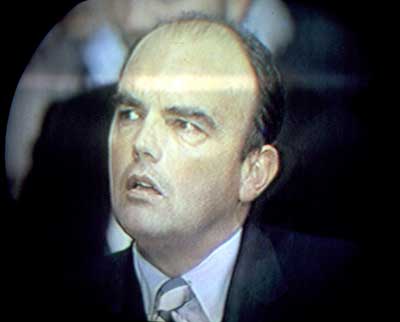
It’s that time of the decade again when we look back on the Watergate scandal and how it brought down Richard Nixon and many of those around him. In this case it is the fiftieth anniversary. I usually like to note that at this time of year–the scandal itself drug out for almost two years and beyond–because I feature two recordings of John Erlichmann testifying at the Senate Select Committee on the subject. You can hear the first of these here and the second here.
As will become evident, I still have my doubts on many of the “official” explanations of what happened. Some of these doubts arose during the events and some are the result of subsequent events, which cast the whole thing in a different light. This is a personal reflection of the impact the scandal had on me–and I’m sure on others–and how life was different as a result of it.
Let me start by presenting this, which brought much of the pain of the era back into consciousness:
At the beginning of 1973, things were starting to look up. The Vietnam War, which had dominated the years before, was coming to an end. It wasn’t the best end (something that was obvious at the time) but it was probably the best we could hope for. I was graduating from prep school in June. That hadn’t been the happiest experience but I had “swum the Tiber” and left the school’s church behind, and had been accepted to Texas A&M and left the school’s socio-economic slice behind, and things were finally looking up.
Watergate and the other crises of the era–especially the oil related crises–wrecked all that.

I listened to the hearings while working at the family business during the summer in the drafting office shown above. I (and my co-workers) were a little mystified by the whole thing. More to the point, I had read subversive books, and knew there were other ways of dealing with problems like this. In a Westminster system, the government would resign, we’d get a new government, and things would go on. In other systems the whole thing would have been shoved under the rug, the lower level miscreants given the boot, and life would go on. The United States–which supposedly had the greatest form of government the world had ever known–could bring itself to do none of these things; it took what seemed like an eternity to finally get to a “changing of the guard” while the nation was torn apart with night after night of the scandal (that was before the 24-hour news cycle we have now) and its energy drained from the Cold War it was supposed to be engaged in with the Soviet Union.
The basic problem was twofold. The first was that the U.S. Constitution made it difficult to remove a President from office, a simple fact which has been repeatedly forgotten in all of the subsequent impeachment efforts. The second was that Nixon’s opponents turned the whole thing into a moral crusade–a very American thing to do–in order to advance their cause. Had they been more focused on their effort, they could have sent the Republican Party to a permanent wilderness, but they missed their best chance to do so.
In the middle of all this most of my faith in this system–a faith which hadn’t been done any favours by my aforementioned prep school–was seriously damaged. Things bounced downward as the decade wore on, leading in part to my first writing of this. It also led to my serious consideration of emigration, which for better or worse I never went through with. Texas A&M turned around my faith in this country and altered my spiritual course as well.
Subsequent events have shown several things.
The first is that our government is capable of intrusive, one-sided suppression of our liberties in ways that Nixon’s people could only dream of, and that the same group of people who attacked Nixon for his dirty tricks have employed worse on our population. That puts the whole business of Watergate in a new light.
The second is that the right–especially the religious right–ploughed into political involvement without really understanding the nature of their opponents nor how to achieve their objectives. This is why their effort stalled and they ultimately turned to Donald Trump, an unlikely a hero of religious conservatism as one could want. I discuss this in my “retrospective” on my earlier writings.
The third is that Watergate taught people that dragging out scandal and resorting to the legal system were the way to “get things done.” Such has poisoned our political system ever since.
But we have a “democracy,” don’t we?
-
Admitting the Failure of the Sexual Revolution Without Admitting It
Timothy Fountain’s piece That Golden Age of Porn is an honest piece on the era of 1969-1984 when porn was distributed freely (thanks in part to SCOTUS) in print and in theatres. Porn was a major disseminator of the sexual revolution.
Tim’s major contribution in this piece, however, was to remind everyone of the routine trashing of people who objected to the sexual revolution in general and porn in particular:
First of all, objections to the Golden Age of Porn were “cancelled” in the same way objections to “Pride” are censored today. To challenge the public proliferation of porn was to be:
- called a religious zealot or nut;
- labelled a Philistine opposed to artistic expression;
- tagged as a Nazi opposed to free speech;
- pop-psychoanalyzed as a sexually repressed neurotic;
- lumped in with the old, ignorant and generally uncool.

But there were consequences, not the least to feminism:
Self-described feminists sometimes attacked porn as “objectifying women,” then pivoted to extol it as “women finding empowerment through their sexuality.” Very much like arguing for elevation of women’s sports while simultaneously bringing biological males into women’s events and locker rooms.
The sexual revolution in general put feminism in a tight place. Were women supposed to spurn sex in order to minimise contact with men? Or was it their most powerful weapon? Feminism has had a schizoid cast to it ever since, something that becomes evident when women like Paula Jones and Tara Reade come forward.
Tim brings us to the present: the transgender movement. It’s worth noting that the sexual revolution used to be called the “free love” movement. We were promised that, when our inhibitions were cast aside and we ripped off our bourgeois phoniness to be our true selves, that we would all be happy. But that’s how it started: how is it going? What we have really done to ourselves is turn sexual activity into a performance-based arena, where there are some winners and many losers. Porn made it look easy. It’s not, especially when it intersects with real relationships.
The trans movement is a way of removing the performance-based sexual activity by pivoting away from sex to gender, and from there to tie gender to personal identity, which in turn ties is to the issue we can never seem to get away from, authenticity. Now we focus on identity, with expensive medical procedures (there’s the cash flow, as was and is the case with the porn industry.) It’s a tacit admission that the sexual revolution has failed, and its attractiveness to young people (along with declining sexual activity) is an indication that they realise the jig is up for “free love.” It’s admitting the sexual revolution has failed without admitting it.
The first victim of this is, ironically, the LGB community. They’ve been telling us that they’re “born this way,” but the trans people tell us that no one is born any way, that we’re “assigned” a gender at birth subject to subsequent alteration. They’ve put themselves into the same kind of tight place as the feminists did. But things can play out differently. In the U.S., a relatively large community of religious conservatives have forced the LGB and T (along with the other alphabet letters) into an unnatural alliance, at least for the moment. In the UK, where religious conservatives are nearly invisible, things are different, especially with the lesbians and their “TERF wars.”
Until we find a way to cast aside our sexo-centricity and attain a more balanced view of things, which includes productive output for our mental health, prosperity and protection from foreign invaders, we will stumble from one disaster to another until we succumb to the last one.
Sailing the Last Voyage with Newton and Pascal
 Positive Infinity