-
Objective Reality is Rather Important
I haven’t engaged Bobby Grow in a long time (for good reason) but he, in his encapsulation of Karl Barth, Thomas Torrence, Duns Scotus, William of Ockham et.al., makes the following statement:
At a purely superficial level, does the reader see how what Barth and Torrance are doing sound a lot like the characteristics present in the thought of both Scotus and Ockham, respectively? Do you see how theologians like Barth and Torrance might be read as modern-day adherents of what also became known as Nominalism (i.e., what we see, loosely, in the thought-life of both Scotus and Ockham, respectively)? Indeed, some would attempt to argue that Immanuel Kant himself, and the dualism he proposed, was very much so akin to the nominalism developed by someone like Ockham. Without getting into the nitty-gritty of all of that, let it simply be noted that while someone like Barth was indeed conditioned by the impact of Kant on the modern Germanic ideational landscape, what Barth was doing, by way of the analogy of the incarnation (and thus faith), was to flip any sort of Kantian or Nominalistic dualism on its head by bringing the heavenlies into the earthlies as that obtained and concretized in the incarnate Son of God, the Man from Nazareth, the Theanthropos, Jesus Christ.
What he and many others overlook is the fact that large swaths of Christian thought–and this is especially true the closer we get to our own day–don’t make a particularly good case that a) they are objectively real or b) have a meaningful relationship to the creation in general. It was this lacuna (among other things) that drove me out of the Episcopal Church and to Roman Catholicism and Thomism. The fact that the latter church couldn’t bring itself to have a pastoral system to match its theology was something I could not anticipate going in. I don’t see how anyone with scientific training can avoid this issue. For someone who came out of a very secularised background, it was likewise unavoidable.
But such it is…I also think it’s a pity that he’s decided to pass up a PhD for another Master’s degree. There’s probably a dissertation in his blog (assuming he could find an institution and academics to go along with his idea) and his erudition and ability to handle the jargon would certainly keep him in good stead. But it is his decision…although I should point out that he is from Oregon…
-
Disregarding the False Dichotomy of Calvinism and Arminianism [Commentary on Browne: Article XVII]

In keeping with his earlier treatment of Article X and Article XVI, Browne holds that Article XVII is neither Calvinist nor Arminian, although, as mentioned previously, he suggests the Article allows for both positions: “It seems worthy of consideration, whether the Article was not designedly drawn up in guarded and general terms, on purpose to…
Disregarding the False Dichotomy of Calvinism and Arminianism [Commentary on Browne: Article XVII]Much of what is here buttresses my points–especially on the Book of Common Prayer–in my post Kicking Final/Unconditional Perseverance Out of Anglicanism. One thing he does bring up is the business of “ecclesiastical election.” This may seem to be a clumsy piece of theology, but the role of the church was an integral part in Augustine’s view of predestination (along with about everything else.) That becomes evident when you look at a true Augustinian such as Bossuet. Calvin eliminated the role of the church, which gives his theology the raw, fatalistic feel that it has.
-
Those Dreadful Evangelicals: My Response to “Methodists At 180 Feet Below: A Short Reflection On Showmanship”
Tyler Hummel’s piece in the North American Anglican is one of those things that surfaces from time to time in the Anglican/Episcopal World. It has the feel of the Palm Beach Old Guard’s worst nightmare: the dread of tasteless nouveaux riches making a statement and getting away with it. As someone who started out in the Old Guard’s premier parish and ventured through Roman Catholicism to end up in one of Classical Pentecost’s premier churches, I think I can speak to some of the issues he brings up.
Let’s start by reviewing the classical Main Line critique of evangelicals, something I have discussed in the past. It goes like this:
- They’re Bible thumpers, ready to pounce with their memorised verses and pushy evangelism.
- They’re impecunious money-grubbers, always pushing for a big offering so their ministers can go off and do God-knows-what.
- They’re judgmental and moralistic, always trying to push their morality on you when in fact they can’t keep it themselves.
- The ones that do get a couple of nickels to rub together are tasteless nouveaux riches (see above.)
- Their hymnody (such as it is) is dreadful and belongs more in a honky tonk or the Grand Old Opry than a church.
- They are totally lacking in discipleship of any kind.
- They don’t drink.
Needless to say Evangelicals had some retaliatory opinions of their own:
- Their people are unsaved, having never experienced being born again or anything subsequent to that (what’s subsequent depends upon the Evangelical.) They have no idea when they were saved or if they are.
- Their Sunday “worship” is a social event rather than a time to really “have church” and seek God. Their religion is not heartfelt. Beyond all that it is boring.
- They never share their faith or lead anyone to Jesus Christ as their personal saviour.
- They’re ignorant of the Bible, they never read it.
- They drink. A lot.
I think any objective observer will note that, with these stereotypes, there is an element of truth on both sides. The sad part is that, instead of learning from each other, both sides are content to use them as weapons rather than to educate themselves about the “other.” The complexities of the last fifty years have muddied the waters for many but unfortunately these divisions persist.
Which leads us to the matter of the Methodists.
Mark Tooley is right in asserting that Methodism is the quintessential American form of Christianity. One evidence of that is the diversity (until now) of Methodist churches. IMHO no other Protestant church has a greater spread of church “types” and socio-economic groups than the Methodists, although that is now falling victim to our social media/either-or culture. People in the Anglican/Episcopal world who would stick their nose up at the Methodists’ current plight would do well to remember their own recent history, and consider that Methodism is simply twenty years behind in the same struggle with which the Anglican/Episcopal world has been consumed. And that lag, I might add, is with a longer history of WO. Hummel’s characterisation that “…it is a church riddled with schism and political controversy at the moment” is certainly not unique to Methodism.
Hummel, however, make another curious statement, namely that this schism is “…likely due in part to the fact that its theology and authority as a tradition were not rooted in tradition or strict hermeneutics but grew as an appendage of the Church of England.” He really doesn’t elaborate on the meaning of this statement, but to be honest it has the feel of a dog whistle for Calvinism. The fact that Calvinists believe their idea is the sine qua non of Christian theology is well known and I discussed it in relation to Anglican theology recently in Kicking Final/Unconditional Perseverance Out of Anglicanism. Anglican theology is sui generis and needs to be treated that way, not only for itself but its direct progeny of Methodism and indirect such as Wesleyan Holiness and Modern Pentecost. I discuss this relationship in my post Liturgy, Pentecost, Wesley and the Book of Common Prayer, Part I: What is a Liturgy? (It’s worth noting that George Whitfield was a Calvinist and that led to strained relations with Wesley.)
His lengthy discussion of Southern religion brings me to a favourite topic of this site, namely the Scots-Irish. He emphasises the “showmanship” nature of Southern Christianity, but I think the evangelisation of the South was a task that was amazing in that it was done at all. As I noted in What Working for the Church of God Taught Me About Race:
Now I’ve spent a great deal of time on this blog on the subject of the Scots-Irish, with controversy following. The point I want to make on that subject here is that, as my Russian friends would say, the Scots-Irish are a very “specific” people, with some very unique cultural qualities that have moulded the life of the church. Don’t drink alcohol? Best way to deal with serious binge drinking. “Clothesline” religion? A counter to provocative dressing from Colonial times to the days of Andy Capp. Like preachers to holler? The custom from the “old country”. Bringing the saving knowledge of Jesus Christ to a people for whom “moderation” was a dirty word was tough, but it was done, and you really have to admire the people who did it.
Ever since the days of William Laud and Jenny Geddes the Anglicans’ inability to effectively reach many of the peoples of the British Isles outside of its English core should be instructive, but sad to say it is not.
There are many things about Southern Evangelicalism that are subject to improvement. But the unravelling of the system that so many worked so hard to achieve isn’t a pleasant business. Much of the political restlessness we see–and that includes Donald Trump–is a result of the secularisation of the culture, not making it more Christian or religious. After years of whining about the Religious Right, we need to start paying attention to the non-Religious Right, which is in the ascendant.
I could go on about other lacunae in Hummel’s piece, especially the lack of mention of the class-stratified nature of American Christianity in general and Southern Christianity in particular. But, as Origen would say, this blog post having reached a sufficient length, we will bring it to a close.
-
Charles Ramsay Preached using Cartoons; for 43 Years the Pentecostal Evangel was his Pulpit — Flower Pentecostal Heritage Center
-
Kicking Final/Unconditional Perseverance Out of Anglicanism
I’m not surprised that James Clark’s piece on Final Perseverance and the Thirty-nine Articles [Commentary on Browne: Article XVI (2)] is a difficult of a business at it is. It is an issue that has been complicated by the passage of time, by the change in the way Protestant Christianity has come to look at itself, and of the Anglican divines who are all over the map on the issue.
It is my conviction that Article XVI is the doorway out of Calvinism’s insistence on final perseverance and into a more Wesleyan view of the topic, which I expressed a long time ago in my piece Anglican Evangelicalism: The Limitations of Augustinian Theology (and, as Clark points out, Augustine wasn’t always clear on the subject.) These points are what I hold to be self-evident on the subject:
- The Articles of Religion antedate the invasion of Calvinism into the Anglophone Protestant world. So to expect them to be Calvinistic is anachronistic and unreasonable.
- Calvinism has pushed itself to be the “gold standard” of Protestant thought when in fact does not deserve that position. It sets itself up as “intellectual” when in fact it is not, it is just the assertion of dogmas with unappetising consequences from which Calvinists frequently backpedal.
- The strongest case to be made against final perseverance as the proper interpretation of Article XVI can be found in the Book of Common Prayer. All three of the major liturgies–Morning Prayer, Evening Prayer, and the Holy Communion–have penitential rites, which are totally superfluous if people have unconditional perseverance (which is a better way of describing what is actually at issue here. They’re really not necessary for absolute predestination, either.) Some Anglican divines haven’t quite put it together on this, but the Baptists–Calvinistic and non-Calvinistic on election–certainly have.
- The whole game of “was he/she ever saved/elect to start with” is really no better than the Roman Catholic “is he/she in a state of grace” situation. It just replaces one uncertainty with another, except that now if a person becomes firmly convinced that he or she is one of the elect they have no real reason to be constrained in their behaviour.
- Baptismal regeneration only complicates the subject. It is at best the beginning of the journey, not the end. The tendency to lean too heavily on baptism as a salvific act is another import from Roman Catholicism we could do without, and my own position on the subject is detailed in Why I Support the Idea of Believers’ Baptism. I should also add that I can’t see even the most die-hard Tulip Calvinist supporting the idea that, if you’re baptised, you’re in the elect.
It’s time for Anglicanism to be sui generis on this subject, which would both put it in commonality with its progeny and go a long way to end its reputation as a gateway to something else.
-
Ex Parte Milligan, Sam Ervin and the Governor of New Mexico
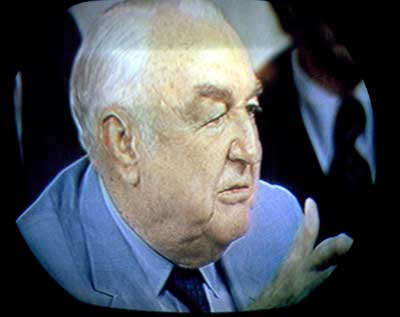
Now that New Mexico Governor Michelle Lujan Grisham has suspended open firearm carry laws in certain places as a “public health emergency,” the whole concept of the suspension of rights under our constitutional system comes up. One case that comes up regarding that is Ex Parte Milligan, which dates from the Civil War. During the Watergate hearings, Sen. Sam Ervin (D-NC) set forth on this case, which he considered the greatest decision SCOTUS had ever set down. His discussion of the case was during the questioning of John Eichmann and can be found here; it begins about 32 minutes into the recording.
Watergate was the left’s greatest triumph, one they let slip away by their own sloth. Today of course, fifty years after the hearings, things have flipped. Ervin was applying the case to the break-in of Nixon’s people to Daniel Ellsburg’s psychiatrist’s office. Ellsburg of course was the person who passed the Pentagon Papers (about the U.S. involvement in Vietnam) to the New York Times, and became a hero to lefties of the times.
Now Ellsburg would probably end up rotting in jail like Julian Assange, and the “Old Grey Lady” wouldn’t touch the Pentagon Papers–or anything else that the “Deep State” wanted to keep under wraps–with a ten foot pole. In those days the lefties were generally civil liberty people; today “their people” have the reins of power, and they conveniently forget those who got them where they are.
And you on the left: they’ll forget you, or worse, if they think it necessary.
-
Jimmy Buffett Goes to Meet God
Singer-songwriter Jimmy Buffett, who popularized beach bum soft rock with the escapist Caribbean-flavored song “Margaritaville” and turned that celebration of loafing into a billion-dollar empire of restaurants, resorts and frozen concoctions, has died. He was 76.
In the process of that famous song he showed a better grasp of responsibility than many
“church people,” as I pointed out in Jimmy Buffett and the Miserable Offenders of the Book of Common Prayer, where I referenced an earlier post about the same subject in the Novus Ordo Missae:As far as the sins are concerned, the Roman Catholic Church’s (the Jesuits of Pascal’s days notwithstanding) emphasis on the seriousness of our sins is well founded, and anyone with a Biblical understanding of the subject should know this. Even some whose Biblical understanding falls short know this too. In the same 1970’s when the “old” NOM translation was current in Catholic Churches, Jimmy Buffett, wasting away in Margaritaville, knew all too well whose fault it was. His lyrics, although liturgically inappropriate, were in their own way closer to the NOM Latin original than what was recited every Sunday.
One of these days we’re going to face reality on whose fault our sins really are. Miserable offenders who know it’s our fault, our most grievous fault just might blurt out Buffett’s admission. And, as someone who came of age just up U.S. 1 and A1A from “Margaritaville,” it wouldn’t be very nice but it would be truthful and refreshing.
Memory eternal.
-
Is There No End to This Madness? Anglicans and the Immaculate Conception
Recently the North American Anglican took up the issue (quite ably I might add) of the Immaculate Conception. This implies that there are Anglicans out there who actually believe that the Blessed Mother was in fact immaculately conceived, i.e., conceived without sin.
As the NAA points out, the church’s witness to this is not univocal, certainly not before the bull Ineffabilis Deus in 1854 and really not afterward. Aquinas, who certainly believed that Mary was infused with many graces after her conception, did not support the Immaculate Conception. The question is discussed in the Summa and his answer to it is as follows:
The sanctification of the Blessed Virgin cannot be understood as having taken place before animation, for two reasons. First, because the sanctification of which we are speaking, is nothing but the cleansing from original sin: for sanctification is a “perfect cleansing,” as Dionysius says (Div. Nom. xii). Now sin cannot be taken away except by grace, the subject of which is the rational creature alone. Therefore before the infusion of the rational soul, the Blessed Virgin was not sanctified.
Secondly, because, since the rational creature alone can be the subject of sin; before the infusion of the rational soul, the offspring conceived is not liable to sin. And thus, in whatever manner the Blessed Virgin would have been sanctified before animation, she could never have incurred the stain of original sin: and thus she would not have needed redemption and salvation which is by Christ, of whom it is written (Matthew 1:21): “He shall save His people from their sins.” But this is unfitting, through implying that Christ is not the “Saviour of all men,” as He is called (1 Timothy 4:10). It remains, therefore, that the Blessed Virgin was sanctified after animation.
ST, 3, 27, 2My logic teacher, who pointed out to me one time that You’re Not as Dumb as You Look, noted that, if Mary was immaculately conceived, such could be extended back to her parents and beyond, all the way back to Adam.
I really think that the desire to go along with this manifests the desire to “keep up with the Joneses,” when, like the Patriarch Nikon and his allies in Moscow, we need to stop and consider just who the Joneses really are.

Sailing the Last Voyage with Newton and Pascal
 Positive Infinity