-
Meditations on the Gospel
In addition to the Elevations on the Mysteries, the other work which Bossuet put to paper in anticipation of “the last hour” was this one: Meditations on the Gospel. It is our special pleasure to present this to you in its virtual entirety.
See the full page: Meditations on the Gospel
-
The Society of St. Pius X Does “Bossuet for Lent” — The Bossuet Project
It’s a little late in the game, I know, but I just discovered that the venerable Society of St. Pius X had posted for this Lent soon past a series from Bossuet’s Meditations on the Gospel. The series is as follows: Jesus’ Victory and Power Over Death Jesus’ Friendship Is a Model For Ours Profusion […]
via The Society of St. Pius X Does “Bossuet for Lent” — The Bossuet Project
-
The Sufferings Foretold: A Good Friday Reflection
From Bossuet’s Elevations on the Mysteries:
We have explained elsewhere the sacred oracles of the prophets on our Lord Jesus Christ. I will say here in brief that they have seen everything: his two births, the first all divine, from the days of eternity; the place marked for the second in Bethlehem; a virgin who conceives him and gives birth to him; a child who was born to us; a son given to us. Child, man from the first day, and altogether strong and omnipotent God. Let us recognize with Zechariah the humble mount of this just, lenient and gentle king, when he enters his royal city. Let us consider with him the thirty denarii for which he was sold, and the use of this money to buy the field from a potter. Everything is accomplished in due time. The shepherd is struck and the flock dissipates. The disciples each retreat to their homes, and Jesus dies alone. We spit on his face, and he does not turn away to avoid the blows and infamy that come to him. We pierce him, and all Israel sees the openings of the wounds it has made to him. As another Jonah, to be thrown into the sea to save the entire ship, and like him he comes out after three days.
As time approaches, its mysteries are revealed more and more. Daniel counts the years when his anointing, his sufferings, his death followed by just vengeance and the eternal desolation of the ancient people who despised the Holy of Holies were to be accomplished. He sees in spirit the Son of Man to whom is given a dominion bounded by neither place nor time. This dominion, the most august that would have been and will ever be, will be the dominion of the saints of the Most High. Daniel, surprised at its size, is disturbed in his thoughts and keeps this word in his heart. But this Son of Man must suffer a violent death.
Isaiah teaches us to taste his sufferings; he must bear our sins, and thereby acquire and share the spoils of the strong; and the cause of his victories is that he gave himself to death. He was numbered with the villains, crucified between two thieves; he is the last of men and altogether the greatest. It is not by force that he suffers death; He offered himself to it because he wanted it. He has not opened his mouth to defend himself, he is as silent as the lamb under the hand that shears him. The silence of the Son of God among so many outrages and so many injustices, which is the most remarkable character of the Son of God, caused the admiration of this prophet. One believes him struck by God for his sins, he who is innocence personified; but it is for ours that he suffers, we are healed by his wounds. The prayers he pushes up to heaven in this state of suffering are the salvation of the sinners for whom he is praying. A long posterity will come out of him, because he has voluntarily suffered death; and his sepulcher, from which he will emerge victorious and immortal, will be glorious.
-
Jesus humbles Himself at the washing of the feet — The Bossuet Project
From Meditations on the Gospel, First Part, Eighth Day: Jesus humbles Himself at the washing of the feet (John xiii. 4, 5). He riseth from supper, and layeth aside His garments; these were the garments of honor which free persons wore-He allowed Himself only the kind of garment that those accustomed to serve were wont […]
via Jesus humbles Himself at the washing of the feet — The Bossuet Project
-
“Man Clothed in the Omnipotence of God”: Bossuet on Faith and Prayer — The Bossuet Project
I’m briefly interrupting my posts from Bossuet’s Elevations to deal with a subject that Matt Kennedy at Stand Firm takes up: the meaning of Mark 11:23-24. I honestly think that Bossuet, “the Eagle”, (who was very Augustinian) has a much more accurate and inspiring treatment of the passage. The following comes from Bossuet’s Meditations on the […]
via “Man Clothed in the Omnipotence of God”: Bossuet on Faith and Prayer — The Bossuet Project
-
The unbelievers do not open their eyes to the light: they walk in darkness — The Bossuet Project
From Meditations on the Gospel, The Last Week of the Saviour, Seventeenth Day. The unbelievers do not open their eyes to the light: they walk in darkness (John xii. 34-37). And how sayest thou: The Son of Man must be lifted up (John xii. 34) from the earth? Jesus had spoken so often of this […]
via The unbelievers do not open their eyes to the light: they walk in darkness — The Bossuet Project
-
The Character of Authority in the Triumph of Jesus Christ — The Bossuet Project
From Meditations on the Gospel, The Last Week of the Saviour, Sixth Day. The character of authority in the triumph of Jesus Christ. His zeal for the holiness of the temple (Ibid.). Upon reaching Jerusalem Jesus went to the temple, as conquerors usually do, even among the idolaters. For there was a notion among men […]
via The Character of Authority in the Triumph of Jesus Christ — The Bossuet Project
-
The Triumphant Entrance of Our Lord into Jerusalem — The Bossuet Project
From Meditations on the Gospel, The Last Week of the Saviour, First Day. The triumphant entrance of Our Lord into Jerusalem. He is acknowledged King, son of David, and the Messiah (John xi. 12-20; Matt. xxi. 1-17; Mark xi. 1-17; Luke xix. 28-48). These sermons or discourses will teach us about the triumphant entrance of […]
via The Triumphant Entrance of Our Lord into Jerusalem — The Bossuet Project
-
My Tribute to Dave Lorency
One of the hardest parts of getting older is seeing loved ones, friends and colleagues pass away. It’s not often that I do a tribute to one of them, in part because a) my audience is very diverse, most people aren’t known to a wide range and b) if I did it I would pretty much dominate the blog. But I’m making an exception in this case for my friend Dave Lorency, who passed away suddenly early this morning. Dave is best known as the President of Operation Compassion, the relief organisation that has been to so many disasters, including the many tornadoes and hurricanes that have struck our country and world, and even the 2004 tsunami in Indonesia.
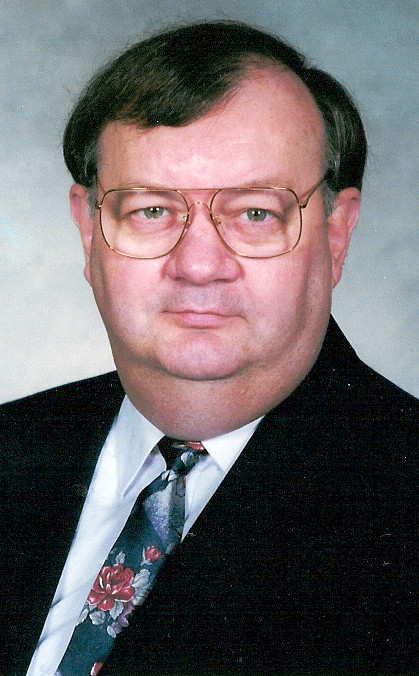
Dave Lorency. Photo courtesy of Church of God Chaplains Commission. Most of all, though, Dave was my friend. I’ve met many interesting people and great men and women of God in the Church of God during my two score in it, but Dave is, to use the Latin phrase, sui generis. His ministerial career was unique, and the way he brought Operation Compassion to the forefront of Christian relief work illustrates both how he leveraged the strengths and transcended the weaknesses of the Pentecostal denomination which he served for so many years.
Dave started out in what used to be called the Tidewater area of Virginia. His ministerial career–and don’t be silly, that’s the way many of our ministers look at it–was not out of the ordinary until he got involved in and was made Executive Director of Operation Compassion. To make a relief organisation like OC successful requires a skill set that is different from many of our ministers, but Dave was God’s man for the hour, so to speak.
What a great loss. He was a powerful force in humanitarian work and a dear friend of mine. He will be missed more than we will ever know. He was one of Mercy Chefs earliest supporters and advocates. I will miss him terribly. Gary LeBlanc, Mercy Chefs
 To start with, he was committed to the ministry body, soul and spirit, which is important for the success of any ministry. I have always been impressed with the energy and dedication of many of our ministers, and he was certainly exhibited both. Beyond that, he had the organisational skills to put it together. Operation Compassion’s mission is simple but vital: to gather food and other supplies and then to deliver them to places and organisations which in turn would distribute them to those in need. That doesn’t sound like much of a mission, but a relief organisation that arrives empty handed won’t bring much relief. OC helped to avoid that problem.
To do that requires not only organisational skills, it requires the supplies, either donated or bought. For the former he had extensive relationships with corporations of all kinds who would donate their surplus to OC’s warehouses, from whence they went to the field. Beyond that Dave was an effective fund raiser, not only in the Church of God but also outside of it. OC started out as an integral part of the Church of God; it was “set loose” (made its own corporation and given autonomy) in 2006, when Dave was made President. As he reminded us frequently, much of the cash income they had came from Roman Catholics, a crossover rare for an organisation with Pentecostal roots. And he did all of this while keeping the overhead below that of many other relief agencies and ministries.

Operation Compassion’s warehouse, with supplies ready to go to the field, 2005. Photo courtesy of the Church of God Chaplains Commission. As for me, I first got to know Dave when I was the webmaster for the Church of God Chaplains Commission, which I was from 1998 to 2010. Both OC and the Commission are under the umbrella of the Care Division of the Church of God, even with OC’s status as a separate corporation. After I left the formal employment of the denomination I was appointed to the Care Board, which oversees the ministries under its umbrella, including OC. In both of these I got to know Dave as a friend. Unpretentious and straightforward in his opinions of people, ministries and churches, he was in many ways an atypical minister. In his passing I am shocked and grieved. Our General Overseer Tim Hill said that he “…has left a legacy in the Church of God that will never be duplicated,” and that’s an understatement.
My heart and condolences go out to his family, friends and colleagues, his passing leaves a hole in our lives which will not be filled until we see him again on the other side.
-
What Will the Church Look Like? — Ad Orientem
Father Joseph Ratzinger (Pope Benedict XVI), in a 1969 radio broadcast: The future of the Church can and will issue from those whose roots are deep and who live from the pure fullness of their faith. It will not issue from those who accommodate themselves merely to the passing moment or from those who merely […]

Sailing the Last Voyage with Newton and Pascal
 Positive Infinity