-
A Second Look at Lying and the Ethics of the New Christian Right–North American Anglican, with Commentary
The response to Ben Crenshaw’s bold statement strikes me as overcomplicated, I have a few thoughts on this issue.
It’s one thing to say lying is a sin, but to say that lying has no eternal consequences–the ultimate criterion–undercuts the sinfulness of lying. That’s built into a number of theologies floating around today. I’ve done my share of attacking these, most forthrightly in The Baptists, Their Doctrine and Their Nasty Politics:
Smith (Church of Christ debater) doesn’t miss a chance to take a pot shot at groups neither one of them likes (Roman Catholics, Methodists, etc.) But basically he’s spot on, especially with the “straight shot” part of the diagram. Although it’s part of the baptismal regeneration part of the debate, his characterization of salvation as “cannot be lost–unconditionally secure–idolatry and murder not make soul in danger” is basically either what the Baptists believe or the logical conclusion of that belief.
That concept is a game changer for the life of the church. The people I normally associated with being free from moral constraint were the Communists, who deny the existence of a non-material reality. But here we are. And Garner never responded to this. This basically turns the life of the church into a numbers game; once you’ve got them saved, that’s it.
Smith could have added lying to the list, but he didn’t have to. His point is made. Such a theology removes our actions from an ethical framework. And the Reformed “unconditional perseverance” depends upon a reliable discernment of election, so while it is consistent logically it has some unappetising consequences.
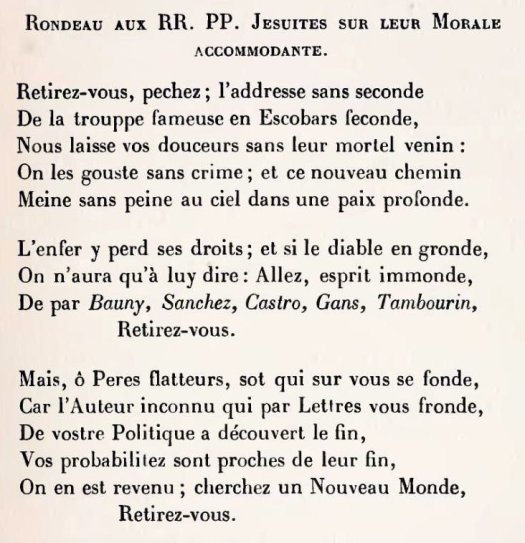
Since the Cardinals are meeting in Rome to choose a successor to their recently deceased Jesuit Occupant, we would be remiss if we didn’t bring up the hard work his order did to undermine Christian morality in the seventeenth century, a work Francis restarted with his ambiguous pronouncements. I discuss this in With Pope Francis, The Provincial Letters Ride Again. There was also some casuistry going on the Reformed side as well. I think that’s where Ben Crenshaw is ultimately going whether he wants to admit it or not.
Finally concerning Rahab, she did go out on faith because she saw the Israelites winning, something many of the Israelites didn’t. (Kinda like the women coming back from the Resurrection…) Out here in the real world, things are more complicated than they look.
Crenshaw’s biggest weakness, however, is his insistence that the survival of the country deserves the kinds of moral failures that he is advocating. And survival is what’s at stake here: if Crenshaw or the proponents of what we’ve endured during the last administration think that the country will endure that kind of agenda, both are delusional. Nevertheless there are two things that Crenshaw and many American Christians forget. The first is that Rome collapsed but Christianity survived; could American Christianity do the same? The second is that, if we adopt the neopagan ways of our political allies, what kind of country will we end up with? Will we just defeat our own purpose?
In the rondeau above, the Jesuits were told to “look for a New World,” and they did just that. Evidently their spirit is oozing north just as the border is being closed.
-
Lee University’s New Engineering Building

A preliminary rendering of the new engineering building at Lee University, for more information:
-
Another Conclave, Another Pope…
Next week the Cardinals will begin their closeted deliberations which should result in a new Occupant of the See of St. Peter. The speculation on the result–and the process–has filled social and traditional media. I’m not here to “make book” (literally for many people) on who will end up winning that contest, but a few observations are in order.
First, since Francis stacked the College of Cardinals so thoroughly, many believe that we will get yet another Pontiff in the mould of the recently passed Argentinian. In reality he wasn’t supposed to be elected in the first place, given that his predecessors John Paul II and Benedict XVI did a great deal of stacking of their own. But he was. When the white smoke emerged from the Sistine Chapel, I was in a Catholic hospital; I told them, “You better wake up, you’re getting a new boss.” Neither they nor I realised just how significant that statement was.
The truth is, however, that every conclave since Vatican II has been a nail biter in its own way. Since they “flung open the windows” of the Church there has always been a danger that someone would make a major pronouncement that would radically alter the idea and course of the Church, something I warned about back in 2005 in Just One Bull Away…. The greatest brake on that is the fact that the Church has taught that the Pope is infallible only since 1870; it taught the infallibility of the church long before that. Making such a change would undermine the confidence of the faithful in the institution once the reality of such a pronouncement sinks in. The progressives would be joyful, but the hard experience of Main Line Christianity in the U.S. indicates that they might stay but most others, over time, won’t.
Ultramontane Roman Catholicism is in a perpetual pickle because it insists on a) top-down governance and b) uniformity of life and practice, neither of which are a given in the history of the church, especially before Trent. That’s why Francis went after the Trads the way he did; he didn’t see an alternative spirituality (one well rooted in the history of the church) but a challenge to uniformity with the possibility that some day their idea would be the idea of the church. Like the Young Turks, who dispensed with the Ottoman millet system under the influence of European nationalism, he couldn’t see using the Trads as a way to advance the Church in places where it wasn’t making much progress (such as young people with children.) For the Young Turks the end result was the Armenian Massacre; for the Church, it was not so brutal but in ecclesiastical terms it was brutal enough.
For the rest of things, his ambiguous pronouncements produced more heat than light. The last time the Jesuits made those kinds of pronouncements, they got the Provincial Letters and eventual dissolution of the order (after another brutal suppression, this time of the Jansenists.) How this conclave comes out may determine whether such events come to pass. In the meanwhile Francis’ successor might consider undoing something that ultramontane Roman Catholicism was supposed to have dispensed with: la regale, or giving Yi Xinping and his subordinates the power to choose/approve Catholic bishops in China. Louis XVI and his ancestors, who wielded that kind of power, deserve an apology from their “infallible” church.
As for me, I took my leave because I had had enough, not of the rich intellectual and historical traditions, but because of the institutional machinations that plague Roman Catholicism. Until those change–and I’m not holding my breath no matter how this conclave comes out–the best way to be a part of those traditions is to be outside of the institutional Church.
-
The Sad Passing of commonprayer.org
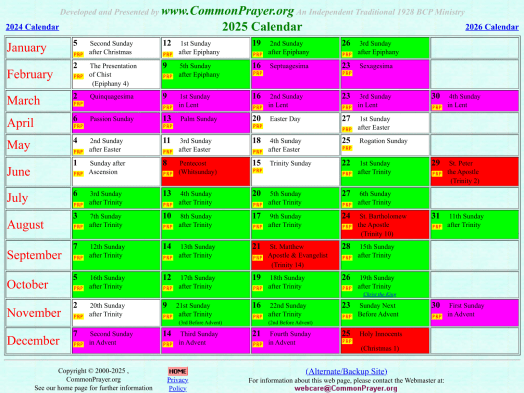
In the midst of the many things–good and bad–that transpire these days, one thing crept up on me that I wasn’t expecting and regret to see–the passing of the website commonprayer.org. It was vanished completely since the first of the year.
As a person who was raised on and still uses the 1928 Book of Common Prayer, this website was a major blessing, and its loss a setback. When I was growing up on the 1928 BCP, Bethesda put out a physical desk calendar with the liturgical year highlighted and all of the liturgical colours noted on the dates. commonprayer.org did that virtually. I’ve reproduced the annual Sunday calendar for this year (early in the year, before they disappeared) at the top of the page, but my favorites were the monthly calendars such as you see below for this time last year. I used these extensively in my 2023 Advent series.
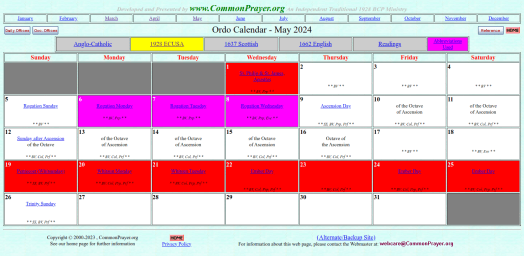
Notice that the site allowed for several options for the liturgical year: the original 1928 BCP, the 1637 Scottish, the 1662 English, and the Anglo-Catholic version (which one is not explained.) It was a good teaching tool for the newbies (well, most of them) I was lecturing to.
They also had specific calendars, not only for the Sundays, but for the fixed holy/saints days, which is shown below.

The site dated back to 2001, which is four years after the predecessor of this site was started, both of which are an eternity on the internet. I don’t know who built and maintained it. I do know that, online as everywhere else, time takes its toll, and the Anglican internet (which spawned the blogosphere and then the social media groups) has been around long enough for sites (and sadly people) to pass on. commonprayer.org was especially vulnerable for two reasons.
The first is that it was an active site; where the web pages themselves were code to produce a web page based on the commands given either in the URL or by other means (GET and POST to use the proper terms, also cookies.) commonprayer.org used cfm, Microsoft’s active language; I preferred php, which is what all my sites use and have for a long time. Active sites are subject to the security updates which result from constantly changing hacking, and language elements get deprecated and even dropped from the language, rendering code limited in functionality or useless. This problem is why I migrated all my sites to wordpress.com, it’s not perfect but it keeps up both the page codes and the php version of the server. I also had to drop an active site for that reason as well.
The second is that it had its own URL, which doesn’t come free either. I have made provisions for mine and hope they work for a reasonable period of time. Really, the “ghost” sites that have done the best (such as John Richardson, the Ugley Vicar, David Trimble, Still on Patrol and Mary Ailes, Baby Blue) are those which used the blog service URL, and that is a fallback for my own sites.
These days if you’re connected on social media with enough people you can keep up with the liturgical year in whatever flavour you prefer, but I still think that sites such as commonprayer.org serve a purpose and are missed when they go away.
-
The Logic Underpinning the Eucharist (Such As It Is,) Continued [Commentary on Browne: Article XXIX]–North American Anglican
If I had to rate the Articles, this one would be at the bottom. Why did this church insist on going against the wisdom of “Good Queen Bess” and insist that the wicked don’t receive the Eucharist? This is one of many reasons why I find Anglican Eucharistic theology overcomplicated and, in this case, unBiblical. The point of the Scriptures is that those who receive it unworthily do receive it, but the consequences of doing so, from Judas to the sinful Corinthians, are dire. Little wonder Bossuet, who wasn’t much on women running the church, gave Elizabeth I a pass the way he did in his History of the Variations of the Protestant Churches.
Once we get past this, there are errors on both sides.
The Roman Catholics, swept up in the enthusiasm of their Eucharistic theology, overlook the fact that one really needs to be in a state of grace to properly receive the Sacrament. “But Christ is really present in the Sacrament…” He was on the Cross and they mocked him! As one priest from my Aggie days said, if you encounter Jesus you are either changed or scandalised. And that, I would add, goes for the Eucharist as well.
On the other hand those who would push us to one version or another of Bill Clinton’s Eucharistic Theology: It Depends on What ‘Is’ Is diluted the reality of the Lord’s Supper, a path too many have followed in the centuries since.
-
Pope Francis Goes to Meet God
It has been my custom to reproduce sentiments of people who have died which I wrote while they’re living, and I’ll do the same for Pope Francis.
First: I would quote from my 2019 piece Pope Francis to Bossuet: Hold My Beer, but it’s the best summation of my attitude towards the recently deceased pontiff and so I commend it in its entirety to my readers.
From The Catholic Church Will Lose Again With the “Reverend Jesuit Fathers”:
The bad part of the rondeau is that the Jesuits did indeed seek a New World, which explains much of the quality of Latin American Catholicism. Now we have a product of both region and religious order as Pope, and the consequences aren’t pretty. He and others been so inculcated with the Marxist idea that the top of society sets the rules to oppress those below that they are ready to move towards a more “liberal” idea not only for “social justice” purposes but also to keep their system full of people. They do not understand that the austerity of Jansenism and like systems, with emphasis on clear rules and discipline, is in fact the real “way up” for the bourgeois in a Christian context, and that entangling morality in Jesuitical complexity only benefits those who pull the strings from the upper reaches of society.
As we all know, the triumph of the Jesuits (the Jansenists made something of a comeback, but it wasn’t enough) didn’t stop the advent of the Enlightenment, even with their “concessions” to the world around them. The bourgeois turned elsewhere for inspiration and ultimately toppled the monarchy which had supposedly backed what was “best” for them, wrecking the Church in France in the process.
I said a long time ago that the Roman Catholic Church is only one bull away from disaster. We now have the possibility that this bull may be in the wings (some people think it’s already been issued.) Or perhaps we’re looking at a series of them. But Francis and his ilk need to wake up to the fact that playing to the crowd–or to the powers that be–won’t save the Church but destroy it, just as it has its liberal Protestant counterparts.
From The Pope, Technology and Slavery:
The Holy Father has once again ambushed American Catholics with Laudato Si, his encyclical on the environment and global warming. As was the case with his earlier document on social teaching, we should not be too surprised; there is a great deal of precedent for this kind of thinking. As R.R. Reno points out:
In this encyclical, Francis expresses strikingly anti-scientific, anti-technological, and anti-progressive sentiments. In fact, this is perhaps the most anti-modern encyclical since the Syllabus of Errors, Pius IX’s haughty 1864 dismissal of the conceits of the modern era.
Buried in the Catholic psyche is a longing for a Ptolemaic, village-centred world where the church, at the heart of things both physically and spiritually, rings out the daily cycle of Mass and prayer and orders the life of the people. This was before Copernicus and Galileo had the bad taste to point out that the earth wasn’t the centre of the universe, which didn’t sit well with the Aristotelian intelligentsia that dominated Catholicism. The fact that post-modern progressives find a congenial ally with such a mentality speaks volumes of their own scientific level.
From The Big Differences Between Pope Francis and the Prosperity Charismatics:
What Francis is probably banking on is that, sooner or later, prosperity teaching is going to hit the wall. This is for two reasons,
The first is that prosperity teaching doesn’t really account for situations–and everyone has them–when God doesn’t do either according to our expectations or those that are drilled into us from the pulpits or television. When I was growing up, liberals would bawl over how they didn’t believe in God any more because he didn’t do what they expected him to do (remember Gilbert O’Sullivan)? The New Atheists have taken this up with a vengeance: how can there be a God when so many bad things happen? (I deal with this in more depth here). Prosperity teaching plays right into this and, in many ways, atheists and prosperity charismatics are working from the same assumptions, only coming to different conclusions.
The second is that the ability for prosperity charismatics to accumulate wealth has always depended upon an economic system that permits it to the extent that ours has. That’s in jeopardy for two reasons. The first is the growing inequality and class stratification of our society. Prosperity Charismatic Christianity is the preferential option of the poor par excellence; when they find that they have a bulletproof glass ceiling above them, they may change their attitude towards the aspirational spirituality they have adopted. Moreover in the West the heavy hand of the state is tilting against any form of Christianity. That is at the heart over the current fracas over bakers and florists refusing same-sex civil marriages; making economic activity of any kind a matter of conscience, and forcing people to make decisions that will cost them economically, goes straight against prosperity teaching in a way that few other things do.
On the other hand, prosperity charismatics, triumphalistic by nature, may figure that God is on their side and the Pope and the Church under him will come their way. But given current realities and the durability of Roman Catholicism, I wouldn’t put money on the prosperity teachers. They’d probably take it anyway.
From Pope Francis and Two-Way Ignorance:
Prior to his election Francis had never set foot in the United States, making him the only pope in the last eighty years other than St. John XXIII who had never been to America before taking office…People close to Francis also say his U.S. trip last year helped him to better distinguish between ordinary Americans and “the system.”
But when another world leader discovered something, the evaluation was different:
Latin Americans also tend to have long memories, and many still recall moments such as Ronald Reagan’s famous reaction upon returning from a 1982 trip to the region: “You’d be surprised … they’re all individual countries.” The fact that national differences could strike a U.S. president as a revelation still rings in Latin American ears as proof of our capacity for condescension.
What I think we’re looking at is two-way ignorance. There’s a lot that people in the U.S. need to learn about Latin America, but the converse is also true, as we see with His Holiness.
I’ve spent a considerable time on the subject of the deceased pontiff, but do not be deceived: the real white-knuckle (and white smoke) part is just beginning.
-
Book Review: “What Still Divides Us”–North American Anglican, and Some Comments
As someone who has been “there and back again” on this divide (and there are few of us who have made that journey) I think I could add something to the discussion, so here goes:
In the first chapter, “How are we Saved?” Maloney points out significant differences in how Protestants and Roman Catholics see human will, God’s grace, faith, justification, and the role of good works. Is unregenerate man free to cooperate with God’s grace, or is his will bound to the point that he is “dead in his sins”?
The one thing I have come to find distasteful in Roman Catholicism is their concept of merit, which is linked in turn to how much time they anticipate spending in purgatory. Jesus Christ’s merit–irrespective of how that’s dispensed, which is a separate question–is sufficient, the hard part is getting people to come to a place where it is applied to them. After all, if grace isn’t free, it isn’t grace, is it?
On the other hand, Protestants–and yes, I’m looking at you, Reformed types–have obscured the issue by insisting that we start out totally depraved, which is why we cannot reach heaven. You don’t need to be totally depraved to miss heaven. To put it in a mathematical example, if you start at zero and the goal is 100 you’ll never make it if you stay at zero, but you won’t make it either if you only get to 99, or 99.9, or 99.99…if God’s uncreated goodness is not in you, then you won’t make no matter how close you get or how close you think you get.
Similarly, the second chapter, “How Does God Speak to Us?” points to differences in how Protestants and Roman Catholics view the relationship between the authority of the Bible and the authority of the Church. This is the point I typically focus on when asked the difference between Roman Catholicism and Anglicanism. The way I typically explain it, all other differences are downstream from the most fundamental issue of authority. Are the Holy Scriptures sufficient for Christians on matters of faith and morals, or is the Church’s teaching authority on the same level as Scripture? Is the Bible knowable by Christians, or must the Church authorities provide a definitive and infallible interpretation of the Bible? Does the Bible have authority over the Church, or are they parallel sources of authority?
The issue of authority is an obsession in Christianity these days, and this blog has been dealing with it for a long time with posts like Authority and Evangelical Churches and We May Not Be a Church After All. The reviewer muddies the water on whether Scripture and tradition are different sources of authority or one in the same. Traditionally Roman Catholicism has regarded Scripture and tradition as a unity which cannot contradict each other; the serious issue is whether the Roman Catholic Church has botched the job by allowing the latter to deviate from the former (whose canon is set in place.) As I noted in Some Thoughts on Bossuet’s History of the Variations of the Protestant Churches:
The Variations were Bossuet’s efforts to show the serious problems inherent in the Reformed churches. So how successful was he? Part of how successful he seems depends upon how you accept his view of Roman Catholicism. A Roman Catholicism which is more like Bossuet envisions it–conscious of Scripture, independent of the state, Augustinian in theology–would be a better entity to adhere to than the one that he had then and we have now. A big part of the problem is that the reverends pères jesuites, or at least one in particular (Pope Francis,) are once again propagating their morale accommodante, as they did in Bossuet’s France (much to its long-term detriment.) Unfortunately then and now the situation is more complicated, but Bossuet tends to ignore this.
We now turn to the third part:
The third chapter, “Who Runs the Church?” is mostly about the office of the Papacy. Again, there is little in this chapter with which a well-catechized Anglican would disagree. We would agree with Maloney that our church leaders have a limited authority that is subject to the Scriptures. His definition of priest, however, is limited to an Old Testament sacrificial priesthood which stand as a mediator between God and the people (54). As such he rejects any idea of priesthood for Protestant clergy, despite acknowledging that only “most” Protestants agree with this rejection (53). Again, Anglicans who accept the Formularies as our “confessional” authority would disagree with his definition.
The problems with Roman Catholicism’s wholesale importation of the Old Testament’s concept of priesthood are numerous, not the least of which is that it detracts from the unique nature of Christ’s own priesthood. This is an issue I discuss in Why I Don’t Agree With the Concept of the “Sacrifice of the Mass”.
The final chapter, “How Should Christians Worship God?” is more problematic from an Anglican perspective. Not only does Maloney (rightly) contrast Roman Catholic and Protestant definitions and understandings of the Sacraments, but he also paints a contrast between Roman Catholic and Protestant worship. He claims that Roman Catholic worship is centered on the Eucharist, while Protestant worship is centered on the proclamation and preaching of the Scriptures.
Roman Catholicism has been successful in bringing the war on the topic to the Anglican home front rather than the other way around, as is evidenced by the “communion every Sunday” reality of the 1979 BCP TEC and the endurance of Anglo-Catholicism, and it’s spreading elsewhere too. Until an effective counter to this is sent to the battlefield this situation will continue.
The reviewer asks the question, “So, in the end, is What still Divides Us a useful book in an Anglican context?” Much of this post is a review of what I’ve written on this topic before, and I would round this out with another reflection from Book Review: Trevor Gervase Jalland’s The Church and the Papacy:
Jalland was unsure of where all of this was going, both for the Roman Catholics and for everyone else. Three quarters of a century after Jalland gave these lectures, we really don’t have a clearer picture. Vatican II had a great deal of promise but its own mandate for change was at once too broad and too narrow, and worse it became the tool of those with a sub-Christian agenda. The current Occupant of the See of Peter, back to the usual agenda of protecting the Vatican’s turf, currying favor with the “gods of this world” and using the authority of an infallible successor to Peter to make this happen, has left many inside and outside the Church in the lurch. As for the Protestant world, the Main Line churches, descendants (in the US) for the most part of the state churches (in Europe) that emerged from the Reformation, have lost center stage to the Evangelicals and Pentecostals, whose propensity to splinter makes putting the pieces back together difficult just by the sheer number of the pieces themselves.
What Christianity needs is leadership which is committed to transmitting the paradosis of the Apostles without expanding it.
Some of you may ask the question, “If all of this is true, why did you swim the Tiber?” The answer is simple: Roman Catholicism has many constants, but is also subject to upheavals and changes, and few match the situation in the two decades after Vatican II, when I was Roman Catholic. Although the Trads concentrate on attacking the “sub-Christian agenda” of some in the wake of that council, there were others–including my first parish priest–who were having serious doubts about the way Roman Catholicism was leading its flock and seldom seeing the transformational power that the New Testament speaks of in the faithful. The desire to see that was a motivation behind, among other things, the Charismatic Renewal, and the fact that it got bogged down in authority issues was and is a tragedy. With Paul VI’s death and John Paul II’s accession in 1978, the push to revert to the “old ways” in a post-Vatican II context ended much of that experimentation.
I consider myself blessed that I experienced what I did, and, as I noted here, its failure still hurts.
-
Francis Collins Calls it Quits
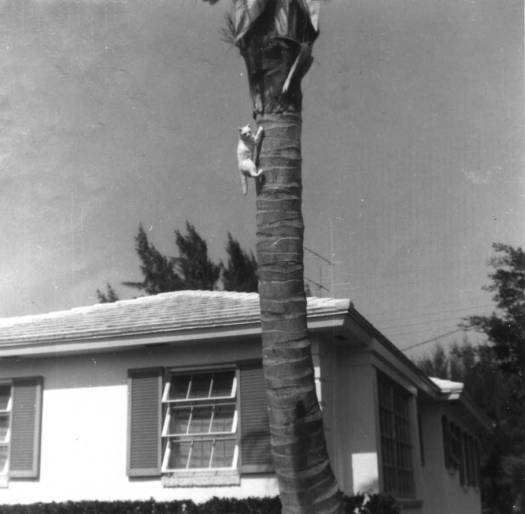
Late last week, Christian geneticist Francis Collins resigned abruptly as a researcher at the National Institutes of Health (NIH). On Wednesday this week, the U.S. Senate held a confirmation hearing for a new NIH director, Stanford University medical professor Jay Bhattacharya, a fellow Christian who Collins privately disparaged as one of “three fringe epidemiologists” during the COVID crisis.
I don’t see the “Stockholm Syndrome” business; I think that Francis Collins, for all of his achievements, is a product of a culture that is obsessed with moving up. His fault is that he made it what winning was the Vince Lombardi: the only thing. Along with Anthony Fauci, his trashing of Jay Bhattacharya and the other proponents of the Great Barrington Declaration was, IMHO, the most disgraceful thing he did during the entire COVID-19 fiasco. But that’s part of moving up: it’s not only elevating yourself, but putting down those who would challenge you for prominence.
Photo above: a climber in Palm Beach.
Jay Bhattacharya’s nomination is a demonstration of an old saw of mine: be nice to the people you meet on the way up, you’ll meet them again on the way down. So Collins has.
I’ll close by reproducing my thoughts on this subject in my 2021 post The Unsaid Lesson of Francis Collins:
If there’s one thing shocking about American Evangelicalism, it’s its blindness to the moral hazard of getting into the upper reaches of a society. Having been brought up in the upper reaches of this one, that moral hazard was definitely apparent.
And yet, with the “have it all” and “move up” mentality that permeates American Evangelicalism, there is a general blindness to that moral hazard. I’d be the first to admit that Francis Collins’ rise is amazing—and objected to by secular types–but the things which Fisher lays out should be expected in an era when moral corners are to be cut, especially in the biomedical field.
I think Evangelicals should be more careful about the way they lionise people who move up the way Collins has, and more importantly quit encouraging people to constantly push themselves into positions where they have to make decisions and compromises such as Collins has had to do. Do we really need to push our children into elite schools? Did we think about the compromises we would have to make in a major political movement? Questions like these and many others go unasked and unanswered in the Evangelical world, which is a major reason we ended up with Donald Trump. Many of the same elite-adjacent evangelicals (such as those listed above) who have blubbered about the support for Trump have pushed people into aspiring for high positions and secular success, which in turn encourages successful political action, which in turn…
You can’t have it both ways; make up your minds.
-
Beating the Bounds of Anglican Eucharistic Doctrine–The North American Anglican (Or More Accurately, Beating Around the Bush)
This is a long exposition of Anglican Eucharistic doctrine that mostly succeeds in making it look complicated.
I thought about doing a “blow by blow” on this, but I will restrict myself to referring my readers to my 2020 article on the subject, Overcomplicating Anglican Eucharistic Theology.

Sailing the Last Voyage with Newton and Pascal

