-
Is Generation Y That High Maintenance?
In the middle of everything else I do, last Friday I took time to attend the Annual Meeting of the Tennessee Section of the American Society of Civil Engineers in Smyrna, TN. I still do engineering activity (including this, this and this) and it’s good to get out and get updated.
Engineering meetings can be very boring, even for engineers. One reason why engineering curricula emphasise more and more communication and people skills (as opposed to purely technical ones) is that good engineering ideas frequently die in the public square for lack of effective presentation. (The less than satisfactory state of our math and science education doesn’t help either.) One session at the meeting that was anything but boring was the Engineering Management session, kicked off by one of the most provocative talks I have ever heard.
The presenter was Tiffany Coursey, PHR of Barge Waggoner Sumner & Cannon, an eminent Tennessee civil engineering firm. The topic was “Recruiting and Retaining the ‘Y’ Generation.” Generational distinctives have always been of interest to me. Her focus was on the generation born between approximately 1980 and 2000, and some of the things she shared were very interesting.
- The first was that that this generation is very bonded to their parents, so much so that they come into the workforce not having made any major decisions in their life. Parents are even involved in their job search and placement; she related that, when she turned down one prospect, same prospect’s mother called demanding to know why their child was rejected.
- The second was that this generation has an enormous amount of self-confidence, instilled both by their parents and their school system. Both of these and more have pumped this group up. (A good place to watch this in action was the Beijing Olympics, complete with the complementary abyss of defeat. Personally I found it hard to take; it came across frequently as arrogance.)
- The third is that this generation is totally technologically connected, both to their devices and to each other. That’s no surprise, but it’s important to underscore both for the benefit of the old timers and in an industry that in some ways pioneered such things as computer simulation and then lagged in using the technology for other things such as talking with each other. That connection changes very rapidly. Ms. Coursey related that she taught a Sunday School class of college and career people. She dutifully collected their emails, only to find out that few read them! They were all on MySpace and Facebook!
- The fourth is that this generation has a low tolerance for jobs and work environments they deem unsatisfactory. Don’t like a job or employer? Start hunting online for a new one, and let everyone else know that the one you’ve got sucks.
- The fifth is that this generation requires a higher degree of mentoring/coaching/interaction with management/handholding (take your pick) than their predecessors. You just don’t let this group “sink or swim” alone in a corporate environment.
- The sixth is that formal, higher education is a given. (That, too, is buttressed by the public school system. Just try to push for more vocational education and feel the brick wall you run into.)
Needless to say, these generalisations (and they need to be understood in that way) drew a lot of lively discussion that doesn’t usually take place at an engineering meeting. That discussion was spiced by the academics at the meeting, who by definition have more combat experience with this group than just about anyone else other than the aforementioned parents. They got into the issue of the inadequate preparation our self-lauding public schools give their students entering the college they feel is so necessary, and that was a whole thread unto itself.
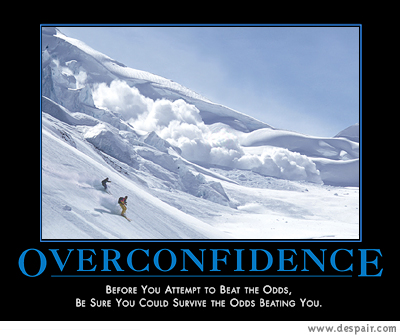
From all this, the employment challenges speak for themselves. I’d like to concentrate on two other aspects of this: the political, and how this relates to the church.
Politics
It’s no secret that the overwhelming majority of this generation supports Barack Obama for President. They have done so since the beginning of the Democrat primary process (which was a long time ago!) What Coursey set forth helps to explain why that’s so.
Back at the first of the year (when this primary process was moving into high gear,) I made the following statement:
…the Republicans’ core problem in moving forward this election year…simply put, is that Americans in general are less and less willing to be self-reliant, and a desire to be self-reliant is a key ingredient in a conservative society.
The characterisation of Generation Y only adds one more reason why this is so. A generation that tightly bonded to parents is simply not as self-reliant as those who went before, their own manifest shortcomings notwithstanding.
Both Barack Obama and Hillary Clinton promised a “nanny state” in response to this. But Obama ended up triumphing. Obviously he did a better job connecting to Generation Y in his style of campaigning. But there’s something else at work: he is, in effect, a surrogate parent for a generation used to looking to parents for so much.
It’s interesting to note that every dictator who has risen in a “democratic” setting (I’m specifically excluding the Marxists such as Lenin and Mao, who did so through revolution and civil war) has presented himself as a father to his people, and his country as the “fatherland” or something like it. Although the usual comparisons come to mind, the U.S. is a diverse country, which is more difficult to sweep than the more homogeneous societies of Europe. A more fruitful comparison might be Argentina’s Juan Peron, and his legacy in what was once one of the world’s richest countries speaks for itself.
It’s hard to see the future for true freedom (as understood by our society until now) in a country where so many are so used to so much supervision. That bodes ill for religious and political minorities (such as the Evangelicals) who have been demonised by the “powers that be” for so long. But that leads to another characteristic of this generation that Coursey brought up: they are diverse and tolerant. They see a fulfilment of that in Obama’s election.
Tolerance is doubtless the most oversold virtue our society has today. Looked at on a purely practical level, tolerance is the grease that allows a group of people who aren’t identical to mesh and get through life together. Underneath the obsession with tolerance is the primal fear that some of the group will be trashed if they don’t go along with the standard agreed on by “everyone.” That guarantees that the tolerance agenda will be self-defeating, because any time a standard is agreed on, some will always fall outside of it. It’s another road to enforced groupthink.
The tricky part for a Barack Obama, if he is elected, is fulfilling the unrealistic expectations of the overconfident in the face of the current economic situation. Will his followers stick with him like dutiful children to a parent? Will they bolt and go somewhere else, like a different job? Or will they just go to pieces, like the losers in Beijing?
The Church
I spend a lot of time lamenting just how ineffective the “Religious Right” is in impacting the agenda in this country. But, in some ways, this generation has been very much influenced by the social agenda of religious conservatives.
Too many abortions? The birthrate went up, and having children became fashionable again. Too large a disconnect between parents and children? The results speak of overcompensation. Drinking and smoking a sin? This generation grew up with the drinking age jacked up again to 21, along with relentless anti-smoking legislation. Nobody cares about everyone else? Voluntarism is today a form of corvée with this generation. Even prosperity teaching is reflected in the high self-confidence of this generation. I could go on with this.
Unfortunately, the church didn’t reap the benefit. This is for two reasons.
The first is that the church has wasted too much time trying to change society when it’s first task is to disciple those who come to it in Jesus’ name. That’s a parallel mistake to the one the trade unions made, as I note here.
The second is that Evangelicalism, with its populism and moral demands, is looked at by the elites of this country as an existential threat. Their response has been to cut it out of the tolerance agenda, something that was easily predictable and should have been planned for by Evangelical leadership. But it was not.
It’s hard to see how a faith which centres on conversion growth is going to get very far in a society where most of the potential converts are hog-tied to their parents and the system, and leaving unbelief has as much potential impact as a Muslim leaving Islam. That could be more than compensated for by a belief system with emphasis on the afterlife taking advantage of a general economic failure. But Evangelicalism itself is too tied to upward social mobility to take advantage of such an event.
The best factor going for Christianity today is the growth of foreign dominance in our society, necessitated by the enormous debt we owe the rest of the world. The Anglicans have got the drop on this. Internationalisation will be a hard pill to swallow for American Evangelicalism, but in the end the medicine will be good.
In the meanwhile, I’m just glad that I’m out of having to make personnel decisions.

Sailing the Last Voyage with Newton and Pascal
 Positive Infinity