-
Are People Who Don't Like the Manhattan Declaration Necessarily Bigots?
At the end of an otherwise interesting post, James Gibson at Sanctus makes the following parting shot:
The visceral reaction against the Manhattan Declaration is a case study in the evangelical ghetto mentality. Born in ignorance, it grows into bigotry and a most un-Christlike lack of charity.
If he was fishing for understanding, he needs to switch bait.
Back at the first of the year I put up a post entitled Why I Don’t Like the Manhattan Declaration. I would be the first to admit that it was informed by a generally Evangelical view of things. But does that make it born of bigotry, or even ignorance?
I am reluctant to call anyone a bigot, even when it’s obvious. These days it’s just too easy to throw the term around to demonise your opponents. The worst offenders in that regard are the LGBT community advocates, but there are others.
As I see it, the Manhattan Declaration is primarily a political statement, and should be evaluated as such. Political alliances don’t have the same standard of theological commonality as church unifications or even ecumenical efforts. Evangelicals or anyone else who apply such a theological standard are silly, and hopefully will see daylight when they’re rotting in prison with their Roman Catholic counterparts.
My ultimate take on the Declaration, as I stated earlier, is as follows:
The Manhattan Declaration contains many fine sentiments. Unfortunately one gets the feeling that it will lead to the leadership of American Christianity making the same mistakes they have in the past, and at this point we have neither the time nor the luxury to indulge ourselves in doing the same things over again we’ve done before.
-
Augustine on the Temptations of Jesus and the Three Major Lusts
Linking the three temptations of Jesus in the wilderness with the three major lusts outlined in 1 John 2 has a long history in Christian preaching. Here is an example from Augustine’s second homily on 1 John, with some bullet points for clarity:
These three (temptations) there are, and you can find nothing whereby human cupidity can be tempted, but either by the lust of the flesh, or the lust of the eyes, or the pride of life. By these three was the Lord tempted of the devil. (Matthew 4:1-10)
- By the lust of the flesh He was tempted when it was said to Him, “If you be the Son of God, speak to these stones that they become bread,” when He hungered after His fast. But in what way repelled He the tempter, and taught his soldier how to fight? Mark what He said to him: “Not by bread alone does man live, but by every word of God.”
- He was tempted also by the lust of the eyes concerning a miracle, when he said to Him, “Cast yourself down: for it is written, He shall give his angels charge concerning you: and in their hands they shall bear you up, lest at any time you dash your foot against a stone.” He resisted the tempter, for to do the miracle, would only have been to seem either to have yielded, or to have done it from curiosity; for He wrought when He would, as God, howbeit as healing the weak. For if He had done it then, He might have been thought to wish only to do a miracle. But lest men should think this, mark what He answered; and when the like temptation shall happen to you, say also the same: “Get behind me, Satan; for it is written, You shall not tempt the Lord your God:” that is, if I do this I shall tempt God. He said what He would have you to say. When the enemy suggests to you, “What sort of man, what sort of Christian, are you? As yet have you done one miracle, or by your prayers have the dead been raised, or have you healed the fevered? If you were truly of any moment, you would do some miracle:” answer and say: “It is written, You shall not tempt the Lord your God:” therefore I will not tempt God, as if I should belong to God if I do a miracle, and not belong if I do none: and what becomes then of His words, “Rejoice, because your names are written in heaven”?
- By “pride of life” how was the Lord tempted? When he carried Him up to an high place, and said to Him, “All these will I give you, if you will fall down and worship me.” By the loftiness of an earthly kingdom he wished to tempt the King of all worlds: but the Lord who made heaven and earth trod the devil under foot. What great matter for the devil to be conquered by the Lord? Then what did He in the answer He made to the devil but teach you the answer He would have you to make? “It is, written, You shall worship the Lord your God, and Him only shall you serve.” Holding these things fast, you shall not have the concupiscence of the world: by not having concupiscence of the world, neither shall the lust of the flesh, nor the lust of the eyes, nor the pride of life, subjugate you: and you shall make place for Charity when she comes, that you may love God. Because if love of the world be there, love of God will not be there.
Hold fast rather the love of God, that as God is for ever and ever, so you also may remain for ever and ever: because such is each one as is his love. Love earth, you shall be earth. Love God, what shall I say? You shall be a god? I darenot say it of myself, let us hear the Scriptures: “I have said, You are gods, and all of you sons of the Most High.” If then you would be gods and sons of the Most High, “Love not the world, neither the things that are in the world. If any man love the world, the love of the Father is not in him. For all the things that are in the world, is the lust of the flesh, and the lust of the eyes, and the pride of life, which is not of the Father, but is of the world:” (1 John 2:15-17) i.e. of men, lovers of the world. “And the world passes away, and the lusts thereof: but he that does the will of God abides for ever, even as God also abides for ever.”
-
While Watching for the Oil Spill, a Bomb Shows Up
South Florida is riveted on the BP oil spill and the Loop Current, but in Manalapan they’ve got other things washing on the beach:
A suspicious device washed ashore on the beach this morning, prompting a call to the bomb squad, police said.
Manalapan Police and the Palm Beach County Sheriff’s Office bomb squad investigated the device, which was found about 10 a.m. in the 1300 block of South Ocean Boulevard. Part of the roadway was closed during the investigation, but has been reopened.
Indications are that the device belongs to the military and bomb squad personnel are currently coordinating with the military to remove it, Manalapan Police Lt. Carmen Mattox said.
-
The Greatest Ambition: Jerome on Psalm 84
Another gem from Jerome’s Homilies on the Psalms, this time Psalm 84 (from here):
“How lovely are your tabernacles, O Lord of hosts!” The sole ambition of some people is to possess property; others long to be enriched with the wealth of the world; still others wish to hold prominent places at conventions and be esteemed among men. But for me, there is only one longing: to see Your eternal dwelling places. To me, those are the lovely dwelling places where the virtuous and not the vicious congregate. “My soul yearns and pines for the courts of the Lord.” This is my one desire, this my only love, that I may see Your courts. Notice the order. First, he longs for the tabernacles, tents without a foundation and easily portable. A tent, moreover, is always on the move, folded up and carried hither and thither. Courts, on the other hand, although certainly not houses, do have a kind of foundation, and from the court we enter the house. Our psalmist, therefore, at first longs for a tabernacle, and then afterwards pines and yearns with love to see Your courts; and when he is in Your court, then he cries out: “Happy they who dwell in your house!”
-
The Tree of Life, Psalm 1 and Jerome
The Tree of Life has been a topic of special interest to me since I made the connection with the lignum vitae (The Tree That Grows in Heaven.) Here is Jerome’s linkage of Psalm 1 with the other allusions to the tree, from his Homilies on the Psalms (from here):
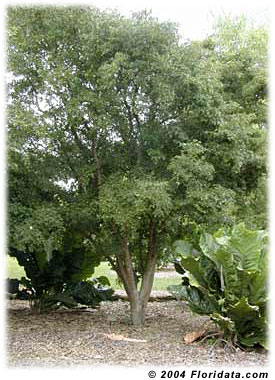 “He is like a tree planted near running water, that yields its fruit in due season, and whose leaves never fade” There are many who interpret these words very simply to mean that just as a tree, if planted near water, will take root and grow and not wither away because it has enough moisture, so in like manner one who meditates on the law of God will derive strength and life from his meditation. This is their simple interpretation. But we shall combine spiritual things with spiritual things and read of the tree of life that was planted in Paradise, the tree of life and the tree of the knowledge of good and evil. This tree of life was planted in the Garden of Eden and in Eden there rose a river that separated into four branches. Likewise we read in Solomon – if one accepts that book as Solomon’s, for he speaks there of wisdom (Christ the power of God and the wisdom of God) – so then, as I was saying, where Solomon says: “She is a tree of life to those who grasp her” he is speaking of wisdom. Now, if wisdom is the tree of life. Wisdom itself, indeed, is Christ. You understand now that the man who is blessed and holy is compared to this tree, that is, he is compared to Wisdom. Consequently, you see, too that the just man, that blessed man who has not followed in the counsel of the wicked-who has not done that but has done this-is like the tree that is planted near running water, is. in other words, like Christ, inasmuch as He “raised us up together, and seated us together in heaven” You see, then, that we shall reign together with Christ in heaven; you see, too, that because this tree has been planted in the Garden of Eden, we have all been planted there together with Him.
“He is like a tree planted near running water” Indeed, it is from that fountain-head that all rivers take their rise. “That yields its fruit in due season” This tree does not yield fruit in every season, but in the proper season. This is the tree that does not yield its fruit in the present day, but in the future, that is, on the Day of Judgement. This is the tree that bears blossoms now, that buds forth now, and promises fruits for the future. This tree bears twofold: it produces fruit and it produces foliage. The fruit that it bears contains the meaning of Scripture; the leaves, only the words. The fruit is in the meaning; the leaves are in the words. For that reason, whoever reads Sacred Scripture, if he reads merely as the Jews read, grasps only the words. If he rends with true spiritual insight, he gathers the fruit.
“And whose leaves never fade” The leaves of this tree are by no means useless. Even if one understands Holy Writ only as history, he has something useful for his soul. We read in the Apocalypse of John (a book which, although rejected in these regions,we ought nevertheless to know, because it is accepted and held as canonical throughout die West, and in other Phoenician provinces, and in Egypt, for the ancient churchmen, including Irenaeus, Polycarp, Dionysius, and other Roman expounders of Sacred Scripture, among whom is holy Cyprian, accept and interpret it): “Behold, I saw a throne set up, and one Lamb and a tree alongside a river, and on both sides of the river was that tree.” This means that the tree was both on this side and on that side of the river. “And this tree” he says, “bore fruit and was yielding its twelve fruits for the year according to each month. And it had leaves, too, and the leaves for the healing of the nations”.
“I saw” he says, “a single throne set up” We believe in the Father, and the Son, and the Holy Spirit, that is true, and that they are a Trinity; nevertheless the kingship is one. ”I saw a single throne set up, and I saw a single Lamb standing in the presence of the throne” This refers to the Incarnation of the Saviour. Scripture says: “Behold the lamb of God, who takes away the sin of the world!” – “And there was a fountain of water corning forth from beneath the middle of the throne.” Notice that it is from the midst of the throne that there issues forth a river of graces. That river does not issue forth from the throne unless the Lamb is standing before it, for unless we believe in the Incarnation of Christ, we do not receive those graces.
A tree, he says, one lofty tree had been set up. He did not say trees, but only one tree. If there is but one tree, how can it be on both sides of the river? If he had said, I saw trees, it would have been possible for some trees to be on one side of the river and other trees on the other side. Actually, one tree is said to be on both sides of the river. One river comes forth from the throne of God-the grace of the Holy Spirit-and this grace of the Holy Spirit is found in the river of the Sacred Scriptures. This river, moreover, has two banks, the Old Testament and the New Testament, and the tree planted on both sides is Christ. During the year, this tree yields twelve fruits, one for each month, but we are unable to receive the fruits except through the apostles. If one approaches the tree through the apostles, he must receive the fruit; he gathers the fruit from the Sacred Scriptures; he grasps the divine meaning abiding within the words. If, therefore, one comes to this tree through the apostles, he gathers its fruit just as we have said. If, indeed, he cannot pluck the fruit, it is because he is still too weak; he is not yet a disciple, but belongs to the throng; he is an outsider, a stranger from the nations. Because he cannot pluck the fruit, he plucks only words, the leaves for the healing of the nations, for it is written: “and the leaves are for the healing of the nations”. One who belongs to the nations, who is not a disciple, who is as yet only one or the crowd, gathers only leaves from the tree; he receives from Scripture plain words for a healing remedy. Briefly, then, the Scripture says; “and the leaves of the tree are for the healing of the nations”; in other words, the leaves are medicine. Why have we digressed on the Apocalypse? Simply because of that tree “that yields its fruit in due season, and whose leaves never fade. Whatever he does prospers.”
We have discussed the happiness of the just man. We spoke of his reward. Because of the three things he did not do and the two things he did do, he was compared to the tree in the Garden of Eden, to Christ, who is Wisdom. We have said all this about the holy man.
-
Mexico: The Tax Haven for Those Who Survive the Lead Rain
No kidding, this, from Rubin on Tax:
A theme we have often mentioned is that capital flows to where it is best treated. Obviously, the level of tax imposed on businesses is a key element of how capital is treated in any given jurisdiction.
A 2010 KPMG guide analyses the current tax competitiveness of 10 major countries, and 41 major cities in those countries. Among those countries, Mexico provides the best overall tax environment, with Canada following closely in second place. Japan and France find themselves in the highest tax positions at number 9 and 10 respectively. Below is the table published in the report:

Note that the tax competitiveness analysis also includes a currency factor so that the results are not entirely based purely on tax issues.
We’re even behind Canada and the UK, home of the Beatles’ favourite “Taxman!” And everyone (except for the Japanese) have relative taxes decreasing, too.
If Mexico can ever gets its drug cartels to stop filling the air with lead, there’s hope for the land where everything is different.
-
Christians Will Be Unpopular
From J. Vernon McGee’s Through the Bible, commenting on John 15:18-19:
Notice what will happen if you are a child of God. The world will hate you. I believe that a Christian’s popularity can be an indication of how he is representing Christ in the world. I do not believe a Christian can be popular in the world. No Christian has any right to be more popular than Jesus was. Beware of a compromising position in order to be popular. The world will not love a real child of God. The world will love you if you are of the world. You don’t have to act oddly or be super-pious. The world will hate you if you are a child of God. This is difficult, especially for young people who want so much to be popular. Let’s tell our young people what the Lord says. They are not going to be popular with the world if they are the children of God. (Vol. IV, p. 470)
Although he put this down about four decades ago, this is truer now than then. The 1970’s was an exciting time to be a Christian, but it wasn’t always an easy one. Many of the same opposing agendas we see today–to say nothing of the general temptations–are still out there. Many of the people who blew us off then are in positions of power and influence today.
Unfortunately Evangelical Christianity went through a period of collective amnesia in the 1980’s, that amnesia reinforced by prosperity teaching, which has become very pervasive in the church. To achieve material prosperity in the degree that its proponents claim–and I take their claims at face value–requires a broad degree of the popularity that Our Lord didn’t promise us. To tell people unremittingly that they will receive a golden rain from heaven and then hit the wall with the world around them will result in what I like to call a “cognitive dissonance” moment, which is never pleasant.
The other problem is that it’s really harder to go “against the tide” now than then. The ersatz individualism of the 1960’s has morphed into the well-disguised groupthink we have now. It’s harder for a young person to buck the trends now than it was when McGee made his commentary. The church as a community needs to back its young people in that endeavour rather than to always try to rack up numbers with “lowest common denominator” programs.
-
Recognising the Inevitable Split in the Anglican/Episcopal World
Many of these orthodox may not yet be fully conscious of this change. It is in some ways subtle, in the tone and frequency of blog posts and other communications among those who have for so long been engaged in this fight. There is a sense of resignation that TEO is inexorably going to do what it will do to convert itself into a secular, social-justice based organization, using the Bible only insofar as it can be turned to justify their secular goals. If one is not yet convinced, the upcoming Glasspool consecration should be the nail in the proverbial coffin of belief in the possibility to “reform” TEO back into a Christian organization.
GAFCON has, through Archbishop Kolini, specific actions to be taken within the overall Communion to advance the cause of the orthodox, including probably rejection of the Covenant. In so doing, is it possible that a line has been drawn in the sand that could lead to the orthodox, particularly the Global South, rendering Canterbury further down the road toward complete irrelevancy? And, GAFCON’s open embrace of Abp. Bob Duncan, +Mark Lawrence, and others from among the North American orthodox clergy is an obvious step away from Canterbury.
My question is this: why did anyone think it would turn out differently?
In the years since I’ve been a part of the Anglican/Episcopal blogosphere, I’ve worked under the following assumptions:
- The Episcopal Church is irredeemably revisionist, and that’s putting it politely. It’s been that way since the days of wine and James Pike and the local resistance movements haven’t changed the general character of the church. A “new deal” for North American Anglicans is needed, with or without the previously occupied property.
- The Church of England, for reasons political and otherwise, cannot be counted on to buttress the orthodox, irrespective of its Evangelical and Anglo-Catholic constituencies.
- The best hope for a serious orthodox Anglicanism in the world is, literally, out of Africa. This is also good for everyone else, because it fulfils the promise of a multicultural body of believers (not sceptics) that is embodied in the New Testament from Acts 2 onward. I know it’s inspired me to look at my own church in a different light.
- The Anglican Covenant is not only a non-starter in a group of churches which is so divergent in belief; it’s a conduit for all kinds of First World mischief to be propagated through money favouring.
It’s sad if understandable to read of blog post after blog post of people who have some kind of hope that an infusion of ecclesiastical authority coming from somewhere (Canterbury is the usual object of affection) will make things “all better.” But we all know that the gap between the promise of hope and change vs. the reality can be very dramatic.
The good news is that Anglicanism, thanks to the dedication of many, the medium of the Internet, and the blessings of God, has done things I wouldn’t have thought were possible, had I not seen them for myself. It’s time to celebrate what’s good and move forward with the mission that Our Lord left us and not worry so much about how we might have liked for things to come out.

Sailing the Last Voyage with Newton and Pascal
 Positive Infinity