-
My Lord and My God: Divinity and Infinity
For an introduction, explanation and links to the entire work, click here.
Having cleared up the matter of the Son being “created” or more informatively “generated” we must turn to the problem of the Son being God and subordinate to the Father at the same time. Like the generation of the Son, this is a problem that only became a serious one with the coming of Arius.
As we have seen, ante-Nicene church fathers had no trouble envisioning the Son and the Spirit as subordinate to the Father. The reason for this is twofold. The first reason is that the Bible clearly taught this subordination. Those who weren’t bogged down in philosophy weren’t concerned with the technicalities of such a declaration; God said it, they believed it, and that settled it. Those who were concerned with philosophical niceties could console themselves with the second reason: the whole universe and everything in it was set up in a hierarchical manner; numerous philosophical schools affirmed this.
Arius, however, mindful of the philosopher’s concept of God such as we have presented earlier, couldn’t see how subordination could exist with all of this primal omni-everything, so he simply rejected the idea of the Son and Spirit being God. Having disposed of this problem, he could happily affirm the subordination of the Son because the Son, being an ordinary creature, would be subordinate to the Father like everyone else. This was one of the appeals of Arianism in its early stages; as long as the Son was important to salvation and subordinate to the Father, many couldn’t see the problem in it.
Trinitarians examined this problem at length and realised that they could agree with the Arians on one point: they couldn’t see how the Son and Spirit could be God and subordinate at the same time either. So Trinitarians, while making the usual allowances for the procession of the persons of the Trinity, basically stated that the Father, Son and Spirit were equal. They found it easier to take this position against the Arians rather than to attempt to work out a way by which the Son and Spirit could be subordinate to the Father. Put another way, faced with the choice of denying the deity of the Son versus his subordination, the Trinitarians chose to jettison subordinationism to preserve the deity of the Son and the Spirit.
This was an entirely sensible and correct choice; recognising that the Son is God is too important to the whole plan of salvation to sacrifice it for the concept of subordinationism. It also made sense in the Greek philosophical system of thought that prevailed at the time. In doing this we lose an important Biblical concept for philosophical reasons that are largely forgotten.
This is one place where Greek philosophy, which furnished Judaism and Christianity (and even Islam in the early years) with some very powerful assistance in understand the nature of God, really fell flat, where the living God of the Bible, who could feel regret and take on the sin of the world, was deprived of these freedoms for the sake of a perfectionistic concept. We need to find another vehicle to examine this subject. We could of course resort to a mystical, subjective approach to the problem, and many have, but since we have worked on an objective plane up to now, we need to stick to it.
Enter the Mathematicians
They who are of the priesthood, or of the clergy, shall not be magicians, enchanters, mathematicians, or astrologers; nor shall they make what are called amulets, which are chains for their own souls. And those who wear such, we command to be cast out of the Church.[1]
It is with a little sense of apprehension that we approach this topic in the way we do, not only because “scientific” explanations of spiritual phenomena frequently fall flat but because of people’s perceptions of math itself. Involving mathematics in a pursuit such as this conjures images of a mad Unabomber blowing up things and people for arcane reasons.
The reason why we have resorted to this, however, is rather simple: mathematics deals more informatively about the concept of infinity better than any other branch of science or art for that matter. Theologians routinely throw out such terms as “omnipotent,” “omnipresent,” “omniscient” and others about God; each of these described a quality (all of which are essentially God’s in any case) that is infinite. While theologians can set these things forth and leave them, mathematicians must actually deal with infinity, sometimes in a theoretical way, sometimes in a practical one. If we can use the concept of infinity to understand the nature of deity then we can make some more realistic assessments of the situation and hopefully understand better what we see in the Scriptures rather than throwing up our hands in confusion.
In employing mathematics to understand these things, we must be careful not to get so far into our analysis that we either lose sight of the main object or lose the comprehension of most of the people we are communicating with. Fortunately the mathematics we employ are relatively simple and, better yet, can be described with pictures and graphs. So we can proceed with some confidence that we will not lose everyone in the process.
Life in One Dimension
Let us begin by considering the one dimensional co-ordinate system shown below.

We have a line that extends from negative infinity to positive infinity. At the “centre” of this line is the origin, the point “0.” Extending to the right is the positive part of the line, divided up into spaces indicated by the tic marks. These spaces can represent any unit of time, space or whatever you might imagine: inches, feet, meters, seconds, years, etc.. For our present purpose we plan to discuss this as the time line for the entire universe so these units are units of time of whatever length you care to think of.
If we look at this we see that the origin is at a certain spot on the line. However, this is an entirely arbitrary decision. In the course of using co-ordinate systems to describe physical phenomena, people find it convenient to do something called “co-ordinate shifting,” which means moving the origin from one point to another. For example, if they are using the co-ordinate system to describe the motion of an object, and that object starts at a certain point, it makes sense to set the zero point of the co-ordinate system to the place where the object’s motion actually starts.[2] This makes calculations easier later.
If we employ co-ordinate shifting on the time line of the universe, we can place the origin at any point we like. In fact we have been doing this all along. The Jews (and Christians for many years) defined the year “zero” at the point of creation; Christians then took up the idea of having dates from the birth of Jesus Christ, even though they didn’t hit the event accurately when they set up the “co-ordinate system” of the years. Muslims picked Mohammed’s flight from Mecca to Medina in 622 as their origin; to make matters more complicated, they adopted a lunar calendar, which means that the length of the years (the distance between the tic marks mathematically) is different. These are straightforward examples of co-ordinate shifting in time. To change from one to another can be confusing to us with all of the associations of time we have but as we see we can define a point in time in literally an infinite number of ways.
The one thing that doesn’t change, however, is that the origin – wherever we place it – is always at the centre of the co-ordinate system! The reason for this involves the nature of infinity. No matter how far to the left or the right we move the origin, it is still an infinite distance (or strictly speaking a semi-infinite distance) from the origin to infinity. No matter how far the origin goes, it never reaches the infinite point, nor gets any closer, because the remaining distance is infinite. John Newton put it very succinctly in “Amazing Grace:”
When we’ve been there ten thousand years
Bright shining as the sun
We’ve no less days to sing God’s praise
Then when we’ve first begun.Theologians and philosophers say that God’s existence is limitless in time; mathematicians would say that God exists from negative infinity (-∞) to positive infinity (+∞) (cf. Ps. 90:2) and at all points in between. Thus at once we set very definable “limits” for God’s existence, yet in reality they are not limits at all.
Having set forth both the co-ordinate system and its relationship to the universe, let us make some observations based on both. The first is that there is no real proportion between anything finite and infinity. By “proportion” we generally mean division; any finite quantity divided by infinity is, in reality, zero.[3] On our co-ordinate system, this means that, no matter how long of a finite distance or time period we consider, it is basically nothing in comparison to the infinite time period God exists in. This certainly helps us in conceiving of the real nature of the proportion of God’s existence and his essential attributes as compared to ours; such a comparison is certainly Biblical.
Second, there is certainly nothing impossible about the Son and the Spirit being generated at -∞. It is as valid a point on the time line as any other. It is both this possibility and this necessity that we established in our discussion on the nature of the arche in John 1:1. In fact, we can say that -∞ is in fact the arche of our co-ordinate system; however, we could also say that +∞ is likewise an arche of our system, and that God (and only God) exists at both. Put another way, we could say that α=-∞ and ω=+∞; this is certainly correct since the Scriptures teach that God, the “Alpha and the Omega,” is at both. So we have further illustrated the nature of the arche relative to the whole co-ordinate system, and thus to the entire universe.
Using this to clarify our examination, we have said that the Father is the arche and exists from -∞ to +∞. We have also said that the Son and the Spirit were generated at -∞ and exist to +∞. In doing this we have removed the time proportion of Father, Son or Spirit relative to anything that is finite in nature. This is an essential attribute of deity. There was never a time when the Son and the Spirit did not exist, but on the other hand if we say that the Father generated the Son and the Spirit at -∞ we can maintain at the same time the priority of the Father, as we see in the Scriptures.
Turning to the creation, since it was created ex nihilo, there was a time when the creation – both material and spiritual – did not exist. Let us consider this event as our zero point, which is fine since the selection of this zero point is arbitrary. The time before this point is infinite, and the time afterwards is likewise infinite.[4] As we said before, if we consider the position of this point relative to infinity, then its position becomes irrelevant, because any point we choose is in the centre of the co-ordinate system. This should help us in answering the question “Why did God create the heavens and the earth when he did?” because the specific time is in reality not a serious consideration relative to God. We can also say that any other finite point of time is the same distance from either infinite point; thus, time in general is not significant relative to God, as we have said before.
We now must consider the course of the universe after this event. The end of the universe and of matter is a debatable point, because we know from physics that matter (or more accurately the matter-energy continuum) cannot be created or destroyed, but only transformed. Since we have undermined the first point (it had to come from somewhere[5]), we could say that at the end of time matter would be destroyed. But the Scriptures do not necessarily teach this; the end of “things” can either be taken to be their annihilation or their transformation. But we know that spiritual beings have an eternal existence from the time of their creation forward.[6] This leaves them, however with at best only half of the existence in time as God has and furthermore they are subjected to other limitations such as limited intelligence, lack of omnipresence and omnipotence, etc.
We have thus seen that the mathematics that we have employed are useful in quantifying (if that term can be intelligently used relative to infinite matters) the relationship between God and his creatures. We have seen that, in drawing the analogy between an infinite God and infinity as a mathematical quantity, we can understand more about what it really means for God to be infinitely anything and everything that he is. We also see that the existence of created beings cannot be compared with God except that, if they have existence at -¥, they can be said to exist in a sense half as long as God has. Our one dimensional graph – as is the case with the Greek philosophers and their Christian students – cannot explain how the Son and the Spirit can be both subordinate to God and God at the same time, so we must expand our view on this subject.
A Broader View
Let us consider the co-ordinate system as shown below.

Instead of the one-dimensional representation we have been used to up to now, we have a two dimensional representation.[7] The following discussion could apply to co-ordinate systems of more than two dimensions but it is simpler to discuss a two-dimensional representation.[8] We also should note that co-ordinate shifting applies to this system as it does to our one dimensional one; moreover, in addition to the translation (linear movement) of the origin we can also rotate the co-ordinate system relative to its original orientation; we also have the option of doing both. Now let is superimpose a circle in the centre of the co-ordinate system of a finite radius as shown below and consider the area contained within.

We know that the area of this circle, as long as the radius is finite, is also finite. We also know from our previous discussion that, if this area is compared with any area with a boundary at infinity, then there is no comparison; the division results in essentially zero. Our use of the term “boundary at infinity” is mathematically sensible but in reality an understatement, since there is no boundary properly at infinity. It makes no difference how far the circle (or any other shape) is extended, as long as it is finite then any comparison with (division by) infinity results in zero.
Now let us look at an area that encompasses the entire co-ordinate system.

We now have an area that is infinite; its “boundary” is at infinity at all points and angles. No matter in what direction from the origin one goes we are still within the area. If we consider the finite area of the previous graph and divide this by the infinite area of the present one, we will still obtain zero.

In this graph we see an area that takes up “half” of the co-ordinate system. It is infinite in all directions to the right of the origin. Its area is likewise infinite because it has a boundary (in this case a 180° boundary) at infinity. Moreover, if we shift the origin in either direction, or rotate the co-ordinate system, the area is still infinite, no more or less so than in the original position.

We previously set forth an area which makes a 180° fan about the origin. We should note that this angle can vary, as we see above. It is important to note, however, that if the angle is greater than zero then the area is still infinite, as the area contains a boundary at infinity. As before any finite area has no meaningful proportion to this infinite area irrespective of how large or small the angle is as long as it is non-zero.
Up to now we have gone through very quickly some very detailed mathematics about areas. It is time to apply this to the matter at hand and come to some definite conclusions.
We need to be clear from the very start that what we are dealing with here is a group of analogies. It is not our purpose to make an exact mathematical representation of the Godhead. Analogies concerning God and the Trinity have been used since the subject first came up. The advantage in using a mathematical analogy is that mathematics can be used to precisely quantify and qualify things that do not have a physical representation, and certainly spiritual things fall into that category. However, we should be aware that it is no more possible to make an exact model of the Godhead using mathematics than with anything else. We are dealing with things that are beyond finite intellectual definition.
So what are we to make of these areas? The areas represent the extent of God’s activity and being, which are both one and the same with God. For such an area to make sense for deity it must be infinite; moreover in being infinite we can draw lines within the area that are infinite, just as the one-dimensional time line is infinite. We should note that these areas are not specifically meant to deal with time progression, although one could pick one of the axes to do this.
If we consider an area, we can consider any number of lines or curves within the area, or even sub-areas within the area. These can be considered to be the various aspects of God’s being, and thus his activity. We should be careful how we delineate these because we are normally used to categorising God’s attributes — power, love, eternity, knowledge, etc. – into a few categories. But these categories reflect how we look at God. Since God is one such categorisation is for our convenience.
The voids we see in the later graphs may be more instructive. In these graphs the area under consideration is still infinite and still has a border on infinity. But there are parts that are missing. What could these parts consist of? What could be missing in God, be it Father, Son or Holy Spirit? It is neither our place nor desire to deprive God of anything, even if it were possible (which it is thankfully not.) The Scriptures, however, speak of things that indicate the existence of these blank areas; some examples are as follows:
- The Son does not know things the Father does. (Matthew 24:36)
- The Father has reserved certain decisions to himself. (Matthew 20:23, Matthew 26:42, John 5:30)
- The Father is greater than the Son. (John 14:28) It is important to note here that the difference here is “greater” and not “better;” it is quantitative, not qualitative.
- The Son was sent to take away the sins of the world, which he did. (John 1:29) How is it possible for the Son to accommodate these sins?
Such things are explained by the voids.
Let us start by stating that the Father – the arche – can be likened[9] to our graph with the entire co-ordinate system part of the shaded area. He is infinite in all respects. There is no comparison to him by any finite creature. Movement by him is meaningless – and philosophically non-existent – because he extends to all infinities completely. Beyond the Father, beyond God, a beyond cannot be said because it does not exist.
Next we may consider the Son as an infinity with a non-zero angle. He is still infinite, but not as great as the Father. Let us assume for simplicity’s sake that that angle is 180°. Strictly speaking this makes the Son “semi-infinite,” but still infinite. Under this assumption the Son is, for practical purposes, half of the Father, but it is important to note that there is in any case some kind of reasonable comparison to the Father. If we turn to comparing the Son to finite creature we discover once again that there is no comparison – no proportion – between the Son and creatures because the Son is infinite.
This then is the key to John 17:3 and indeed where our analysis reaches the critical moment. Jesus, preparing to go to the Cross for our redemption, accurately calls the Father “the only true God.” Why? Because the Father has the quality of “infinity” in all directions, while the Son (and presumably the Spirit as well) have it only in some, albeit having been generated at -∞. Jesus could look at the Father from the garden and, understanding this proportion (or something like it[10] could call the Father the only true God. On the other hand we, finite and created at a certain point in time as we are, have no proportion with either the Father, the Son, or the Spirit; they are all God in the true sense of the word. So we have established the reason why Jesus could on the one hand call the Father the only true God and himself be really God as well.
The one difficult question that comes out of this concerns the proportionality of the Son and the Spirit to the Father. We know that it is less than unity, but how much? This is a question that the Scriptures are loath to answer. Among those who maintain both the deity and the subordination of the Son and the Spirit, there is variance in this. We have seen that many ante-Nicene thinkers such as Origen were prepared to make this proportionality very small; this makes some very nervous. At this point we are in the realm of speculation, something that is very dangerous, but we need to at least hypothesise a bit about it.
If we stick to the “pie shaped” diagrams that we presented above, we said that, as long as the “angle” (which establishes the proportionality) is between 0° and 360°, then we have something reasonable, although small angles, as we have said before, make some uneasy. We should like to present an interesting alternative for consideration.

This depicts an area that encompasses the entire co-ordinate system except for a line directly to the left of the origin (the negative x-axis in Cartesian co-ordinates.) The angle is of course 360°, but we leave out the line where the angle starts and ends. This line of course has zero width as is the case with all lines; the line is depicted with additional thickness for visual purposes. Since the line has zero width it has zero area; thus, this area is the same as the one for the entire co-ordinate system. We see, however, that this area is not continuous as the previous one but has a break, a break that extends back to infinity. Such a break is referred to as a “branch cut” and is important in complex analysis.
Where We Stand
We have completed a very unusual analysis of the concept of the subordination of the Son and the Spirit within the Godhead. Our purpose is not to denigrate the Son and the Spirit but to show that their subordination, which is taught in the Scriptures, is not contradictory to their divinity. We have employed mathematics to accomplish this because it is a convenient language to do so; it contains the concept of infinity while at the same time enabling us to look at such infinity in a multi-faceted way.
The main weakness of Greek philosophy in this regard is that it looks at the unique existence of divinity in a one-dimensional way; divinity according to this model has characteristics that do not really describe the relationship amongst the Father, Son and Spirit. To make a Trinitarian concept work in this framework either involves the denial of the deity of the Son or the denial of his subordination to the Father. From a strictly Biblical view this is unacceptable, but its upholding of the divinity of the Son has outweighed this problem for many years, and certainly still does as opposed to Arianism.
The evident question now is this: what use is all of this, other than making the Arian’s life miserable? We want to turn to this subject now, while at the same time investigating the basic reason why Arianism failed in the first place and why it is not a viable system of belief now.
[1]Canon 36, Synod of Laodicea. In this case “mathematicians” are those “who hold the opinion that the celestial bodies rule the universe, and that all earthly things are ruled by their influence.” (Balsamon) Such activity presupposes that the stars, planets, etc. are living beings, a very common belief in antiquity.
[2]We should note that co-ordinate shifting in more than one dimension can involve both rotation of the co-ordinates as well as translation of the origin. However, in one dimension it should be obvious that only translation can be done.
[3]This is a simplification of how one would state this mathematically. Strictly speaking, this should be stated as
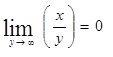
assuming x is a finite quantity.
[4]Strictly speaking, the correct term for this is “semi-infinite.” This means that something is infinite in “one direction.” With a line, it proceeds from a point to infinity in one way; with a plane, it is everything from one side of a bisecting line onward; in a three dimensional space, it is everything on one side of a bisecting plane, etc.
[5]This is a complicated point because even people who admit that the universe was created at one point in time deny the occurrence of creative miracles because they contend that matter cannot be created further. But it should be evident that, if God had the power and intelligence to create the universe in the first place, he could create other beings or matter at a later time. It should be clear, though, both that matter cannot be created by natural means and that God is capable of using pre-existent matter for his own purposes, in addition to retaining the option of a fully creative miracle.
[6]We are aware that our friends in the Watchtower teach that many beings are annihilated as opposed to receiving eternal punishment. But this does not affect our argument because at least some created beings according to their own teachings remain forever.
[7]We have elected to use a polar co-ordinate system as opposed to a Cartesian one. The reasons for our choice are rather involved but it will make some of the following discussion simpler. As was the case with the “zero” point on the one dimensional system a choice of co-ordinate systems can be made to make the solution of a given problem simpler.
[8]Three-dimensional systems are the first ones to come to mind, although mathematically any number of dimensions can be represented. The physical representation of more than three dimensions, however, becomes difficult.
[9]We choose this word very carefully; it is the same word Jesus used to compare the kingdom of Heaven to various things.
[10]This proportion manifested itself in a number of ways which we have already seen, i.e., the fact that Jesus did not know the hour of his return, that the Father’s will prevailed in the garden and on the cross, etc. The most important aspect of this concerns how the Son could take on the sins of the world; this will be dealt with later.
-
An Interesting (?) Exchange on Health Care
Recently a friend of mine posted the following on Facebook with the following caption: “He says Vladimir Lenin, founder of Communism in Russia, believed socialized medicine was the key to a socialist government”.
To which I added the following:
At the other end of the Soviet Union, the health care system–such as it was–was a place of corruption and inefficiency. It was widely known and practiced to bribe the doctor to get something done. Another reason why the USSR collapsed?
To which one of his left-wing friends came back as follows:
That May be what Lenin believed but it does not make it true. And There is a pesky fact which gets in the way here. Every developed OECD nation (decidedly not socialist in economic form) has a form of health care or universal insurance scheme. And a final pesky fact: Obama care is a Market based system where private insurance companies supply the insurance coverage. How is that socialist? Just curious. Don and Mr. Carson need to do a bit of reading.
And I, seldom at a loss for comeback, returned fire as follows:
No, Don doesn’t, at least not on this subject.
My statement is factual re the late years of the USSR, and you can’t deny it. Life expectancy was going in reverse, to boot, and the health care system (along with their appalling environmental record) was part of the problem.
As far as the difference between Obamacare and nationalised health care in the rest of the world, the difference is simple.
In most of the world, the minimal objective of universal health care is crappy, mediocre health care at 10% of GDP.
The end result of Obamacare (assuming the system doesn’t get completely nationalised along the way) will be crappy, mediocre healthcare at 18% of GDP. This is progress? Not only that, other systems are a lot simpler: you pay a tax, you get health care, instead of this Byzantine…system we’re getting saddled with.
Lowering the GDP portion will leave people more money to travel elsewhere when they need medical procedures in an expeditious fashion. That’s common practice in the rest of the world.
I’ve drawn some analogies between the old USSR and our “new” health care system here. But the truth of the matter is that the “Affordable Care Act” is the worst of both worlds: it’s neither a real market solution nor a good universal coverage one.
-
The Easy Way Out for Frederica Mathewes-Green (and everyone else) on Gay Marriage
Her series on this is a little different:
I could sum it up: 1, I haven’t spoken out against gay marriage because I don’t see it damaging marriage any more than straight people have already done.
2, my spiritual tradition has found by experience, over millennia, that sex apart from hetero marriage damages one’s spiritual health. (Actually, a lot of world religions have observed the same.) This is just one part of a much larger process of spiritual therapy, and I don’t expect it to make sense to those outside the faith. It’s certainly not the thing I’d first want to talk about with nonbelievers. Jesus comes first. So, as far as this issue goes, I just want to live and let live.
I’ve differed with her before on issues. In this case, however, I think her greatest fault is that she has both oversimplified and overcomplicated the issue at the same time.
Let’s start with the positive: she’s right that straights have damaged marriage in a serious way. And her statement about sex apart from hetero marriage is a major understatement.
Having said that, let’s start with the over-complication: it seems to me that she’s written diligently and at length with the central purpose of differentiating herself from other Christians who take a more militant stance on the subject. Sooner or later she’s going to find out what Jim Wallis did: it’s not enough to make the militants on the other side happy. In that respect it’s an exercise in futility.
The over-simplification is that she, in common with just about everyone else in this debate, doesn’t differentiate between Christian marriage and that meted out by the state. At this point I must plead ignorance on one point: I don’t know if either the Byzantine Empire or the Russian one (the premier Orthodox states in history) required marriages to be registered by the state. In the West, after the Roman Empire’s collapse the Catholic Church pretty much took over the process until it was taken back from them either via the Reformation or by state action, both violent and non-violent. Today, of course, just about everywhere Orthodoxy has a presence requires state marriage with church ceremony following.
The easy way out of this is to advocate the abolition of civil marriage. In this way everyone can do what they either want or believe God wants them to do, and their life together is unimpinged by the shifting sands of changing family law (like this). Frederica envisions a long process about the truth of the differences between heterosexual and homosexual relationships, and that certainly applies to ending civil marriage. But it’s worth the effort. Doing so up front would have taken the wind out of many sails, but our leadership is unimaginative, to say the least.
It’s interesting to note that these days the main antagonist against the LGBT community in the West (outside of Islam) is none other than Russia, Orthodoxy’s “crown jewel”. But Frederica may regard Russia for Orthodoxy the same way that Scotland and the Scots-Irish were to Protestantism: it may be the crown jewel, but the after effects are, to say the least, unpredictable.
-
My Lord and My God: In the Beginning…
For an introduction, explanation and links to the entire work, click here.
We have come a long way through a complicated part of church history to stand where we do. We should note, however, that our main purpose is not a history lesson but to get at the truth of a very important part of theology, to improve our understanding of the most important subject we can, namely that of God himself.
Nevertheless, we see that this subject has been and is discussed in great detail; some reference to these discussions and their conclusions is unavoidable. Some would like for us to take a completely ahistorical approach to this problem and to cut directly to a “Biblical” solution to the problem. The immediate problem of this is that there are many “Biblical” solutions devised by people. Trinitarians, disarmed of the Johannine Comma[1], nevertheless insist that the doctrine of one God in three Persons is totally Biblical. Arians, such as those in the Watchtower, tell us that this is not the case, and that their solution is also totally “Biblical.” The record shows, however, that both sides have had recourse to two very important sources of authority in order to gain both adherents and respectability.
The first is the teaching authority of a church organisation, with or without the co-operation of the state. In the case of the Trinitarians, their first victory took place at the Council of Nicea in 325. We have seen that the church up that point had been going in such a direction, but without complete understanding of why or how. The Arian controversy forced such a question to be answered. Much later councils confirmed the Nicean formula and went further on questions such as the human and divine nature of Christ and other subjects. The effectiveness of this later activity was dependent upon both the state of the church and the support of the state.
This last “if” was of course the Arians’ opportunity; the Arians had sympathetic prelates and others in the church, they had at certain points in time the support of the state and they called councils to confirm their position. Their objective was to obtain the long-term acceptance of their doctrine; in this they failed, although certain groups of people (such as the barbarian Goths and Lombards) continued in their Arian ideas for a long time afterwards.
The Trinitarian position managed to become the generally accepted position, not only of those churches which are direct descendants of the men who met at Nicea (the Roman Catholic and Orthodox churches) but also of most other Christian churches that have come after. With the advent of the Watchtower and its progeny, we have an organisation that is able to both make Arian doctrine “official” through its claimed teaching authority and to propagate it through the efforts of its members.
The second source of authority is, for want of a better word, philosophical. The Arian position rose in the first place became of a philosophical problem; Arius could not reconcile the idea of one God with Jesus being an independent yet subordinate personality, so they rejected his divinity. The Trinitarians responded that Jesus Christ and the Holy Spirit were equal (first implicitly, then explicitly) with the Father as one God in three Persons. This solution gave them the most Biblical solution they could find while at the same time meet the philosophical problems that they saw in the subordinationist position that was historical in the church before Nicea.
We realise, however, that philosophy has some limitations that makes it an inadequate transmitter of the Gospel. Do these limitations apply to the subject at hand? In approaching this subject, our plan is to give the “philosophical” concept of God a full hearing, to see how it can be helpful to us, and if possible to achieve a suitable union of the two, while at the same time insuring that what we end up with is Biblical. We want to start at a point where the philosophers have been helpful to us, namely in the distinction of created and uncreated beings.
Created and Uncreated
The origin and course of the universe around us is an important question and has been a point of investigation for a long time. The Bible starts with the creation: “In the beginning God created the heavens and the earth.” (Genesis 1:1) The pagans around the Jews and Christians had a plethora of stories about how the creation resulted from a wide variety of sources, usually the result of conflicts amongst the gods. The philosophers had also mused about the origin of the universe, or if it had one at all.
Once the existence (if not the identity) of a one, “universal” God was established, it became apparent that there was an important distinction between an eternal, self-existing being and a creation that always changed from one day to the next. This distinction fits well with the Biblical concept of God who brought the universe into existence through his sovereign power and intelligence, and who was and is far above this creation in his ways and mode of existence. So we have an important point of contact between the philosophers on the one hand and the Jews and Christians on the other. This point was not lost on many; Christians especially who were familiar with both worlds used it to both understand the Bible and to communicate the Gospel to those outside.
Let us begin by setting forth in a way that is both Biblical and philosophical the difference between an uncreated God and the creation and then discuss the implications of this, both in more immediate concerns and for our present subject. We forewarn the reader that we will repeat some of the previous material for clarity.
“In the beginning God created the heavens and the earth.” (Genesis 1:1) This simple yet fundamental statement marks the beginning of the differentiation between God and the rest of what we see in the universe. The Creator is inevitably before the creation, and moreover the Creator must have a nature that is different that those things which he has brought into existence.
Uncreated Being
Let us consider first consider the characteristics of an uncreated being, in this case God himself.
Existence the Fundamental Attribute
When we speak about a person or thing, the first thing that must be true about this person or thing is that it must be; it must exist. If it does not then we cannot speak about them, except as a figment of our imagination or a theoretical postulate. Existence remains the fundamental attribute of any being.
With God (and since he is the only uncreated being, we will refer to no other) his existence is not only his most important attribute, it is his defining one. For we read, “Nevertheless, Moses said to God, ‘Suppose I am now come to the sons of Israel and I do say to them, ‘The God of your forefathers has sent me to you’, and they do say to me, ‘What is his name?’ What shall I say to them?’ At this God said to Moses: ‘I am who I am.’ And he added: ‘This is what you are to say to the sons of Israel, ‘I am has sent me to you.’” (Exodus 3:13,14)[2] Again we read, “’Abraham the father of you exulted in order that he might see the day the mine, and he saw and rejoiced.’ Said therefore the Jews toward him ‘Fifty years not yet you are having and Abraham you have seen?’ Said to them Jesus, ‘Amen amen I am saying to you, Before Abraham to become I am.’” (John 8:56-58 KIT) The Jews understood clearly that Jesus’ use of the phrase “I am” was a statement of his divinity, and they attempted to stone him as they thought his claim to be blasphemy. Although the Jews’ reaction was wrong, they were correct in their understanding of Jesus’ statement.
So therefore we can say that a fitting name or title for God is “He who is” because he is his existence. This leads to some important conclusions.
God is Eternal
Since God’s existence is his all in all, so to speak, it makes sense that such an existence be eternal, otherwise it could not be fundamental. “Before the mountains themselves were born or you proceeded to bring forth as with labor pains the earth and the productive land, from even time indefinite to time indefinite you are God.” (Psalms 90:2) We cannot properly speak of a beginning or an end of God; in fact, “I am the Alpha and the Omega,’ says Jehovah God, “who is, and who was, and who is coming, the Almighty.’” (Revelation 1:8), and again “I am the Alpha and the Omega, the first and the last, the beginning and the end.” (Revelation 22:13)
God is Above Time
Since God existence is both fundamental and eternal, it follows that God is above time, that is to say he does not experience the passage of time. It is really meaningless to say that he is at one point in time or another. So we say that he is at all points at once, because he not only comprehends the finite points he comprehends the infinite ones as well. In describing this we are attempting to tell about something that is above telling; so, we can boldly say that the Scriptures are making an understatement when they say “For a thousand years are in your eyes but as yesterday when it is past, and as a watch during the night.” (Psalms 90:4)
God Sees All Things in One Vision
A necessary corollary of the last point is that God sees all things in one vision. When we look around us, we can only see and experience one moment at a time. With God, however, since time essentially means nothing with God, all things are seen with one vision. This is an important point because, although we say that God has foreknowledge of all events or induces predestination, in reality all knowledge in God is in his eternal present.
God’s Attributes are Essential
Since being is God’s all in all, so to speak, we can also say that any attribute or characteristic of God is essential to him. Usually, when we say that something is essential, we say that it is necessary and without it something cannot exist. This is certainly the case with God’s attributes but in reality it goes deeper than this with God, because all of God’s attributes are a part of his very being. For example, when “Jesus said to him, ‘I am the way and the truth and the life. No one comes to the Father except through me.’” (John 14:6), he is not only telling the disciples how to get to heaven; he is making a very important theological statement, because not only does he have the way, the truth, and the life, he is all of these things.[3]
God’s Existence is Independent
Since he is uncreated, God’s existence cannot be dependent upon anyone else or anything else. Job was reminded of this: “Gird up your loins, please, like an able-bodied man; and let me question you, and you inform me. Where did you happen to be when I founded the earth? Tell me, if you do know understanding. Who set its measurements, in case you know, or who stretched out upon it a measuring line? Into what have its socket pedestals been sunk down, or who laid its cornerstone, when the morning stars joyfully cried out together and all the sons of God began shouting in applause?” (Job 38:3-7)
God is Changeless
Since God is independent of time, it makes sense that God does not change, since change requires the passage of time. Moreover change implies either an improvement or a deterioration; since he is perfect, neither one of these can take place. So neither can he change. The Bible tells us that “God is not a man that he should tell lies, nor a son of mankind that he should feel regret. Has he himself said it and will he not do it, and has he spoken and will he not carry it out?” (Numbers 23:19), and “And besides, the Excellency of Israel will not prove false, and He will not feel regrets, for He is not an earthling man so as to feel regrets.” (1 Samuel 15:29), and again, “Jehovah has sworn (and he will feel no regret): “You are a priest to time indefinite, according to the manner of Melchizedek.” (Psalms 110:4), and once more “For I am Jehovah; I have not changed. And you are sons of Jacob; you have not come to your finish.” (Malachi 3:6), and “Every good gift and every perfect present is from above, for it comes down from the Father of the celestial lights, and with him there is not a variation of the turning of the shadow.” (James 1:17)
Created Beings
Now we need to turn to created beings, which include everything in the universe apart from God.
Existence is Dependent
Since created beings did not bring themselves in to existence, their being is dependent upon an outside agent. Therefore, although existence is the most important aspect of a created being (because if one doesn’t exist, it isn’t a being in the first place) it is not the defining attribute as it is with God.
Characteristics are Composite in Nature
Since the existence of created beings is not as it is with God, their attributes are not either. Created beings are composite in nature; they lack the simplicity of uncreated God, and thus their attributes and indeed the structure of their beings, although working together is still made up of “pieces” of various kinds, which can vary in their makeup. These pieces are also subject to variation with time and circumstance as well.[4]
Created Beings are Subject to Time
Created beings live or exist in time. They only know one moment as the present, i.e., the moment that they are in. All other points in time are either past or future, and are in reality out of our control. The Bible is replete with references to the shortness of life, such as “…whereas you do not know what your life will be tomorrow. For you are a mist appearing for a little while and then disappearing.” (James 4:14) This also is a part of being subject to time. To live in the present is to live in a period of time that in reality infinitely small; even if all of the presents are put together, the total span of life is very short. However, even if we consider inanimate objects, their total span of existence is very short if we compare it to the existence of God.
Created Beings Have a Starting Point of Existence
This follows from two truths: a) the previous point, and b) the fact that created beings are created, thus there was a time when they were not. It does not necessarily follow, however, that they have an end point. This depends upon the nature of the created being. If the created being is material, then it has an end point; it cannot go on forever, although its elements can be reconstituted either as matter or energy in another form. If the created being is spiritual, then it certainly can have infinitely long existence after its starting point; we can say that its life is semi-infinite, but the more common term is eternal life. Since this is only semi-infinite but not infinite, as is the case with God, then “eternity” is entirely different business with created beings than it is with God.
Created Beings are subject to Change
Because they exist in time, created beings are subject to change; this change can either be an improvement or a deterioration. This manifests itself differently in spiritual and material beings. With material beings, the idea that they can deteriorate or improve is rather obvious; we see it all the time.
Relationship of God and His Creation
The foregoing discussion is rather abstract in its nature, and may seem far removed from anything in the Bible (the Biblical citations notwithstanding,) but there are some very important implications of the above that we need to understand.
God and His Creation are Unlike in Nature
We see rather clearly that God and his creation are unlike in their nature. “For as the heavens are higher than the earth, so my ways are higher than your ways and my thoughts than your thoughts.” (Isaiah 55:9), and “But will God truly dwell with mankind on earth? Look! Heaven, yes the heaven of heavens themselves, cannot contain you; how much less, then, this house that I have built? “ (2 Chronicles 6:18), and again “Can you find out the deep things of God? Or can you find out to the very limit of the Almighty? It is higher than heaven. What can you accomplish? It is deeper than Sheol. What can you know?” (Job 11:7-8)
The Creation is Dependent Upon God
We also see that the creation, far from being a self-sustaining, self-contained business, is dependent upon God for its existence. From a human standpoint, the practical implication of this is that human beings are not in a position to place themselves at the pinnacle of everything nor to make demands of God. This was Satan’s mistake: “Son of man, lift up a dirge concerning the king of Tyre and you must say to him: ‘This is what the Lord Jehovah says: ‘You are sealing up a pattern, full of wisdom and perfect in beauty. In Eden, the garden of God; you proved to be. Every precious stone was your covering, ruby, topaz and jasper; chrysolite, onyx and jade; sapphire, turquoise and emerald; and of gold was the workmanship of your settings and your sockets in you. You were the anointed cherub that is covering, and I have set you. On the holy mountain of God you proved to be. In the midst of fiery stones you walked about. You were faultless in your ways from the day of your being created until unrighteousness was found in you. Because of the abundance of your sales goods they filled the midst of you with violence, and you began to sin. And I shall put you as profane out of the mountain of God, and I shall destroy you, O cherub that is covering, from the midst of the fiery stones.’“ (Ezekiel 28:12-16)
A Distinction with a Difference
We have set forth a model that is at once based on philosophical considerations and on Biblical teaching. We can see that the Creator and his creation are very much separate matters with separate attributes. The distinction between the Creator and the creation is an essential one; it separates Christianity (and Judaism for that matter) from paganism, as the distinction there is rather blurred. It gives us a very elevated view of God, which is both appropriate and correct. Moses Maimonides states this as follows:
Those who follow the Law of Moses, our Teacher, hold that the whole Universe, i.e., everything except God, has been brought by Him into existence out of non-existence. In the beginning God alone existed, and nothing else; neither angels, nor spheres, nor the things that are contained within the spheres existed. He then produced from nothing all existing things such as they are, by His will and desire…We say that God existed before the creation of the Universe, although the verb existed appears to imply the notion of time; we also believe that he existed an infinite space of time before the Universe was created…This is our first theory, and it is undoubtedly a fundamental principle of the Law of our teacher Moses; it is next in importance to the principle of God’s unity. Do not follow any other theory. Abraham, our father, was the first that taught it, after he had established it by philosophical research. He proclaimed, therefore, “the name of the Lord the God of the Universe.” (Genesis 21:33); and he had previously expressed this theory in the words, “The Possessor of heaven and earth.” (Genesis 24:22)[5]
There are many implications that this concept gives us and these can take up a lifetime to explore. There are also some difficulties that need to be resolved. Why do our prayers matter when God never changes? How does God’s knowledge affect our free will? How does God, who is above time, interact with us who are not? These are serious questions, and we may touch on some of them as we proceed, but they are not central to our present task, which is to explore the nature of the Godhead in general and the nature of the Son and the Spirit in particular.
The central problem we have here is the problem of the “creation” of the Son. Arius made a big deal of the fact that the church taught in his day that the Son was created; this was based on such Biblical passages as Proverbs 8:22 and Colossians 1:15,16. Arius was as aware as anyone of the line of reasoning about created and uncreated beings, so he concluded that, since the Son was created, he cannot be divine, and must be subject to the limitations that created beings normally are. He also concluded that there must have been a time when the Son was not, since creation is by definition ex nihilo (out of nothing.) The Watchtower has followed him in all of these respects. This is a fine piece of philosophy but is it correct?
At this point it is tempting to simply revert to our Biblical exposition earlier and state that the Bible teaches that the Son came from the Father and that he is God. Both of these assertions are correct, but they do not go into the kind of detail that we need at this point to settle the Arians on this question. We must come to some kind of explanation of how this actually works.
Out of Nothing, Out of Eternity
One question that comes to mind when reading the preceding exposition concerning created and uncreated beings is simply this: Why should there be such a distinction? Do created beings inherently have the limitations they do? Why couldn’t God create beings with characteristics such as he himself has?
The answer to this is somewhat complicated, but basically it starts with the observation that only God has existence that is independent of anything or anyone else. Every created being’s existence – whether of the original matter and energy that came into existence at the time of creation or in a form reconstituted by the action of God’s physical laws – is ultimately dependent on someone, namely God, bringing the creation into existence at some point in time. If the created being’s very existence is dependent, then everything else associated with same being is likewise both dependent and not intrinsic in the being, since existence itself came from outside. This is not the case with God, whose existence is independent on everything and everyone else.
Inherent in this line of thinking is the formal definition of creation: the bringing into existence of something out of nothing (ex nihilo.) We speak of people being “creative” and the breadth of human ingenuity at all levels never ceases to amaze but when people “create” something they have to start from something pre-existent and take a step beyond that. When God created the heavens and the earth (Genesis 1:1) he started with no pre-existent materials at all; only he himself was pre-existent for the semi-infinite period of time before he brought the creation into existence.
And here we meet the first important point as regarding the Son: the Bible clearly teaches that the Son was “created” from all eternity. This means that the Son (and by extension the Spirit) are co-eternal with the Father. The Son did not thus come into existence from nothing. He was in existence before the creation was made to be through him irrespective of how far back that happy event was; it is in this light that we must understand the phrase, “first born of all creations” (Colossians 1:15) The Son is that not only in priority but in time as well; this includes all purely spiritual beings as well as corporal ones.
Based on what we have said about the creation, this puts the Son’s existence is a decidedly ambiguous position. On the one hand, we know that the Son came into existence through the agency of the Father; such an event is necessary for any kind of “Father-Son” relationship. On the other hand this happier event took place outside of time, in eternity past, so the Son was not brought out of non-existence into existence. This violates the basic definition of creation, since there is no ex nihilo event. What is to be done?
The usual answer to this question is that the Son and Spirit’s existence were not in fact made a reality by a creative act. This is based on creation as ex nihilo; since this is not the case, we need to call it something else. So Trinitarian theologians speak of such things as the “procession” of the Son from the Father and the “procession” of the Spirit from the Father or from the Father and the Son (depending on which end of the Mediterranean you find yourself on.) In doing this they place the existence of the Son and the Spirit outside of creation and in with the Father. The main problem with this is that, if we posit that the Father, Son and Spirit are all “uncreated” in the same way then sooner or later someone will get up and say that what we have in reality are three equal, separate beings and ultimately three gods. This is totally unacceptable.
We need to look at the existence of the Son and the Spirit in a different light from the uncreated Father on the one hand and the semi-infinite creation on the other. We should start with what we know rather than speculating about what we don’t. What we know is the following:
- The Son and the Spirit were brought into existence by the act of the Father (Colossians 1:15). This is half of the definition of “creation.”
- The coming into being of the Son and the Spirit is an event that is outside of time (Proverbs 8:22). There was not a time when they did not exist. This violates the other half of the definition of “creation.”
- Both the Son and the Spirit are God and were intended to be such from the beginning (John 1:1). They thus have their attributes as God has them, including (as we have seen) the attribute of self-sustaining existence (John 5:26) and creative power, even though their existence is a product of the act of the Father.
- Neither the Son nor the Spirit are intended to be separate from the Father, but one with the Father in the fullest sense of the word. (John 17:21) The Son and the Spirit are to be a part of the one God. The Son and the Spirit can participate in this unity fully because they are not subject to the limitations that we have as finite, created (in the full sense of the word) beings. Created beings, on the other hand, are separate from God in their existence, in addition to a lot of other ways as well.
We can see from this that the existence of the Son and the Spirit is certainly different from ours as created beings (in the strict sense of the word) but also not identical to the Father either. We could say for convenience that the Son and the Spirit are “created” but such would create confusion. It is probably more informative and exact to say that the Son and the Spirit are “generated” because, although their existence was the result of the act of the Father, they were generated outside of time and to remain in perfect unity with the Father.
While we are here we might as well make one important affirmation: all of the above necessitate that the Son and the Spirit are “of the same substance” (homoousios) with the Father. The idea of “substance” in God may seem strange to us but in this case it refers to the spiritual “stuff” which constitute God. The Son and the Spirit are constituted of this “stuff” as is the Father. This declaration was the main result of Nicea.
Conclusion
We have theologically come a long way in a very short space. We have seen that the Arian contention that the Son and the Spirit are merely created beings cannot stand. But we have also seen that it is not necessary to assert that the Son and the Spirit are uncreated in the same way as the Father is uncreated. If their generation either took place in time or resulted in beings that were separate from the Father then we would be moving down the slippery slope towards Arianism. But we are not. We will see other important reasons why the Son and the Spirit have the position that they do, but we must now turn to the other major issue that involve our blessed Saviour and the Paraclete.
[1]1 John 5:7,8, which have an insertion in to the original manuscripts that ended up in the KJV and all other translations that used the received text.
[2]The NWT’s rendition of “I am” is modified here. This was explained more fully earlier.
[3]In setting this forth, we should mention the objection that, since there is only one God, and many attributes, that these multiple attributes cannot be said to actually exist in God but are only the results of God’s actions, which in turn proceed from his essence. John of Damascus sets forth the problem: “The Deity is simple and uncompound. But that which is composed of many and different elements is compound. If, then, we should speak of the qualities of being uncreated and without beginning and incorporeal and immortal and everlasting and good and creative and so forth as essential differences in the case of God, that which is composed of so many qualities will not be simple but must be compound. But this is impious in the extreme.” (The Orthodox Faith, 1,9) Moses Maimonides is emphatic about this: “What we have explained in the present chapter is this: that God is one in every respect, containing no plurality or any element superadded to His essence: and that the many attributes of different significations applied in Scripture to God, originate in the multitude of His actions, not in a plurality existing in His essence, and are partly employed with the object of conveying to us some notion of His perfection, in accordance with what we consider perfection, as has been explained by us.” (Guide for the Perplexed, 1,51). The problem with this, as Thomas Aquinas points out (Disputed Questions on Truth, q. 2, a. 1) is that, in order for God to communicate to us those things that are in Him, they must be in Him to start with. Perhaps the best way to leave this difficult problem is to say that, although we see God’s attributes as multiple, they are a) in him essentially, as we have said above and b) they are all the same in God, i.e., love, knowledge, truth are all the same in God although they are plural with us.
[4] The Scholastic term for this is that the characteristics of created beings are “accidental” as opposed to God whose characteristics are “essential” to Him. The problem with this terminology for modern discourse is that it leads to the idea that created beings are the result of both a random process of development and a random make-up. But created beings cannot have come into existence nor can they sustain existence unless those elements that go into their make-up are so designed that they work together for the perpetuation of the organism or thing. This of course forms the basis for intelligent design, a further discussion of which is beyond the scope of this work.
[5]Guide for the Perplexed, II, 13
-
Making More Proficient Bullies, One Anti-Bullying Campaign at a Time
Our public education system is at it again:
It started as a simple look at bullying. University of Texas at Arlington criminologist Seokjin Jeong analyzed data collected from 7,000 students
 from all 50 states.
He thought the results would be predictable and would show that anti-bullying programs curb bullying. Instead — he found the opposite.
Jeong said it was, “A very disappointing and a very surprising thing. Our anti-bullying programs, either intervention or prevention does not work.”
One of the more persistent campaigns from the left has been against abstinence education, and the current administration has pretty much ended federal support for such programs. At the vanguard of this movement has been the LGBT community. It’s no secret that sex is sacramental to the left, but why should the LGBT community care what heteros do among themselves? Because people who are defined by their sexual activity count as their greatest adversaries those who refrain from sex, either temporarily or permanently.
But the best defence is a good offence, and so the LGBT community has been especially active in promoting the anti-bullying campaign. Since they have been victims of same, this makes sense, although for those of us bullied for other reasons the idea that only sexual orientation really matters (an implied undertone in all of this) won’t wash.
But the anti-bullying campaigners are finding out what the abstinence educators should have: that our public education system is a poor teacher of values and morals. Instead, we have this:
The student videos used in many campaigns show examples of bullying and how to intervene. But Jeong says they may actually teach students different bullying techniques — and even educate
about new ways to bully through social media and texting.In this respect they are like prisons: instead of punishing crime, they become finishing schools for criminals.
The U.S. would be well advised to leave the inculcation of morals to civil and private society and make the public schools concentrate on more basic tasks such as teaching people how to think. As it stands it’s not doing a stellar job of either one.
-
My Lord and My God: Wisdom of the Wise
For an introduction, explanation and links to the entire work, click here.
We have come a long way already in our journey through both the Scriptures and the Fathers concerning our subject. We have seen that both affirmed that a) Jesus Christ and the Holy Spirit are God and b) both are subordinate to the Father.[1] As our friends from Brooklyn are not shy about pointing out, however, most Trinitarian Christians assume that all three persons in the Godhead are equal, at least in their being. This does not always enter into creeds, confessions, or faith declarations, but it is generally taught in seminaries and schools of theology. How did this happen? Is this a legitimate position to take?
We need to begin this examination by realising that this conclusion was not arrived at in a vacuum, but in the context of the time and thought processes of the time in which the debate was first joined and resolved. This means that we must start by examining the relationship between the Scriptures and Greek philosophy; without such an examination we will not understand how this debate even started.
Because I Do Regret…
The Hebrew-Aramaic Scriptures were written in a…well, Hebrew-Aramaic, i.e., Semitic context. This is not meant to level them with the rest of Middle Eastern thought of the day; the realisation that there is only one God to worship and serve was revolutionary then and is so today. Although these Scriptures present some very deep topics that philosophers have debated in their wake, they were not addressed to people who were schooled in a lot of the intellectual niceties that philosophers like to engage in.
To make this more specific, an example is necessary. A good one can be found in the following passage:
Consequently Jehovah saw that the badness of man was abundant in the earth and every inclination of the thoughts of his heart was only bad all the time. And Jehovah felt regrets that he had made men in the earth. So Jehovah said: “I am going to wipe men whom I have created off the surface of the ground, from man to domestic animal, to moving animal and to flying creature of the heavens, because I do regret that I have made them.” (Genesis 6:5-7)
On the face of it, there is nothing striking about this passage. It seems an entirely sensible idea to us that Jehovah, having created man and having seen him deteriorate to the state he was in before the Flood, would have second thoughts about creating him in the first place. We would be even more surprised if he is not having similar thoughts today. But this passage does not square with a God who is both perfect and unchanging, ideas about God which the philosophers held dear and which Christian thinkers who came after them picked up on and made a part of basic theology. Such concepts have justification in the Scriptures themselves: “God is not a man that he should tell lies, neither a son of mankind that he should feel regret. Has he himself said it and will he not do it, and has he spoken and will he not carry it out?” (Num. 23:19) How can we explain this?
The usual explanation for such things is that expressions of regret, anger and other such human emotions are anthropomorphisms, i.e., the application of human emotions and attributes to God for illustrative purposes that in reality are not proper to God. In addition to applying these to emotions, these also apply to physical characteristics. The Bible speaks of the hand and eye of God, but God in reality does not have a body. This explanation of such expressions in the Scriptures is entirely correct but it overlooks two very important facts.
The first is that all of these expressions are used when referring to God’s interaction with man. Christians take it for granted that God does this but the idea of a perfect, changeless, self-sufficient and time independent God actually caring about what we are doing and where we might be going was an eye-opener to a lot of people in Jesus’ day and still is. There is no intrinsic reason why God should care if we, who are just a small part of his creation, should go stumbling on in sin until we vaporise ourselves with some weapon of mass destruction without any idea that we could live in a different way. This fact becomes more amazing if we consider ourselves individually; really, why should he care about us, who are by his own admission a “mist?” (James 4:14) But the fact remains that he does care about us and has provided a plan for our redemption that can bring us into eternity. The god of the philosophers – and the Greeks suspected that beyond the rogues’ gallery of Olympian gods there might be one that was really important – more often than not couldn’t be bothered with us. The Bible shows that our God is living and cares about us, even if it risks having to come down and make accommodation with us.
The second fact concerns the nature of Greek thought. If we look at the Scriptures, we can see that God is not ashamed of the idea of changing the ways in which he deals with men. The whole Bible is the account of those changing ways; we can trace these through the various covenants he made with Abraham, Isaac, Jacob, Moses and David. As the people of God went forward in time so God’s revelation to his people progressed. It reached the summation with Jesus Christ, God’s own Son, who fulfilled the revelation that came before, gave us the final revelation to live by, and most importantly of all gave us the means to achieve union with him. But this is still not the end of it, because at the end of all things we still have his direct reign on earth to look forward to, which is another change in the relationship between God and man. Only when this earth has passed away will things become more or less “fixed,” and everything and everyone will be in his or her place.
The Greeks found this change hard to take; it was a distinct characteristic of their thought:
It is possible to see, in almost every branch of Greek literature, a particular trait of the Greek mind which has important effects in some branches of scientific thought. It was a liking for stability, rest and permanence, and a corresponding dislike, almost a mistrust, of change, movement and what they called genesis and phthora, ‘coming-to-be’ and ‘passing away’. Why this should be is something of a mystery, but perhaps their very acute awareness of the impermanence of physical things in their world, and of human life itself, caused them to set a high value on the permanent and the stable.[2]
We see from these two things that the Bible on the one hand and Greek philosophy on the other were not always working from shared premises. When the time came for Christianity to be explained to a world that had been steeped in the philosophy of the Greeks, it goes without saying that some things got lost in the translation. A lot of Christian history can be seen as either attempts to undo the effects of Greek philosophy on Christianity or to redefine Christianity with whatever philosophy was around at the time; both of these processes are active in our day.[3]
Journey to Mars Hill
It should not be surprising that this conflict should appear in the Christian-Greek Scriptures. Paul encountered it in his visit to Athens:
But certain ones of both the Epicurean and the Stoic philosophers took to conversing with him controversially, and some would say, “What is it this chatterer would like to tell?” Others: “He seems to be a publisher of foreign deities.” This was because he was declaring the good news of Jesus and the resurrection. So they laid hold of him and led him to the Areopagus, saying, “Can we get to know what this new teaching is which is spoken by you? For you are introducing some things that are strange to our ears. Therefore we desire to get to know what these things purport to be.” In fact, all Athenians and the foreigners sojourning there would spend their leisure time at nothing but telling something or listening to something new. Paul now stood in the midst of the Areopagus and said:
“Men of Athens, I behold that in all things you seem to be more given to the fear of the deities than others are. For instance, while passing along and carefully observing your objects of veneration I also found an altar on which has been inscribed ‘To an Unknown God.’ Therefore what you are unknowingly giving godly devotion to, this I am publishing to you. The God that made the world and all things in it being, as this One is, Lord of heaven and earth, does not dwell in handmade temples, neither is he attended to by human hands as if he needed everything, because he himself gives to all [persons] life and breath and all things. And he made out of one [man] every nation of men, to dwell upon the entire surface of the earth, and he decreed the appointed times and the set limits of the dwelling of [men], for them to seek God, if they might grope for him and really find him, although, in fact, he is not far off from each one of us. For by him we have life and move and exist, even as certain ones of the poets among you have said, ‘For we are also his progeny.’
“Seeing, therefore, that we are the progeny of God, we ought not to imagine that the Divine Being is like gold or silver or stone, like something sculptured by the art and contrivance of man. True, God has overlooked the times of such ignorance, yet now he is telling mankind that they should all everywhere repent. Because he has set a day in which he purposes to judge the inhabited earth in righteousness by a man whom he has appointed, and he has furnished a guarantee to all men in that he has resurrected him from the dead.”
Well, when they heard of a resurrection of the dead, some began to mock, while others said: “We will hear you about this even another time.” (Acts 17:18-32)
This is the first recorded encounter that Christianity had with Greek philosophy and its adherents. It is interesting to note that the point at which rejection started was not the point of one God, nor that this God was self sufficient in his existence. The problem came with the resurrection. Although a part of Judaism rejected the idea (the Sadducees in particular,) the Pharisees had done quite a lot to promote the idea of the resurrection of the dead, and so the Jews were not in general adverse to the idea. The Greeks, however, and especially Plato’s followers, had such a low opinion of the body that the whole idea of raising it up again once again was unappetising to say the least.
Paul probably had this rebuff in Athens in mind when he wrote the Corinthians the following:
For you behold his calling of you, brothers, that not many wise in a fleshly way were called, not many of noble birth; but God chose the fooling things of the world, that he might put the wise men to shame; and God chose the weak things of this world, that he might put the strong things to shame; and God chose the ignoble things of the world and the things looked down upon, the things that are not, that he might bring the things that are, in order that no flesh might boast in the sight of God. (1 Corinthians. 1:26-29)
The stage for conflict was thus set. Paul goes on to remind the Corinthians that “…I came to you in weakness and in fear and in much trembling; and my speech and what I preached were not with persuasive words of wisdom but with a demonstration of spirit and power, that your faith might be, not in men’s wisdom, but in God’s power.” (1 Corinthians 2:3-5) Paul saw the danger of letting Christianity get bogged down in the kinds of things he saw in Athens, a danger that saw justification in the century of conflict over the divinity of Christ.
Today people who put a lot of emphasis on these verses insist that Christians check their brains at the door of the church, if not throw them away altogether. They claim that such a position is the only position that a Christian is allowed to take. It is obvious that many of the philosophies and religious concepts circulating in the Greco-Roman world – and much of Judaism itself should be included here as well — were not ideal vehicles for understanding the Gospel; many of those circulating today are, if anything, less suitable than those. But is such extreme anti-intellectualism the only position the Christian can take?
All Things to People of All Sorts
Everyone who has taken the step from death to life knows that step one is of faith, not just of blind faith but also of faith in a God that is real and cares. In leading up to this step some people spend a lot of time examining the claims of Christianity in detail and working out all of the problems that arise, but most people do not. Once we make this step, however, it is necessary for us to continue our journey with God, to understand him better, to know him not just for what he can do for us at the moment but for who he is and what our place in his plan is. Moses Maimonides put it this way:
My son, so long as you are engaged in studying the Mathematical Sciences and Logic, you belong to those who go round about the palace in search of the gate…When you understand Physics, you have entered the hall; and when, after completing the study of Natural Philosophy, you master Metaphysics, you have entered the innermost court, and are with the king in the palace. You have attained the degree of the wise men, who include men of different grades of perfection. There are some who direct all their mind toward the attainment of perfection in Metaphysics, devote themselves entirely to God, exclude from their thought every other thing, and employ all their intellectual faculties in the study of the Universe, in order to derive therefrom a proof for the existence of God, and to learn in every possible way how God rules all things; they form the class of those who have entered the palace, namely the class of prophets.[4]
Such a journey is a necessity for spiritual growth and personal maturity; our churches are too full of people who are not making this journey. For such a journey to be successful, however, it must ultimately be directed by God himself. Since we have said that the key to our ongoing relationship with God is nothing short of his presence in us, our obvious objective from an intellectual standpoint is to have the “mind of Christ.” (1 Corinthians. 2:16) When we have this then our thought processes become his to the extent that our limitations will allow; beyond this we are totally dependent on him. Paul was certainly correct in realising that such a mind was missing on the Areopagus, especially since the resurrection of Jesus Christ is the central event in human history and in the divine plan as well.
A more serious problem to be tackled then and now is the problem of communicating the Gospel to people who are ignorant of it. Paul spends a lot of time at the beginning of his letter to the Romans looking at the situation around him and the depravity that infested the world; however, he never dreamed of not communicating the Gospel to that very depraved world. To do this it is necessary to put the Gospel in terms that the world around him could understand, irrespective of the fact that, as we have seen, the thought processes of these people were not ideal for communicating that Gospel. Put another way, God had placed the responsibility on Paul and his contemporaries to get the Gospel out and expected them to use the means at their disposal.
Paul is not shy in doing this; at the start of Romans he appeals to the natural law of the Gentiles:
For God’s wrath is being revealed from heaven against all ungodliness and unrighteousness of men who are suppressing the truth in an unrighteous way, because what may be known about God is manifest among them, for God made it manifest to them. For his invisible [qualities] are clearly seen from the world’s creation onward, because they are perceived by the things made, even his eternal power and Godship, so that they are inexcusable, because, although they knew God, they did not glorify him as God nor did they thank him, but they became empty-headed in their reasonings and their unintelligent hearts became darkened. (Romans 1:18-21)
This is an interesting passage from two standpoints, because Paul not only calls to mind the “secular” thinking of the day to demonstrate his point but goes so far as to tell the Romans that, if they had looked at that thinking objectively, they would realise that the real Truth was staring them in the face!
Moreover he never tired of reading the Hebrew-Aramaic Scriptures back to the Jews, and telling them what it meant. His objective, as he put it eloquently, was to “become all things to people of all sorts, that I might by all means save some.” (1 Corinthians 9:22) To accomplish this required someone of a background who could communicate with a wide variety of people. Paul was just such a person: raised a Pharisaic Jew in the Diaspora, he was a part of two worlds and thus moved from one to the other with ease.
Moreover his letters reflect someone who could get to the bottom of an issue in a hurry, which is the mark of a real intellectual; pseudo-intellectuals, with whom he disputed on Mars Hill, aren’t capable of getting to the bottom of anything. A good example of this concerns the subject that ended his Athenian discourse, namely that of the resurrection. Paul produces a relentlessly logical presentation of what the resurrection really means and how important it is:
Now if Christ is being preached that he has been raised up from the dead, how is it some among you say there is no resurrection of the dead? If, indeed, there is no resurrection of the dead, neither has Christ been raised up. But if Christ has not been raised up, our preaching is certainly in vain, and our faith is vain. Moreover, we are also found false witnesses of God, because we have borne witness against God that he raised up the Christ, but whom he did not raise p if the dead are really not to be raised up. For if the dead are not to be raised up, neither has Christ been raised up. Further, if Christ has not been raised up, your faith is useless; you are yet in your sins. In fact, also, those who fell asleep in union with Christ perished. If in this life only we have hoped in Christ, we are of all men most to be pitied.
However, now Christ has been raised up from the dead, the firstfruits of those who have fallen asleep. For since death is through a man, resurrection of the dead is also through a man. For just as in Adam all are dying, so also in the Christ all will be made alive. (1 Corinthians 15:12-22)
English translations don’t quite do justice to his use of language either; if preachers today commanded their native tongues in the same way that Paul did Greek, our preaching would be unrecognisable from what it is today. Many of the things he dealt with were so deep that it wasn’t until Augustine four hundred years later that someone really grasped the main point of what he was saying, and then Augustine overdid it.
None of the above should be taken to belittle the divine agency in the writing of Paul’s letters; but God was not careless in choosing Paul of Tarsus to be the “Apostle to the Gentiles.” The Greek philosopher types Paul encountered in Athens were not really getting anywhere; the Damascus Road experience, coupled with his Jewish background, taught Paul that, if we start a train of thought, it needs to end in God, and specifically in Jesus Christ, and it is in this where we rise above the foolishness of this world.
After the Apostles
We spent some time on the subject of philosophy and Christianity to illustrate that, although Greek or any other kind of philosophy has many shortcomings (which are justifiably referred to as “foolishness”) as a vehicle for the Gospel, it is useful both for the communication of that Gospel to others and when judiciously employed to the understanding of some of the basics of theology. The course of Christianity in general and of the subject of the deity of Christ in particular illustrates both traits, along with some others as well.
Based on what they saw in the Scriptures, the Apostolic and post-Apostolic church affirmed the fact that Jesus Christ is God. They hadn’t worked out the technicalities of this but they knew it to be a fact. For many then and now such an affirmation was enough; the “why” and “how” were secondary to the new life they had found in Jesus Christ. The same could be said about subordinationism; it was an eminently sensible position considering that Jesus himself had spoken often about doing the Father’s will, having been given power from the Father, etc.. It was in working out the technicalities of these concepts that difficulties began.
The first difficulty, however, came not so much from philosophy as from politics. The Greco-Roman world was a very socially stratified world where power emanated from the top down. Both Greek (specifically Athenian) and Roman civilisations had experienced periods of participatory government of one kind or another; by the time Jesus came into the world, these periods were pretty much in the past. About forty years before Jesus’ birth Brutus assassinated Julius Caesar with the hope of restoring the Republic, but his hopes died on the shores of Actium and the victory of Octavian, who became the first Roman emperor as Augustus. From there on out the history of the Roman Empire became one of increased centralisation of authority, first fitfully (with such emperors as Nero and Domitian) and then more consistently. The deification of the emperors reflects this trend; during the days of Peter and Paul it was generally done for those in the past[5] but as time wore on emperor worship and deification became a “real time” event.
We spoke of social stratification; it was illegal in the Roman Empire to marry someone outside of your social class; the best you could do was concubinage, and for many years the church permitted it if both parties treated it as a de facto marriage. By the time of Nicea it was mandatory that sons follow their fathers in occupation. The whole of society was conceived as a stratified, ordered system with an emperor at the top and layers of people in social classes downward to the bottom, and the more people thought of things in this way the more fixed this system became.
When Christianity broke out of its Jewish confinement and began to be spread amongst the Gentiles, it came into a world where worshipping many gods was routine. The idea of worshipping only one God, well established in Judaism, was a novelty amongst the Gentiles. The Gentiles that left their gods behind to worship the one true God were not slow to make the analogy between the one God who ruled from the heavens and the one emperor who ruled from Rome (or wherever his troops were at the time.) Those who wanted to push the analogy too far insisted on a God who was one entity in every sense of the word they could think of. These were the Monarchians.
For a religion that emphasised the worship of one God, Monarchianism was an attractive doctrine. The problem with it was that the Scriptures depicted Jesus as having an active, separate personality from the Father, while at the same time affirming that Jesus is God. The Monarchians, faced with choice between trying to work out the difficulties of this in a monotheistic religion and trying to paper over the problem with unbending unity, chose the latter. They had in short chosen their own concepts (drawn from the world around them) over those presented by Jesus himself. Although this choice was not basically a philosophical one there were inevitably some philosophical types who would take up the cause; in either case it was an instance of choosing a worldly concept over a Biblical one.
Unlike the Marcionites, who cut down the Scriptures to suit their own ideas, the Monarchians tried to explain away what was there. There were two solutions set forth to this problem: Modalism and Adoptianism.
Trinitarians usually say that God is one Essence in three Persons. Modalists on the other hand tell us that, when we hear the Scriptures speak of the Father, Son and Holy Spirit, we are only seeing God act in different modes; thus, according to their idea, God switched from his “Father mode” to his “Son mode” to his “Spirit mode” depending upon the situation. This doctrine was for a while popular amongst many Christians, but it became the bête noire of many Christian writers and thinkers such as Tertullian and Origen, who saw the concept as robbing Jesus Christ of his divine distinctiveness and also of the possibility of him being subordinate to the Father.
The battle against Modalism (or Sabellianism, after one of its chief spokesmen) became the consuming passion of many in the third century. Tertullian’s main attack on it was, as we have seen, Against Praxeas. The doctrine had become so popular at Rome (traditionally slow on the uptake to recognise inferior theology) that some of the bishops of Rome were sympathetic. They didn’t care much for Pentecostal faith such as Montanism either, leading Tertullian to his witty remark that his opponent “Praxeas did a twofold service for the devil at Rome: he drove away prophecy, and he brought in heresy; he put to flight the Paraclete, and he crucified the Father.”[6] The last point is an inevitable consequence of Modalism; if God is simply in the business of switching modes, then the Father himself was on the cross!
Tertullian went on to define the whole concept of the Trinity, in a way that spared Latin Christianity much of the heartburn of the Greeks:
We, however, as we indeed always have done and more especially since we have been better instructed by the Paraclete, who leads men indeed into all truth), believe that there is one only God, but under the following dispensation, or oikonomia, as it is called, that this one only God has also a Son, His Word, who proceeded from Himself, by whom all things were made, and without whom nothing was made. Him we believe to have been sent by the Father into the Virgin, and to have been born of her–being both Man and God, the Son of Man and the Son of God, and to have been called by the name of Jesus Christ; we believe Him to have suffered, died, and been buried, according to the Scriptures, and, after He had been raised again by the Father and taken back to heaven, to be sitting at the right hand of the Father, and that He will come to judge the quick and the dead; who sent also from heaven from the Father, according to His own promise, the Holy Ghost, the Paraclete, the sanctifier of the faith of those who believe in the Father, and in the Son, and in the Holy Ghost. That this rule of faith has come down to us from the beginning of the gospel, even before any of the older heretics, much more before Praxeas, a pretender of yesterday, will be apparent both from the lateness of date which marks all heresies, and also from the absolutely novel character of our new-fangled Praxeas. In this principle also we must henceforth find a presumption of equal force against all heresies whatsoever–that whatever is first is true, whereas that is spurious which is later in date. But keeping this prescriptive rule inviolate, still some opportunity must be given for reviewing (the statements of heretics), with a view to the instruction and protection of divers persons; were it only that it may not seem that each perversion of the truth is condemned without examination, and simply prejudged; especially in the case of this heresy, which supposes itself to possess the pure truth, in thinking that one cannot believe in One Only God in any other way than by saying that the Father, the Son, and the Holy Ghost are the very selfsame Person. As if in this way also one were not All, in that All are of One, by unity (that is) of substance; while the mystery of the dispensation is still guarded, which distributes the Unity into a Trinity, placing in their order the three Persons–the Father, the Son, and the Holy Ghost: three, however, not in condition, but in degree; not in substance, but in form; not in power, but in aspect; yet of one substance, and of one condition, and of one power, inasmuch as He is one God, from whom these degrees and forms and aspects are reckoned, under the name of the Father, and of the Son, and of the Holy Ghost. How they are susceptible of number without division, will be shown as our treatise proceeds.[7]
It is here that the classic Trinitarian formula was done, for the Latins at least. By the middle of the third century the Modalists were in retreat; the Roman prelate Novatian could write his treatise On the Trinity using similar theology as this as the accepted doctrine.
The Greeks were not idle on this question either; Origen was mind-numbing in the repetition of the three persons of the Godhead as distinct. In his Commentary in John (which we cited extensively earlier) he makes one of those statements that carried a lot of weight in later discussions:
We consider, therefore, that there are three hypostases, the Father and the Son and the Holy Spirit; and at the same thee we believe nothing to be uncreated but the Father. We therefore, as the more pious and the truer course, admit that all things were made by the Logos, and that the Holy Spirit is the most excellent and the first in order of all that was made by the Father through Christ. And this, perhaps, is the reason why the Spirit is not said to be God’s own Son. The Only-begotten only is by nature and from the beginning a Son, and the Holy Spirit seems to have need of the Son, to minister to Him His essence, so as to enable Him not only to exist, but to be wise and reasonable and just, and all that we must think of Him as being. All this He has by participation of the character of Christ, of which we have spoken above. And I consider that the Holy Spirit supplies to those who, through Him and through participation in Him, are called saints, the material of the gifts, which come from God; so that the said material of the gifts is made powerful by God, is ministered by Christ, and owes its actual existence in men to the Holy Spirit. I am led to this view of the charisms by the words of Paul which he writes somewhere, “There are diversities of gifts but the same Spirit, and diversities of ministrations, and the same Lord. And there are diversities of workings, but it is the same God that worketh all in all.”[8]
In the next century, the Cappadocian Fathers used the “three hypostases” theology effectively to defeat Arianism. As is the case with Tertullian and others, Origen uses the concept of the subordinationism of the Son to the Father as proof that Modalism cannot be correct; the Son’s and Spirit’s distinctiveness are dependent on their subordination, since there can be no subordination when there be only one person. In the process of insuring this distinctiveness of persons, however, Origen makes many extreme statements about that subordinationism that the Arians use while discarding the Son’s deity in eternal generation. How to resolve this problem is a task that is left to us.
The other form of Monarchianism is Adoptionism. In this concept Jesus started out as a created being and was adopted and elevated in some fashion by the Father. The Adoptionist’s favourite verse is as follows:
After being baptized Jesus immediately came up from the water; and look! the heavens opened up, and he saw descending like a dove God’s spirit coming upon him. Look! Also, there was a voice from the heavens that said: “This is my Son, the beloved, whom I have approved.[9]“ (Matthew 3:16,17)
The Adoptionist tells us that the Father would not have done this if it were not to confirm Jesus “adoption” as the redeemer of mankind.
The main advocate of this kind of thinking was Paul of Samosata. He was bishop of Antioch in the last part of the third century. Origen’s followers managed to have him kicked out as bishop, but it was not the end of it; in many ways he and his followers were the main precursors of Arius.
The Coming of Arius
When Arius began to set forth his idea that the Son was not God and that there was a time when he was not, given the fact that the Scriptures speak of a divine Saviour, and given the fact that those who came immediately after Apostolic times maintained this doctrine, one would think that Arius’ idea would have been rejected out of hand. But it was not; it had enough life to trouble the church for many years. How could this be? What was (and is since we now have the Watchtower) the big appeal for denying Jesus’ divinity? Or looked at another way, what is so difficult about affirming it?
This is a simple question with a long answer. The one answer we won’t find is that the Bible teaches such an idea. The Scriptures lack that philosophical precision of later formulas about the nature of the Godhead, but their intent is clear. It takes a lot of “explaining away” to force the Bible to teach that Jesus and the Spirit are not God, and Arians of all types have certainly attempted a great deal of that.
The first main objection to the divinity of Christ and the Spirit comes from Judaism. This objection is tied up in the identity of the Messiah. The Jews have always believed that the Messiah, the Anointed One, would come at some point to re-establish the Jewish nation and the kingdom. There is no arguing that Jesus claimed to be the Messiah as foretold by the prophets in the Hebrew-Aramaic Scriptures. Moreover the prophets foretold that the Messiah would be Immanuel, “God with us.” The problem comes because the Jews rejected the idea of Jesus as Messiah; if you reject this, then you reject the whole idea of Jesus being God. But how could one be a Christian and reject Jesus as Messiah? Monarchinanism in general and Arianism in particular is an attempt to have it both ways, i.e., to proclaim Jesus as Messiah on the one hand and to proclaim God absolutely one without that divinity extended to Jesus in a personal way on the other.
The second objection – more important in Arius’ day than now – is the philosophical objection. We said earlier that Greek philosophy influenced Christianity in many significant ways after the Apostles; Arians today try to tell us that their solution is a restoration of things before Greek philosophers got into the act. Unfortunately for them both Arians and Nicene followers were influence by such thought processes; the claim that Arianism in any form is purely Biblical simply will not stand, and for Arius was not entirely necessary.
To begin with, the philosophers had spent some time musing about the God that was beyond the various deities that people worshipped. This was the origin of the “Unknown God” that Paul spoke of in Athens. Connecting this God with the creation around us is another matter, because in general the philosophers taught that God was so utterly unlike his creation that he would not have much of anything to do with it. As long as the god remained unknown, such a connection was not very important.
But Christianity proclaimed that God was certainly interested in his creation, to the point that he sent Jesus Christ to redeem people from their sins and give them eternal life with him. This is a philosophical way of looking at John 3:16; the term the Scriptures use for such interest is “love.” The idea that God would actually love anything or anyone down here was too much for the philosophers. The Stoics discipled their followers to rise above such emotions, to say nothing about God doing such a thing. Having been forced to admit that God loved and cared for his creation, philosophical types who were attracted to Christianity had to deal with another “novelty:” Jesus Christ himself is God, and not only that he spent a little more than thirty years on earth as a man as well, sharing our state and ultimately allowing us to put him to death by the most excruciating and humiliating method we had devised. Additionally the Scriptures taught that this chain of events was not an accident but had been planned by God from the foundation of the world.
All of this was too much for Arius. God, uncreated and unchanging, could never in his eyes lower himself to undergo the things that Jesus Christ did; moreover as one God he could never “share” his divinity with a Son who united himself to the creation (especially in his humanity) in the way in which he did. So Arius attempted to “simplify” things by denying Jesus Christ’s divinity while at the same time making him the Saviour of the world and man’s road to God.
Why this will not do will be investigated later; in addition to being derived from the philosophers, such sentiments are reflected in the writings of a more important fellow who came from across the Red Sea about three hundred years later:
O People of the Scripture! Do not exaggerate in your religion nor utter aught concerning Allah save the truth. The Messiah, Jesus son of Mary, was only a messenger of Allah, and His word which he conveyed unto Mary, and a spirit from Him. So believe Allah and His messengers, and say not “Three” — Cease! (it is) better for you! — Allah is only One God. Far is it removed from His transcendent majesty that he should have a son. He is all that is in the heavens and all that is in the earth. And Allah is sufficient as Defender.[10]
[1]Up to this point we have not spent any time on the subordination of the Spirit. This, however, is virtually a necessity from that of the Son.
[2]Landels, J.G. Engineering in the Ancient World. Berkeley: University of California Press, 1978, p. 186.
[3]Concerning the latter, although Greek thought has a lot of inherent limitations in explaining the concepts we see in the Scriptures, there are many worse vehicles that can be used. For instance, the Germans have spent most of the last two centuries trying to cram the Bible into Hegelian thought.
[4]Moses Maimonides, Guide for the Perplexed
[5]The first emperor who demanded to be called “lord and god” (dominus et deus) during his lifetime was Domitian; it was under his rule that John was exiled to Patmos and from there wrote the Revelation. It is not an accident that Revelation, with its predictions of people taking the mark of the beast and the coming of the Antichrist, was produced under an emperor who claimed deity. Nor is government attempting to be a substitute god a thing of the past either, but of the present and certainly of the future.
[6]Tertullian, Against Praxeas, 1
[7]Ibid, 2.
[8]Origen, Commentary in John, II, 6
[9]The KIT renders this, “in whom I have found good pleasure”
[10]Qu’ran, 4:171.
-
Yes, the Founding Fathers Hit the Tavern
Sad to say, however, it’s closing during the government shut-down:
An iconic Philadelphia restaurant has been forced to close its doors and turn away booked parties because of the government shutdown.
City Tavern at 3rd and Walnut Streets in the Old City section of the city has been told it must close until the U.S. Congress passes a spending bill.
The restaurant, which opened for the first time in 1773 and was frequented by the nation’s founding fathers, sits inside Independence National Historical Park and the building is owned by the U.S. National Parks Service.
A little while back I posted Should Christians Drink? You can see the sour blow-back from that piece there, but, for all the labour Evangelicals have put into lionising the Founding Fathers as Christians, that they consumed alcohol–something implied by the tavern they frequented–is an inconvenient truth. My piece tried to explain that inconvenient truth, but evidently some cannot handle it.
Shutting down the Fathers’ watering hole, however, suggests that some people involved in this ordeal are under the influence of stronger substances than alcohol.
-
Welby Skips GAFCON II
The Archbishop of Canterbury Justin Welby will not be attending the GAFCON II Conference in Nairobi this month, a spokesman tells Anglican Ink, due to a schedule conflict.
A spokesman from the Lambeth Press Office said the Archbishop had been invited to address the 21-26 October 2013 meeting of centrist and conservative Anglican leaders set for All Saints’ Cathedral in Nairobi. However, he “is unable to attend because of a long-standing commitment on the same date. He will be sending a pre-recorded video greeting,” the spokesman said.
Although many Anglicans lament this, I think that GAFCON and its allies should breathe a collective sigh of relief. His usual habit at conferences with this makeup of idea is to lecture them on their “intolerance”, and I think that the conference attendees have to endure enough people looking down their nose at them not to have to endure one more. Personally I wouldn’t even play the video greeting if I were GAFCON.
The reality now is that there are two “Anglican Communions” with two different ideas. The “bonds of affection” are pretty much a thing of the past. Hopes (especially in North America) of a rightward shift in Canterbury were unrealistic to start with (their own experience should have taught them that) and that should be clear to everyone now.

Sailing the Last Voyage with Newton and Pascal
 Positive Infinity