-
Textual Variants and Isopsephy in the New Testament :: By Randy Nettles #ourCOG
After my post yesterday Why I’m Not Sold on Modern Biblical Scholarship/Criticism ourCOG posted this interesting treatment on the New Testament manuscripts, their variants and the significance (or lack thereof) of those variants.
There’s no question that the Bible–Old and New Testaments–is the best attested book to come out of classical antiquity, a point I made in my book with Leonard Albert Lay Apologetics: How to Know and Show the Bible is True. That speaks to the continuity issue: every manuscript the article mentioned before the Textus Receptus comes out Roman Empire Christianity, mostly from the Eastern part of the Empire.
What many modern Biblical critics have done is to question the origins, authorship and compilation of the books of the Bible. Concentrating on the New Testament, that means the whole business of source criticism (“Q” and the like) and the authorship/integrity of many of the epistles. (They’ve even suggested that the book of Hebrews, whose Pauline authorship is manifestly doubtful, was written by a girl, which has resulted in many complementarians hitting the floor before they could grab the smelling salts.) This manifested itself in the “Quest for the Historical Jesus” in the nineteenth and early twentieth century and the “Jesus Seminar” of more recent years.
It would have taken far more effort to construct a fraud than to put together the truth of the New Testament.
-
Why I’m Not Sold on Modern Biblical Scholarship/Criticism
In a post on another one of my sites I announce a transition: this fall, Lord willing, I will begin teaching engineering at Lee University, which is my church’s undergraduate institution. It is the first time since haunted the halls of the St. Andrew’s School in Boca Raton, FL, that I have been either a student or faculty at a church-affiliated institution. All my degrees and all my teaching experience has been in state schools; it should be an interesting transition.
Bringing up the last church-affiliated institution brings up a topic I haven’t had to deal with very much: modern biblical scholarship/criticism. If I had to pick one topic that has had the most long-term corrosive effect on the integrity of Christianity it would be this one. Science, to a large extent, is an abstraction with our ministers, and it is only recently that many of our Christian institutions of higher learning have really broken the liberal arts mould and embraced teaching the sciences and the scientific professions, thus Lee’s initiation of an engineering program. But the nature of the Bible, its authority and the integrity of its content are at the centre of the whole life of the church.
A combination of the adoption of the German dissertation system and (later) the accreditation system have just about made “modern” (and I don’t use that term in merely a general sense) Biblical scholarship de rigeur for seminarians, and after they graduate they pass this idea along to their parishioners. Evangelicals, buttressed by the likes of Harold Lindsell, have resisted these trends, but now we see those trained in the various types of Biblical criticism coming into view in traditionally conservative institutions. Some (but not all) come in with the fervor of missionaries, determined to extirpate the fundamentalist mentality of the tuition paying youth group products which look back at them during class.
For me, that assault came much earlier. My Episcopal prep school required two semesters of “Theology,” the futile attempts of my father to get me out of the second notwithstanding. By that time I had taken my leave of the PECUSA and the school chaplain who had in part inspired my departure. But in reality the first semester–which I took in Form III (freshman, for those of you uninitiated in the prep school system)–was the first shot. It was taught by an Episcopal priest named Raymond P. Kress, who had the distinction of being the only teacher that my brother and I both had after we went to different high schools. (He went to my brother’s military school the year after he taught me.) One thing for sure, he was consistent: he hated us both. I think he picked up on the fact that I was unreceptive to things like the Apostle John being an “old codger” when he wrote his Gospel. (Kress lived long enough to be one himself.)
As I said, I took my leave but my exposure to modern Biblical criticism wasn’t over. I recount my early days as a Roman Catholic here; my parish priest, a “progressive traditionalist,” introduced me to this kind of Biblical scholarship from a Catholic point of view, especially in inspiring me to acquire the original Jerome Biblical Commentary. Some of the things there were informative, others were faith challenging, but ultimately Roman Catholicism impressed on me one key point: the validity of the Scriptures and the continuity of the Church were mutually supporting. That leads to an important point: the whole business of modern Biblical criticism is a fundamentally (sorry!) Protestant project. Breaking the institutional continuity forced Protestant churches to hang their hats on Scriptures deracinated from an historical context. It became a vulnerable target to shoot at during the Enlightenment.
The first major shooter was Richard Simon, a convert from Protestantism (perhaps the first exvangelical?) My suspicion is that he brought his concept of Scripture and church into Roman Catholicism without realising it. His most vehement opponent was Bossuet, who saw which way Simon was going and where it would end. Unfortunately Simon wasn’t the last shooter, and we’ve had many down to our day.
It isn’t my intent to recount that story but to point out what I promised to do in my title: explain why I’m not sold on the whole project. Certainly some good discoveries have been made, but my problem is that the whole enterprise of “Biblical studies” are based on two assumptions that contradict each other and undermine the entire discipline.
The first is that we can only extract from the Scriptures the meaning that the author intended. No more sensus plenior for us now, the fact that it pervades the NT notwithstanding. The Scriptures were written for a specific time and place, and we cannot derive any meaning beyond that. In a world where the understanding of history is so poor and in a discipline where real historians are so scarce, the usual result is that the Scriptures are reduced to irrelevance.
The second is that the text, being the composite, uncertain business that it is depicted to be, is unreliable and cannot be trusted. How deep that goes depends upon the scholar and his or her school, but textual criticism has had its effect. But it raises an important question relative to the first point: if the text is unreliable, how can we ever know what the original author (who is likewise unknown) meant?
It seems to me that modern Biblical criticism is a self-defeating proposition. Or, to put it more simply, modern Biblical critics are simply talking their own way out of a job. That was very much on display during the 1960’s and 1970’s when this and other trends in the church convinced many in Main Line churches that church was pointless and that they should leave. And they did.
So what is to be done? I’d like to make several suggestions in moving forward.
The first is that we need to look at church history as a continuum from the Apostles onward, rather than this mangy Evangelical idea that there was the “Early Church,” then a millennium and more of darkness, and then ____________________ (fill in the name of the church doing the talking) appeared to rescue the faith. The Canon of Scripture–especially the New Testament, the Old is additionally wrapped up in the complexities of Judaism–is the result of a long and desultory looking process which has inspired catcalls but reminds us that, as Erich Sylvester knew, God doesn’t always move in a straight line in his creation. The flow of the history of the church goes from the Scriptures to the Roman Empire Church without the artificial break fundie and skeptic alike believe took place.
The second is that continuity comes in different forms and we should recognise it. The reason Modern Pentecost has been successful is that people can actually witness God doing the same things today that he did in New Testament times. That’s a form of continuity that flies in the face of the rationalistic, cessationist mentality that dominates much of Protestantism. Today we also have liturgical types insist that their idea is the method of continuity, but as I have tried to point out in my three series on that topic it’s not an either/or but a both/and proposition.
The third follows the second: we don’t need to minimise the importance of the supernatural in the life of the church. Many decisions and assumptions have been made in modern Biblical scholarship based on the implicit (or explicit) assumption that, because it’s supernatural, it can’t be true. But that gets back to the issue of relevance: if this whole thing called Christianity isn’t supernatural, then why do we have Biblical studies?
The last is that asserting the existence of a sensus plenior in the Scriptures is itself a witness to the fact that the Scriptures are an inspired corpus. The fact that people have gone overboard from time to time doesn’t invalidate that statement. People have been going overboard for a long time about many things.
I doubt seriously that what I’ve said here is going to make much of an impact. But this is where I’m at, and I hope that some of you find it helpful.
-
Overreliance on the Sacraments Leads to Box-Checker Christianity
Mere Orthodoxy has gone to meddling once again, this time in an article by Gillis Harp:
Yet fixing old problems can open the door to new ones. A singular focus on holy communion can occasionally overshadow other crucial elements in worship, especially the ministry of the Word. Preoccupation with the eucharist may prompt evangelicals to overlook the hazard of sacramentalism. Readers may be surprised to hear this cautionary note coming from an Anglican, but our experience here may be instructive.
Sacramentalists make many swelling claims about the results of following their way:
Yet an even larger project is, in fact, envisaged here. This evangelical sacramentalism is also being called upon to do some heavy philosophical and cultural lifting. It champions a sacramental approach to Scripture and the creation at large as the best way to counter the “disenchantment” they associate with the Protestant Reformation and, more generally, the rise of modernity.
Boersma, for instance, laments “the abandonment of a pre-modern sacramental mindset in which the realities of this-worldly existence pointed to greater, eternal realities, in which they sacramentally shared. Once modernity abandoned a participatory or sacramental view of reality, the created order became unhinged from its origin in God, and the material cosmos began its precarious drift on the flux of nihilistic waves.”
My experience in Roman Catholicism tells me that the opposite is true: leaning on the sacraments as the central instruments of grace encourages a “box-checker” mentality where personal renewal is simply assumed to take place in the context of the sacramental system. My first parish priest was even less charitable about this point: mindful that most of his congregation were products of a pre-Vatican II church (we’ve always been about the old-timers in South Florida) he said that Roman Catholicism for many degenerated into making a “business deal with God.”
What we need in Christianity is a body of believers who have been renewed by the rebirth in Jesus Christ, informed by the Word and fortified by the sacraments (I’ve recently discussed both baptism and the Eucharist.) That will be a more perfect church and Bride prepared for Our Lord’s return.
-
Those Pesky Pedobaptists
I decided to have the good taste to wait until after Holy Week to respond to the North American Anglican’s two posts on this subject: Lee Nelson’s Credobaptism and Anglicanism and Alexander Wilgus’ The Baptist Sacrament. Both of these were in response to Matthew Joss’ The Case for Baptist Anglicans. Evidently this eminent site could not wait until Our Lord and Saviour Jesus Christ rose from the dead (liturgically) to torpedo Joss’ thesis. Additionally it’s worth noting that, back in the Roman Empire church, Holy Saturday was the time to baptise and chrismate the adult catechumens that had completed their final catechism in the preceding Lent. (I have an entire series of Cyril of Jerusalem’s lectures on the subject if you’re interested.)
My position on this subject is in my post Why I Support the Idea of Believers’ Baptism and I’ll leave it to those of you who wish to take the time to respond to it. My objective here is to say some of the things that neither Nelson or Wilgus explicitly spelled out but which are necessary to get a complete picture.
Let’s start with Wilgus’ piece. He makes the following statement regarding the Baptists’ substitution of sacramental baptism with the public profession of faith:
Unlike a confession of belief (such as in Romans 10:9‒10), once universally understood to be the prerequisite in order to participate in the main event of baptism, the Public Profession is something else altogether: a super-sacrament that purports to contain within itself all of the graces that the Church once promised were dispensed by the sacraments of the gospel. Moreover, it even results in a revision of the meaning of grace in order to turn entirely on the internal disposition of the believer, rather than the indwelling of the Holy Spirit.
Even with his Baptistic erudition on display, Wilgus leaves out one important fact: historically Baptists in this country have believed in unconditional eternal security (“once saved always saved”) even when they preach a more Arminian view of election. With the profession of faith you’re on your way to heaven and that’s it. To put it mildly the concept blows the doors off of any sacramental benefit that the pedobaptists usually come up with, and if it were true (which it isn’t) it would put everyone else on the backfoot. Even with the infiltration of TULIP Calvinists into the Anglican world, it is doubtful that many of these would associate election and perseverance simply with baptism.
Rather than dickering with this topic, the Anglican world would do far better to root out “once saved always saved” from its Baptistic converts than to make a big stink out of baptism. I discuss this problem in my post I Wonder…How Many of these ACNA Exvangelicals Still Believe in Eternal Security? But you hardly ever see any Anglican divines deal with this.
Turning to Nelson’s piece, I think the best way to deal with his argument is to point out the basic weakness of the Anglican position regarding baptism. The best way to do this is to look at the traditional Roman Catholic position on the subject, the one that the English Reformation had to deal with one way or another.
Roman Catholic theology traditionally posited the primary purpose of baptism was to wash away original sin, which everyone is born with. Failure to do so resulted in an infant ending up in Limbo, not Paradise, which is why Roman Catholics were so solicitous in baptising people as soon as they were born (so they would end up in Paradise.) The concept of Limbo wasn’t the most scriptural idea they ever came up with, but it made logical sense and was internally consistent. The Church had a follow-up with First Communion, Confirmation, initiating their children in the Sacraments, and the Catholic education, which traditionally made dislodging people from Roman Catholicism a difficult business.
Once the Protestant Church of England decided to dispense with Limbo but not Original Sin, they were left with questions. Where do unbaptised babies go? Do they end up in Hell? Or are they not held accountable for their original sin until they are baptised? Article XXVII, which Nelson quotes, dodges these questions with its swelling rhetoric:
Baptism is not only a sign of profession, and mark of difference, whereby Christian men are discerned from others that be not christened, but it is also a sign of Regeneration or New-Birth, whereby, as by an instrument, they that receive Baptism rightly are grafted into the Church; the promises of the forgiveness of sin, and of our adoption to be the sons of God by the Holy Ghost, are visibly signed and sealed, Faith is confirmed, and Grace increased by virtue of prayer unto God.
When Roman Catholicism itself decided to dispense with Limbo after Vatican II, it too adopted swelling rhetoric about baptism, the baptised and the community of faith it’s supposed to create. The Episcopal Church, not to be outdone, used baptism as an excuse to dispense with Confirmation as a prerequisite to the Holy Communion, and of course came up with the infamous Baptismal Covenant: The Contract on the Episcopalians. All of this, however, dodges the key point: at the core of the whole concept of Baptismal Regeneration is the washing away of original sin. (Neither of the NAA articles even mention that topic.) What’s replaced that is part of a trend that evidently antedates our own time–the shift of emphasis from the eternal benefit to the temporal benefit. With a rite such as baptism, which is supposed to be done but once, it’s fair to focus on the eternal benefit rather than the temporal one.
And there’s something else worth noting. In his book The Social Sources of Denominationalism, Richard Niebuhr makes a distinction between churches (such as the RCC, Episcopal, Lutheran, Presbyterian, etc.) and the sects (Baptists, Holiness, etc.) Almost without exception the former practice pedobaptism and the latter credobaptism. (The Methodists, with their composite origins, complicate everything.) The former are generally the descendants of the state religions of old Europe, and the state mentality applies: you’re born into a country, you’re born into a religion, you’re born into a church, the initiation should be early. (Remember that we had baptismal records before birth certificates, a practice which presumes pedobaptism.) This mentality on the state side is parodied by Gilbert and Sullivan, doubtless mindful that many former inhabitants of the British Isles had filled two continents with those who wanted or had to leave:
One almost senses that a nice 1940 Hymnal “Amen” would round it out… The problem with this idea is that it breeds complacency. People are simply assumed to be “sealed” into their church, which makes churches vulnerable to being buffeted the way they have during the last half century and more. Many get to the point where they no longer remain Episcopalians or Presbyterians or whatever. The Anglican world has suffered much with this, and unless they figure out how to break the cycle (which I describe in Squaring the Circle of Anglican/Episcopal Ministry) decline with happen sooner or later.
In fairness it’s not always that way with pedobaptist churches. A glaring exception are Middle Eastern churches, as I noted in The Evangelical Comeuppance in the Middle East. But American churches are going to have to deal with a hostile environment more effectively than they’ve heretofore shown evidence.
It’s probably fair to say that, in spite of the inroads credobaptists have made into the ACNA, that institution will remain predominantly pedobaptistic. Matthew Joss, whose article detonated this controversy, tells us that “I’m not aware of anyone being disciplined or removed for lack of baptizing their infant.” But there’s a first time for everything. I have conservative Episcopalian friends whose foray into the ACNA was ended by what the husband (a retired judge) called a “snot-nosed” rector who objected to something they were doing. I’m sure there’s a Diotrephes or two out there who will exercise their authority on this issue and many more.
In the meanwhile, I think we would do well to dig into the base issues rather than simply bandy authority about.
-
For Some Reason, Our Wheelhouse is Interesting

As is probably the case with most website/blog maintainers, the statistics get checked on a fairly regular basis. One of the driest pages on the site (although some of you will argue there are drier) is Terms and Conditions of this Website, Privacy Policy and Information About Endorsements. It’s one of those things you just about have to have on a website but very few people find it interesting. Except here, for some reason: since the first of the year it’s been popular on the site.
Perhaps it’s because I referred to it in The “Leaky” Church of God Marches On, about a site that likes to copy other people’s stuff, frequently without acknowledgement. But perhaps there’s another reason. Most of us have heard the term “in our wheelhouse,” and that page features a picture of one. We’ve reproduced it at the top of this post. It is a photo of the bridge of the last yacht we owned, the Goldengirl, shown below.
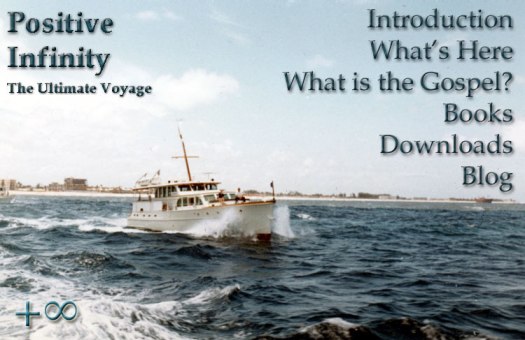
At one time the photo of the yacht–taken outside of Palm Beach Inlet–was the masthead for the site, back in the days of image maps and a static site. Those days are pretty much gone, but “old salts” will also note that many of the items in our “wheelhouse” photo (it’s really the bridge) are things of the past too, such as the clock and barometer set (with its wind-up clock) and the air driven screen wipers.
The Goldengirl has long been featured in the post Safe in the Harbour (Barely!), the time when we found ourselves in a literal storm and then almost moroned in the Straits of Florida with one key component in the bridge (the ship’s wheel) useless to guide the ship.
As Holy Week is about to begin, all of our readers need to realise that without God’s protection and direction, all of us can find ourselves buffeted by the storms of life without the ability to end up safely in the harbour.
-
God’s Answer to Overthinking–The Christian Tech-Nerd
If there’s one thing that frequently drives me crazy in my teaching engineering students, it’s their tendency to overthink problems and get lost in the process. This is good advice.
-
Lent 2024 Series: I Am the Bread of Life: How Do We Celebrate the Eucharist?
The previous video in this series (there are only two) is found at the link Lent 2024 Series: I Am The Bread of Life: What Is the Eucharist? In posting this originally I neglected to included the video; my apologies for any inconvenience.
The second in two sessions on this topic. In this video we explore the proper celebration on the Eucharist, including whether it needs to be liturgical or not, and a review of the liturgy of the 1928 Book of Common Prayer, which is a traditional Anglican liturgy.
-
Lent 2024 Series: I Am The Bread of Life: What Is the Eucharist?
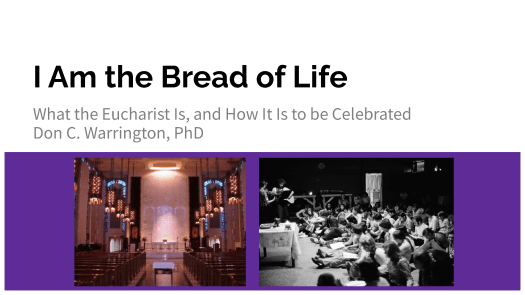
A series for Lent 2024 in two parts:
- What is the Eucharist? (this video)
- How Do We Celebrate the Eucharist? (next video)
Eucharistic theology and practice have long been a favourite topic of mine, from posts like Bill Clinton’s Eucharistic Theology: It Depends on What ‘Is’ Is to Don’t Tell People to “Come to the Table” Unless They Really Do–Or Should to Intiction: “I Don’t Think You Can Do That”. This puts some of that together–with new material–in a two-part video series.
It was my original intention to do this live at my church, the North Cleveland Church of God, but after the difficulties I ran into in putting on the last series, I decided to do this virtually. Feel free to leave your comments either here or on the YouTube videos themselves.
-
The Issues of the Role of the Laity and WO are Really Tied Together
I recently replied to Chris Findley’s article with the post The Inconvenient Truth About the Nature of the Priesthood. One of the respondents to this pointed out a statement from the ACNA bishops as follows:
As a College of Bishops, we confess that our Province has failed to affirm adequately the ministry of all Christians as the basic agents of the work of the Gospel. We have not effectively discipled and equipped all Christians, male and especially female, lay and ordained, to fulfill their callings and ministries in the work of God’s kingdom. We repent of this and commit to work earnestly toward a far greater release of the whole Church to her God-given mission.
As someone who worked in lay ministries at a denominational level for more than a decade, I have pointed out that the issue of WO and that of empowering, equipping and sending the laity forth to due the work of the Gospel as God intended them to are tied together. Many people who advocate for WO shy away from making this connection because they implicitly fear that advancing lay ministries of all kinds will dilute the urgency of WO. But that doesn’t change the reality: a church that throttles the laity will, sooner rather than later, have to deal with all of those who conclude that they can never fulfil God’s plan for them as a lay person.
The concept of the priesthood that Findley set forth and which excludes women from that vocation also does the same thing for the laity. The inert laity of Roman Catholicism was supposed to be activated with Vatican II, but that too is an unfulfilled promise. The ACNA and other Anglican bodies have learned little from this experience. But, in all fairness, personal experience tells me that it doesn’t take such a theory to effectively sideline lay involvement in the way envisioned by the New Testament. It is the great failure of contemporary Christianity, and sooner or later we will all have to deal with its consequences.

Sailing the Last Voyage with Newton and Pascal
 Positive Infinity