
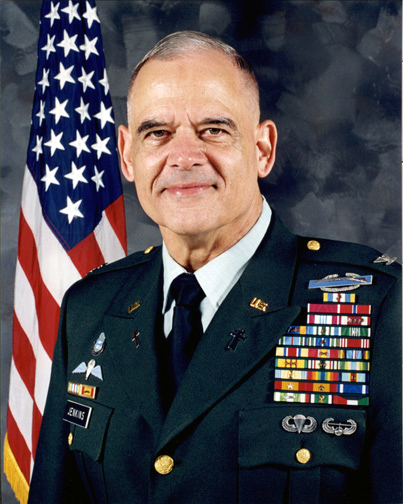
This is an eyewitness account of the attack on the Pentagon on 11 September 2001. The following summer, its author and eyewitness, Church of God Chaplain Col. Robert Jenkins, was honored at the Church of God General Assembly in Indianapolis, IN. The video below was presented at the Chaplains Honors Banquet on 10 August 2002 to note his and others’ reception of honors in the wake of 9/11.
11 September 2001, day one
All ten of us Command Chaplains serving Commander In Chiefs (CINCS) from around the world (ten of us) had just concluded morning devotions in the Office of the Secretary of Defense (OSD) conference room in the Pentagon, had been given an overview for the week’s annual Strategic Planning Conference conducted by the Joint Staff Chaplain and were on a ten-minute break when we were all called immediately back together to pray for the victims of the Trade Center attack now flashing on the briefing screen. Right after that prayer I was on the phone returning a call to my deputy command chaplain in Korea when I heard a very deep “boom.”
Immediately everyone was exiting the conference room and frantically waving at me to follow. I hung up the phone and followed the orderly mass of people exiting the building. As we turned around we could see dark billowing rolls of smoke rising directly opposite from where we were. No one was panicking. No one was running. All of us were stunned in disbelief. We moved to the edge of the walkway and watched the smoke rise. Some were asking if it was a bomb. No one knew.
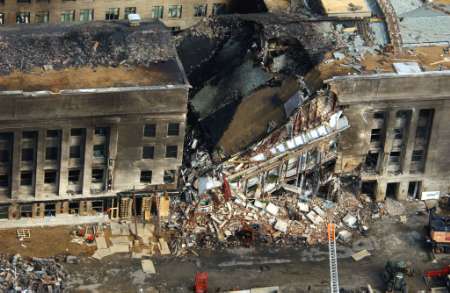
Word quickly passed through us that a plane had crashed into the other side of the building. The smoke was worse now. Suddenly security personnel began yelling at us to move off of the walkway and across the road to the river. Another plane was supposedly inbound for a second strike. No one seemed to panic, but anxiety obviously rose as folks now very quickly moved down the steps and across the road. I lost sight of my master sergeant, but I knew she got out ahead of me. In utter disbelief, I too moved to the road. An F-16 suddenly screamed by overhead and caused everyone to duck. Some uttered words that probably reflected what many others were at least thinking. A policeman said the aircraft had been identified as friendly. We were relieved.
Casualties began emerging toward us from inside the building. Some were walking on their own while others were being helped or carried. Voices were calling for anyone with medical experience to identify themselves. Chaplains were assisting the wounded. Some were holding IV bags in the air, others praying, comforting and encouraging those injured. I moved from victim to victim to offer support. Prayed with a few. Stayed with some till we could put them in a vehicle headed for a hospital. One black major was badly burned and his skin was hanging off his arm. It was a frenzy of activity.
They asked for volunteers to gather to try to go back into the building to bring out any more survivors. Time was of the essence. I stepped forward and was made leader of team 2. No one in that group was thinking of their own safety. We were now focused on getting our comrades out of there alive and to safety. With surgical masks and gloves on we quickly moved across the road and back into the building. We could see through the smoke, but the air was thick with fumes. It was hard to breath, but we kept moving until we emerged into the courtyard and fresh air. Firefighters were trying to put out the spreading fire. No one yet knew the extent of damage or fire.
The volunteers were organized into search and rescue parties. I was now made team leader of team four. Each of us shook hands and introduced ourselves by our first names. A two-star general was on my team, but rank or service status wasn’t even a thought among us. We were American volunteers focused on only one thing, i.e., getting our folks out of a burning building alive. I was asked by our team to pray before we went in. No one asked what “faith” I was. It didn’t seem to matter. I was a chaplain and I prayed for us all. Soon a firefighter yelled for our team to follow him into the building. Though we could see through the smoke, the fumes were so strong that after about a hundred feet in we had to withdraw back out into the courtyard to wait. We exited coughing and moved toward better air.
The longer we waited the more we realized the chances of getting anyone else out alive were diminishing. The fire was spreading. We had no news. Some began using their cell phones to let their loved ones know they were okay. An agent let me use his to call Carol. I let her know I was okay. She said to me, “I believed in my heart that you were okay and, if you were, you would be ministering to those hurt.” My own emotions began to rise and I couldn’t talk more to her. I knew from my Viet Nam and Desert Shield & Storm experiences that I needed to keep my own emotions in check and my mind focused on the mission at hand. That mission to me was twofold: one, inspire those around me to hope and, two, to do what I could to help. I dismissed the thought of what if none of us here could get out of the courtyard alive. Me saying to those around me to “stay focused on our task” helped me to stay focused as well. It was about 3 PM now, the fire was still spreading and we were still waiting. Waiting was getting harder to do.
I went over to the folks responsible for setting up a temporary mortuary on the far side of the courtyard. They were anxious too. One soldier shared her concern about her son coming home and seeing that she wasn’t there. I offered words of encouragement, support and prayer. They were all grateful and said so. I moved back to my group as were now told were now going to have to move through the building to the blast side. Our anxiety rose.
A firefighter who knew the way led us back into the building. We could still see through smoke, but the fumes were worse. It was a very long and winding walk and I had no idea where in the Pentagon we now were, but we kept moving. At one point we had to turn around and go a different direction. Some voiced concern that we might be lost, but no one panicked. We stayed together and kept moving through the smoke. As we went by then Army Chief of Chaplains office I instinctively gave a thumbs up. I heard several behind me chokingly utter, “Hooah.” I didn’t look back. We kept moving. Breathing through the wet towel around my face helped a little, but when we finally emerged out the other side of the building I joined the others who were coughing out the smoke. It was awful.
Moving around to the side of the Pentagon we could now clearly see the impact area to the outside of the building. We were as awestruck as we joined the thousands of other people looking on. No one could believe this was actually happening. Moving into place to wait to be called forth, folks shouted words of comfort and support to us. Bottles of water were passed our way. I saw some of my fellow chaplains and left my team for a few minutes to greet my brothers. They were as stunned as we were, but were already actively providing ministry all over the grounds. After about 30 minutes, 16 teams of 12 each volunteers moved into place to attempt to enter the building from the impact side to rescue any survivors. I was now leader of team 4. We were instructed to not lose sight of the buddy we were paired under any circumstances. I asked a blessing upon our team. We were ready. Emotions were high. It was now about 5 PM. Just before we were going to be lead in, LTG Van Alstyne came over and asked for the volunteer leaders to huddle around him. We did.
LTG Van Alstyne thanked us for volunteering and for what each of us was willing to do, but we were not going to now be needed. He said it was much too dangerous, we didn’t have the proper safety equipment and enough search and rescue workers were now on the scene. He told us that probably no one else would be thanking us, but he thanked us for what we were willing to risk for others. He told us the Old Guard was arriving to assume responsibility for the operation along with the other various agencies responsible. As we dispersed he recognized me and stopped to speak to me. It was good to see him in charge.
Now the Old Guard had the mission to bring out remains. It was no longer being considered a rescue operation. No one believed anyone could still be alive in the intense heat, smoke and toxic fumes. Still some were hopeful, praying. One young soldier told me his fiancé was on the phone talking to her friend and suddenly screamed and then phone went dead. He said he believed she saw the plane just before it hit near the window of her office in DESPER. He said he knew she was dead, but he wanted to join the mortuary team and go in to help retrieve her body. I asked if she was a Christian and he said that she was and so was he. We talked about the eternal hope we Christians have Christ and the resurrection yet to come. He was comforted and so was I.
Across the way I saw General Shelton being led our way with others in tow. As he passed by I saluted and he nodded. I remembered I had told him as his Command Chaplain at USSOCOM that I felt he would be leading our nation during one of its darkest hours. I wondered if he remembered and I wished I had been wrong.
I reported to the Chaplain’s tent. The Military District of Washington (MDW) Command Chaplain was in charge of ministry operations on the grounds. He welcomed my help. I walked among the various types of workers—police, fire, rescue—offering words of support and encouragement. I was surprised at how many voiced their thanks and appreciation that chaplains were so visible and directly involved. As I visited the soldiers setting up mortuary affairs, I was asked to help and so agreed. A civilian there who had been a soldier in Korea said his girlfriend had been in the area of the blast. He didn’t think she was alive, but he wanted to help bring her remains out. Understandable, but I knew that was not going to be permitted. An emotional reaction could jeopardize the safety of the whole team. We stood silently together still staring in disbelief at the burning building for a long time.

Teams were now formed to go into the building to remove bodies. There were four of us chaplains. After the FBI would photograph and tag the remains inside the build and indicate location found, the Old Guard soldiers would put the remains into body bags, two chaplains (protestant and catholic) would pray a blessing over the remains before they were carried out of the building to a refrigeration truck waiting with a medical team and chaplain inside. A doctor would pronounce death and, after that the remains would be escorted to a controlled FBI holding area at the end of the Pentagon. Respect for the dead and chain of custody were of paramount importance. I was designated the Protestant Chaplain and Chaplain Rick Spenser designated the Catholic Chaplain who would pray over the remains inside the building. Both of us could feel the weight of the responsibility, but both of us also found relief and strength through prayer and the knowledge that what we were doing for the living and the dead was necessary and a sacred honor.
Father Spenser and I hit it off instantly. I could sense in his demeanor a quiet confidence and see in his eyes deep spiritual strength. Neither of us knew what we were getting into, nor just how much we ourselves would need God’s grace and strength in order to provide meaningful and effective ministry to those assembled around us. We walked among the soldiers listening, offering words of encouragement and hope, praying with some and silently praying for all and for each other. The fire continued to consume and nightfall was upon us when we were told there would be no entering the building tonight. After being told to report back at 0700 the next morning, Chaplain Spenser and I looked for something to eat as we headed to the MDW Chaplain operations tent.
It was now 2220 hours. I was exhausted and very aware of the intense pain in my left heel and in my right calf. I hadn’t noticed I was limping till someone asked if I was okay. Someone else gave me a sandwich to eat and a bottle of water. I couldn’t remember how many bottles of water I had already consumed, but I needed a few more. I kept my black sweater on all day because I didn’t have all the stuff that goes on the military shirt. That made me sweat more, but also provided additional protection. Besides, I was in the military and was not about to appear disrespectful at a time like this.
I started walking toward my hotel (Sheraton National near the Marine Corps Barracks at Henderson Hall, about a mile), but the pain in my foot and leg wouldn’t allow me to get very far. A policeman offered me a ride and I took it. Glad I did because up the hill I would have had to walk through hundreds of media folks spread across the hill. I thanked the officer and limped up the walkway. My Master Sergeant saw me and headed toward me. She hugged me and was so relieved to see me because she didn’t know if I had made out for sure. It was a touching moment, but I felt bad I had caused her so much additional worry. I told her to go ahead drive with the Navy Chief back to South Carolina, but to be careful.
My room was as I had left it at 0700 in the morning. It had not been cleaned because the FBI locked down the top floors and put snipers on the roof. All the cleaning teams were confined to the first floor. Made sense. No one knew what was happening or what could happen next. What a day. I called the desk and they sent up some towels. I was a mess. Sunburned, dirty, exhausted and still stunned by the day’s events. After a long hot shower, I listened to eleven voices messages on my room phone. I called Carol and told her I was okay, but continue to pray because we didn’t know what tomorrow would bring. I couldn’t talk more. It was midnight and I fell asleep.
12 September, day two
After a very restless night’s sleep, I awakened before my alarm was to go off at 0500. Pain exploded up my heel and shot up my leg as I stood up and that meant I was alive. I wondered how many were not. Looking out my window I could see smoke drifting across the skyline from the Pentagon. CNN showed the tragedy in New York. I couldn’t believe my eyes. It looked like a movie and somehow Bruce Willis would end it all okay, but this wasn’t a movie and the dead and injured were truly many. My mind was still struggling to embrace the enormity of it all as I began my morning devotions by turning to the readings for the day in “For All The Saints, A Prayer Book For and By the Church.” After some time in meditation I wrote the following prayer:
It is now the first morning following our darkest day. Oh God, I affirm you alone are almighty and your love endures forever. As we the living are this morning bowed low in grief for those who suffer in this disaster that has come upon us, let us not rise in vengeance for vengeance is yours alone. Rather, O God, let us turn to you and in our turning may you renew your spirit within us all. Enable us to again take to heart the words, “In God We Trust” In our trusting you, enable us to not just “say” we love you, but enable us to “show” we do indeed love you in how we love all of our neighbors.
We acknowledge that you, O God, birthed our nation free and it is by your grace and mercy that we remain so. Raise our spirits from the ashes around us and let us more deeply embrace the understanding that the foundation of our country and our people is not ultimately built upon our military or economic might, but our ultimate power and wealth is centered in those enduring values that make us truly American and for which our flag stands.
Lead us out of this dark night—one and all, O God—to rededicate our national and personal life to you. Raise our flag from half-staff to symbolize to all of the nations of the world that America and Americans stand firm for freedom with righteousness and justice with mercy for all. Enable each one of us to serve both God and country with a renewed sense of integrity befitting honor—no matter what or where. Amen.
At 0640 hours I painfully walked down the hill and reported in to the MDW Chaplain operations tent and then rejoined the mortuary affairs group to begin the day’s work. After some time of sorting through jurisdiction and procedural concerns the team was ready to move into place. I stepped up onto a box and reminded everyone though the day’s task would be hard and gruesome; it was our sacred duty and honor to remove our fellow Americans with care showing the proper respect and dignity due each of them. Then I asked God’s blessings upon us all and there were many “Amen’s.”
We were stopped from moving into place because of renewed fire concerns and additional structural concerns on the left side of the building. All agreed however, it would be even worse if we got rescuers injured or killed. No one around us believed we would find anyone alive. We understood that our task was now removal of remains. Chaplain Spenser and I moved among the waiting troops. Many were anxious and nervous. Most had never done this before. Some were not sure they could. Waiting and thinking made it more difficult. Food was brought to us by a group of the Red Cross volunteers and it was most appreciated. It helped to divert our thoughts to something more pleasant, at least for a time.
New instructions. We were going to move to the right side of the blast area and bring out the remains through the far right door of the building. Trucks and covered fences would provide security and privacy for the operation. No one wanted any media to show pictures of our fallen comrades in newspapers or on TV. We did not want to give the enemy any thing else to gloat about!
The FBI was ready for the first team of us to go in. Chaplain Spenser and I assured each of them and then followed them into the building as they followed CSM Butts’ (Old Guard) lead straight in and then left down a long and dark hall through four inches of standing water and debris and then right to where the remains were tagged and ready for removal. One soldier returned. He couldn’t handle the confinement of the darkness. Lights were brought in and he passed by us on his way back in. Father Spenser and I stood in polluted water against the wall and waited.
The longer we waited, the more time we had to think. The more time we had to think, the heavier the ordeal became. We were in polluted water with him in army boots and me in low quarters. While we both had masks over our noses our eyes were not protected. Besides that, we wondered what the mask wasn’t filtering out. Then we wondered about the structural integrity of the building…. These thoughts were not at all comforting, but they were real and we didn’t want anyone else to be hurt especially those risking their own lives trying to help. We stood in silence and continually offered prayer.
As each stretcher came and stopped we each simultaneously blessed the deceased. Every body removed from the disaster would have a Protestant and a Catholic blessing offered. If anyone new that some one was Jewish or Muslim, we were prepared for that as well. However, none of us knew anything of the sort. We did with deep respect what our conscience and duty as chaplains called for. We comforted the living and honored the dead. It was difficult duty. Father Spenser and I noted the nervous look in the eyes of the soldiers as they first went in. As they carried remains out their eyes told a different story. Some were now stoic, focused on the task, not allowing him or her to think about what they were seeing and doing. Others looked profoundly disturbed and still others shocked. Imagination was made to flee in the face of reality and the reality was most gruesome. Remains would be brought out and then we would come out and wait till the FBI finished their processes and then we would go through it all over again.
While we waited, Chaplain Spenser and I would talk to the troops and then go back in with the next group. It was hard on the soldiers. Even the Rescue professionals and the FBI said they had never seen anything like this before. I had and I had to control my thoughts because they wanted to take me to a place I could not afford to go. Not now for sure. My own training in Critical Incident Stress Debriefing told me I would need to go there later, but certainly not now. We continued to pray and we continued to minister to the soldiers, firemen, safety inspectors, structural inspectors, air inspectors, and FBI agents, everybody involved in the process where we were. It was a very long and hot day, but at 1730 it was over. Structural concerns would not allow us to continue for the rest of the evening. We were exhausted as Chaplain Spenser and I headed back to the chaplains operations tent.

A regional Police Chaplain asked if I could use a ride to the hotel and I gratefully accepted, but couldn’t leave due to the President’s momentary arrival. Then we noticed firemen up on the roof of the Pentagon building unfolding a large American flag. The President arrived and actually passed by where Chaplain Spenser and I were standing. We each shook his hand and noticed his moist eyes. He shook my hand firmly and looked me in the eye and said, “God bless you.” I was very deeply moved and could barely respond with, “God bless you Mr. President.” His strength was obvious and his compassion real. I found myself thinking as he passed by reaching out to others, “God, I am so glad I voted for you.” Then Mrs. Rice came over to us and shook our hands as well and thanked us for what we were all doing. As the President moved along, the firemen unfurled the large American flag next to the caved in face of the building and spontaneous clapping began followed by the singing of “God Bless America.” It was a deeply moving and emotional moment. I could barely take it in, or keep it in. My cup was full and I needed to go.
The Police Chaplain put me in a police car and I was driven up the hill to the Sheraton. Along the route the policeman driving also thanked me for what I was doing as a chaplain with the army. He had learned the value of a chaplain soon after he had joined the police force.
Inside my room, I sat on the bed and all the locked up emotion emptied out my eyes. I gave thanks to God for the incredible privilege of serving as a chaplain to soldiers, sailors, airman and marines as the USFK Command Chaplain on the scene here for such a time as this. I looked at the three themes embroidered on the stole I had made in Korea and had been wearing each day. “Joining Hands, Linking Hearts and Building Bridges.” That was exactly what was happening with all of us involved here, in New York, around our country and even with countries outside of our own. It was a very humbling day and a most exhausting one.
After another hot shower, I propped up my painful leg and foot and called Carol to tell her again that I was okay. It was really good to hear her voice. I was blessed. In spite of everything, America was blessed too. We would rise from this catastrophe as a one nation even stronger and more united under God like never before in our history. May it be so, O God! Amen.
13 September 2001, day three
Up at 0520. Very tired, but cannot sleep. Still cannot believe this is happening at one level and am almost overwhelmed on another. Devotions, prayer and back into the same dirty uniform, down the hill I go and report in at the chaplain operations tent.
It is almost daylight now. Chaplain Spenser and I marry back up with our team. Waiting. Getting ready. Someone calls in a bomb threat to the Pentagon and everyone is moved across the rode. With so many security forces here, no one believes there is a real bomb and many of them express their anger. God help the phone caller if some of the policemen I was standing beside catch them! All clear is sounded and we finally move back in, but this time we all pass through a single entrance and are given a bracelet to identify that we are authorized to be inside the area.
A different Old Guard company arrives for duty and gets suited up in rubber boots, gloves, masks and safety helmets. I again step up and inform the group that though the day’s memories will be gruesome and those they will not wish to recall, it is our sacred duty to remove our fellow Americans with dignity and respect as we seek on this day to serve both God and country with integrity befitting honor because we ARE Americans. They were ready and Chaplain Spenser and I were ready too. Chaplain Bradfield who would again be inside the refrigeration truck with the doctor and nurse was ready too. This would be another very hard day, but none of us new that yet. We moved to our places and began.
The FBI was ready to lead us into deeper carnage. It was harder to breath the air. Day three odors would be much more nauseating. Our thoughts were less controlled and our emotions were beginning to overload due to the visual trauma experienced. In fact, had the three of us chaplains not been specifically asked to return as a team for this third day, none of us would have. For the sake of the soldiers and teams we had bonded with and established a strong ministry link, we each stayed. It was our duty and we clearly knew that and embraced it without hesitation. The work continued.
Standing deep inside watching the soldiers work after the FBI backed out, one of the FBI agents said to me, “Chaplain, I can’t express how comforting it is to us that you two are in here standing with us.” I remarked to Chaplain Spenser how surprised I sometimes am by “who” makes those kinds of comments than I am by the comments themselves. Structural safety engineers cleared us from the building with concerns that a wall may collapse and trap us inside. Quickly we went outside and waited.
Up inside an exposed 4th or 5th floor office on the left side of the blast area you could see a Marine Corps flag standing. The entire wall was blown away, but that flag was standing tall. I pointed it our to the Marines among us. I told them, “Though covered in ashes and amidst destruction all around, that flag still stands. Look at it long and hard. Remember this day Marine, never forget it and be proud. THAT is the heritage you are a part of.” Even the faces on the army soldiers were glowing and when the Marine Corps major with us actually pulled the flag from that office as a crane raised him to it, all of us started clapping wildly. It was a great moment indeed!
Still waiting to go back into the building. Chaplain Spenser and I are told to report back over to the chaplain operations tent. We get there, but no one knows who sent for us so we head back. We are stopped by two senators and are asked how we are doing. We share what we are doing and they are particularly moved that every body removed from the disaster is being given a Protestant and Catholic blessing before removal from the building. They thank us and we move back to our troops wondering if THAT was why we were to go over there… Who knows?
Still waiting. Chaplain Spenser and I moved among the troops checking to seeing how everyone was doing. One soldier took Father aside and asked for prayer of reconciliation. That is what we chaplains are about. Reconciling soldiers to God and soldiers with themselves and others. “Bringing God to Soldiers and Soldiers to God,” is more than just our Army Chaplain Corps motto. It is what we do and we do it where the soldiers are. We share in their hardships and challenges, in their joys and in their terrors and sometimes we die with them too. It is our sacred honor and duty and we can do no less.
It is now 5 PM; two Navy and one Coast Guard Chaplain are now replacing day three and Chaplains Bradfield, Spenser and me. Our duty is done, our fellow sister service chaplains will continue. We have finally been relived of the watch. We say goodbye to the troops, FBI, rescue workers, medical personnel and one happy Marine Corps major, and the three of us report back to the chaplain operations tent.
As we stood talking among ourselves, we each realized it was good we were relieved two hours early. My cup of trauma work was full and almost overflowing. My body felt exhausted and my emotions wanted to again burst. The pain in my foot and leg was even more pronounced and I needed to eat something more than just a sandwich. Father Spenser and I headed over to the Red Cross food center set up in the Pentagon parking lot. What a shock we were in for.
Standing in line waiting for chicken and barbecue, a man grabbed me and hugged me. When I looked at him and heard him say, “Robert, I am really glad you are here,” his affirmation as my Chief of Army Chaplains deeply touched me more than I can say. He invited Chaplain Spenser and me to join him at his table and we did. Our Deputy Chief of Chaplains was there too, as was our Sergeant Major—in my view the best threesome our corps has ever had! The Chief looked under my very hot black sweater and immediately knew why I was wearing it. He smiled at me and chuckled. Everything I needed on my shirt beneath was missing. We had a good laugh. It was an appropriate conclusion to a long hard three days and days none of us ever wanted to repeat.
With our duty here now done, Chaplain Spenser and I joined hands, prayed for each other, hugged each other and departed in the peace of the Lord and in the satisfying knowledge that our ministry had made a difference to those tragedy had so ruthlessly thrown together, but God had so wondrously caused to prevail.
Looking back at the flag draped from the Pentagon building and saluting one last time, I started the painful walk up the long hill to the Sheraton. A security man saw me limping and gave me a ride. I was grateful indeed!
14 September 2001, day four
I slept long and hard, but awakened before 0600. My lungs don’t feel completely clear. I am in emotional overload. The images are too intense and I find myself still shaking my head in disbelief. It is all so surreal.
None of the chaplains who flew in from over seas can fly back before next Thursday. I call the airlines and the best I can do is next Wednesday the 19th out of National. My flight is rebooked, but then the TV says National is now closed indefinitely. What to do?

The Arab lady working in the hotel restaurant won’t let me pay for my coffee and says, “God bless you” to me as I leave. I take a cab to Ft. Myer to pray in the chapel and we are stopped in a long security line with the meter running. I pay the cabby and ask for a ride from the driver in the car ahead. He gladly lets me in and tells me he is a retired Naval aviator and has already volunteered to the Navy that he is ready to do a suicide mission on any target they name. I understand. He drops me off at the chapel for prayer and after prayer I sit at the computer to write from daily journal the above. It is now 1830 hours. I am finished and I am okay. My task now is to quickly find my way back to Korea. May God help me and may God bless America.
 Positive Infinity