
It’s that time of the decade again when we look back on the Watergate scandal and how it brought down Richard Nixon and many of those around him. In this case it is the fiftieth anniversary. I usually like to note that at this time of year–the scandal itself drug out for almost two years and beyond–because I feature two recordings of John Erlichmann testifying at the Senate Select Committee on the subject. You can hear the first of these here and the second here.
As will become evident, I still have my doubts on many of the “official” explanations of what happened. Some of these doubts arose during the events and some are the result of subsequent events, which cast the whole thing in a different light. This is a personal reflection of the impact the scandal had on me–and I’m sure on others–and how life was different as a result of it.
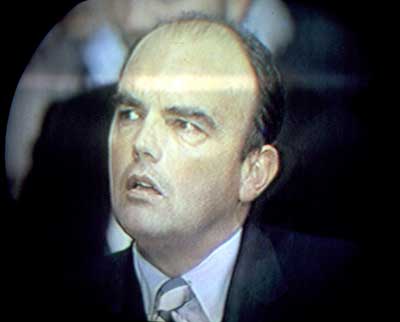
Let me start by presenting this, which brought much of the pain of the era back into consciousness:
At the beginning of 1973, things were starting to look up. The Vietnam War, which had dominated the years before, was coming to an end. It wasn’t the best end (something that was obvious at the time) but it was probably the best we could hope for. I was graduating from prep school in June. That hadn’t been the happiest experience but I had “swum the Tiber” and left the school’s church behind, and had been accepted to Texas A&M and left the school’s socio-economic slice behind, and things were finally looking up.
Watergate and the other crises of the era–especially the oil related crises–wrecked all that.

I listened to the hearings while working at the family business during the summer in the drafting office shown above. I (and my co-workers) were a little mystified by the whole thing. More to the point, I had read subversive books, and knew there were other ways of dealing with problems like this. In a Westminster system, the government would resign, we’d get a new government, and things would go on. In other systems the whole thing would have been shoved under the rug, the lower level miscreants given the boot, and life would go on. The United States–which supposedly had the greatest form of government the world had ever known–could bring itself to do none of these things; it took what seemed like an eternity to finally get to a “changing of the guard” while the nation was torn apart with night after night of the scandal (that was before the 24-hour news cycle we have now) and its energy drained from the Cold War it was supposed to be engaged in with the Soviet Union.
The basic problem was twofold. The first was that the U.S. Constitution made it difficult to remove a President from office, a simple fact which has been repeatedly forgotten in all of the subsequent impeachment efforts. The second was that Nixon’s opponents turned the whole thing into a moral crusade–a very American thing to do–in order to advance their cause. Had they been more focused on their effort, they could have sent the Republican Party to a permanent wilderness, but they missed their best chance to do so.
In the middle of all this most of my faith in this system–a faith which hadn’t been done any favours by my aforementioned prep school–was seriously damaged. Things bounced downward as the decade wore on, leading in part to my first writing of this. It also led to my serious consideration of emigration, which for better or worse I never went through with. Texas A&M turned around my faith in this country and altered my spiritual course as well.
Subsequent events have shown several things.
The first is that our government is capable of intrusive, one-sided suppression of our liberties in ways that Nixon’s people could only dream of, and that the same group of people who attacked Nixon for his dirty tricks have employed worse on our population. That puts the whole business of Watergate in a new light.
The second is that the right–especially the religious right–ploughed into political involvement without really understanding the nature of their opponents nor how to achieve their objectives. This is why their effort stalled and they ultimately turned to Donald Trump, an unlikely a hero of religious conservatism as one could want. I discuss this in my “retrospective” on my earlier writings.
The third is that Watergate taught people that dragging out scandal and resorting to the legal system were the way to “get things done.” Such has poisoned our political system ever since.
But we have a “democracy,” don’t we?
 Positive Infinity
One Reply to “”