-
For the #straightouttairondale Set, the Canonisation of Paul VI is a Brown Pants Moment
Acclaimed Vaticanista Andrea Tornielli reports that a unanimous vote has taken place at a meeting of the Congregation for the Causes of Saints, positively recognizing a purported miracle attributed to the intercession of Pope Paul VI (Giovanni Battista Montini, 1897-1978). This development effectively paves the way for the Pontiff’s ‘canonization.’
But the #straightouttairondale people aren’t happy about it, to say the least:
The ‘canonization’ of Papa Montini is nothing else than a ‘canonization’ of the sordid agenda and disastrous orientation of Vatican II, the abysmal Novus Ordo Missae, and the embarrassing entirety of post-conciliar legislation and innovation.
This is unsurprising. Popes John Paul II and Benedict XVI had as their basic mission the walking back from many of the changes that took place under Paul VI. That, of course, would include the Catholic Charismatic Renewal, which was in many ways spoilt by its leadership.
And as for me? I think that my fate as a Roman Catholic was sealed by his death in 1978, when I came back three years later things were not moving in a nice direction for those of us who were the product of the previous decade.
It’s also worth noting that most of the Catholic music linked to here came from Paul’s pontificate.
-
Jubal: Trust
Wheat WR 1001 (1977)
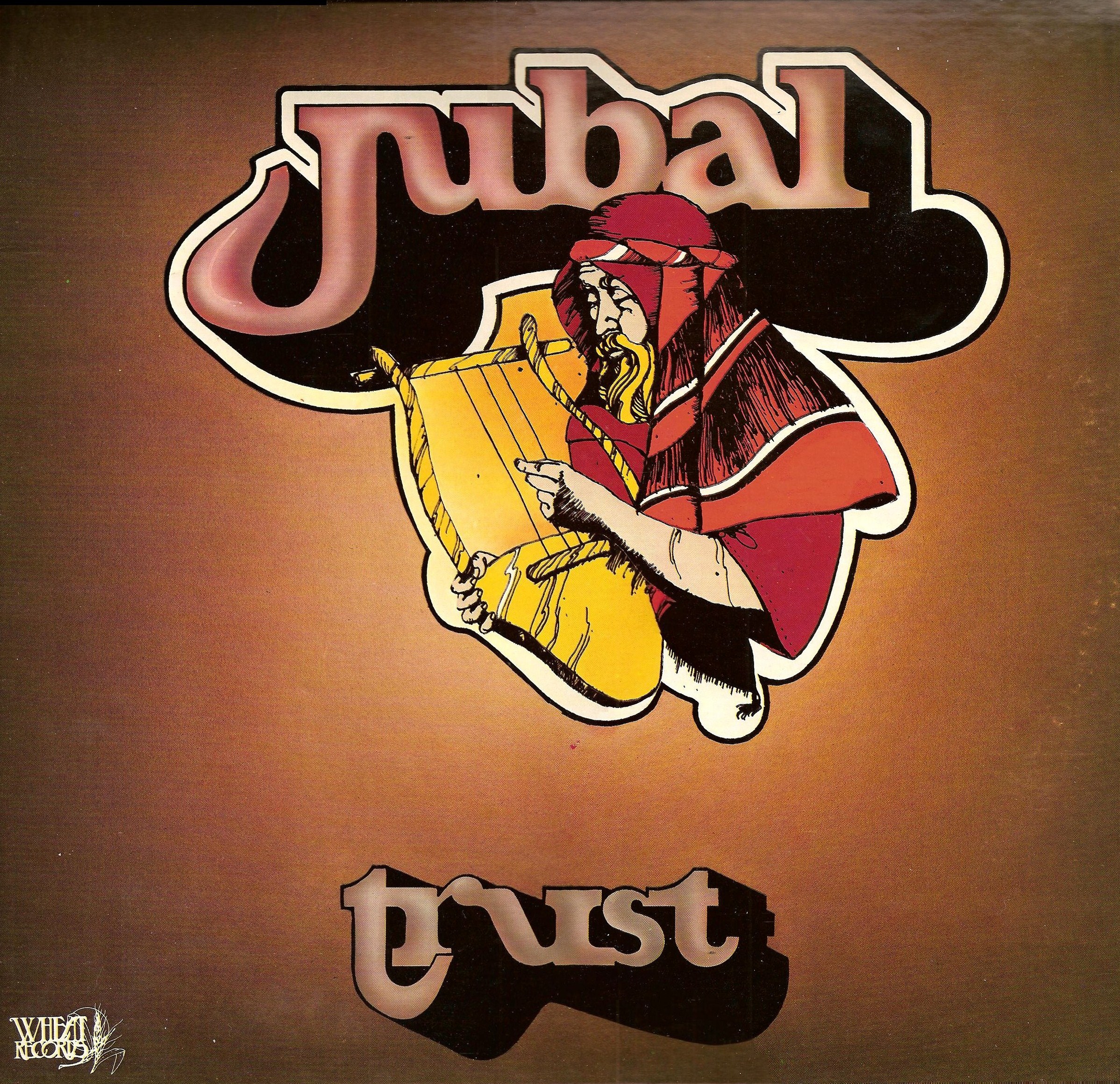
Although this Detroit-based production has been described as “Christo-funk,” it’s really very eclectic, with a wide variety of styles that reflect the makeup of the group. There’s both jazz and soul elements in it, some hard driving stuff and some very light stuff too. One thing that’s missing is any churchy or even any CCM sound to it. A real delight that is sure to brighten your day.

Thanks to Dennis for providing this music.
The songs:
- Whom The Son Sets Free
- Changed Man
- I Long To Glorify Thee
- Blessed Abundantly
- Rock Of Refuge
- Be All That You Can
- Psalm 57
- Expose Yourself To His Love
- Loser
- Trust
-
Those Unscientific Science Journalists
NPR, which to its credit at least attempts to cover science and health, is looking for a new Science Editor. Unfortunately, actually being trained in science is not required for the job.
Under the qualifications section, the ad says, “Education: Bachelor’s degree or equivalent work experience.” Amazingly, not only is a background in science unnecessary, college itself is optional. Despite such a low bar, whoever gets hired for the job will be responsible for covering “consumer health trends, medicine, public health, biotech and health policy.” Seriously?
It’s fair to say these days that a journalism position is an advocacy position. But that’s one thing that’s discredited many scientific initiatives: the total lack of people with science training either reporting, advocating, or setting public policy on these kinds of issues. No where is this more evident than climate change, where the biggest carbon-free solution in the mix–nuclear power–has been shunted aside, even when most of scientific community is good with it.
But that’s the American way, and has been for years. It’s little wonder that countries such as China, Iran and Russia, where more of the educated population is trained in the sciences, are perceived as such threats.
-
I Guess YouTube Will Flag the Boring Video, Too
YouTube is doing some strange things these days, and this is yet another:
YouTube announced Friday it will start flagging videos published by organizations that receive government funding.
Viewers will be able to see labels on videos from government-funded outlets above the video’s title on the page.
“News is an important and growing vertical for us and we want to be sure to get it right, helping to grow news and support news publishers on YouTube in a responsible way,” YouTube News senior product manager Geoff Samek said.
I guess that includes this masterpiece, which I use in my Soil Mechanics class:
Watch it for a minute or two and see why I call it the “Boring Video.” I told my students that labelling it as such was my attempt at “truth in advertising.”
This video was produced at the University of California at Davis with a grant from the Feds. Like so many documents and other material in this field, it was produced with government funding, and use of this kind of material is widespread amongst the Federal and State agencies charged with civil and military works, and used in the teaching of civil engineering, most of which in this country takes place at state (government) universities.
So I guess that YouTube will, once it figures all this out, label this as “propaganda.”
Like I said, YouTube is doing some strange things these days. Recently they demonitised “small” YouTube channels (like mine, the pennies rolled in) and frankly I couldn’t figure out what they were trying to accomplish other than getting rid of a large number of accounts that were more hassle to service than they were worth. The obsession of social media with “propaganda” (and YouTube certainly isn’t alone) is going to kill it for themselves and everyone else.
-
Just Because Your Alma Mater is “Christian” Doesn’t Mean You’ll Be
Higher education is a competitive business. One of the things that educational institutions that are affiliated with a church or profess or call themselves Christian use to attract students is “your faith will be enhanced by coming here.” Christian parents and students find that attractive, which is why many pay the premium to go to one of these institutions.
Unfortunately things don’t always work out the way we think they’re supposed to. I didn’t have to wait until college to find that out: the one and only church affiliated educational institution I ever attended, the St. Andrew’s School, was the place where I entered an Episcopalian (the school was and is affiliated with the Episcopal diocese it’s in) and left a Roman Catholic, a move which liberal and conservative alike found distasteful.
So how did this happen? There are basically two reasons for this.
The first is that the school, like many in the late 1960’s and early 1970’s, received an influx of sixties radicals in the faculty. These obviously had little use for any “traditional” agenda of any kind, Christian or otherwise.
The second is that neither of the school’s head chaplains–who also taught the required theology courses–had much use for the Episcopal Church’s historical beliefs either. I document my conflict with the second one here.
Although life at Bethesda had its moments, when I came to St. Andrew’s I was basically happy with being an Episcopalian. By the time I left I wasn’t. I could have just dropped out of church altogether, like many did (and do) when faced with people who had fled their post. Thankfully I didn’t.
Christian educational institutions don’t exist in a vacuum. They’re subject to the changes going both in the society at large and in their own church (if they’re affiliated with one.) It’s takes a special effort–and occasionally some unpleasant staff and policy changes–to keep such an institution on course. It’s easy to let things and people slip. This is true for Evangelical and Pentecostal institutions as well; the firm doctrinal stand is frequently overwhelmed by the shame-based desire to be acceptable in society. The accreditation system accelerates this process.
For me, I went to Texas A&M, which exceeded my expectations in many ways. I’ve never been on the faculty or received a degree from a Christian institution since.
So what is to be done? For Christian parents and prospective students, it’s time to be discerning. Don’t accept labels and heritage at face value; things are changing too fast these days.
Humble yourselves, therefore, under the mighty hand of God, so that he may exalt you in his good time, laying all your anxieties upon him, for he makes you his care. Exercise self-control, be watchful. Your adversary, the Devil, like a roaring lion, is prowling about, eager to devour you. Stand firm against him, strong in your faith; knowing, as you do, that the very sufferings which you are undergoing are being endured to the full by your Brotherhood throughout the world. God, from whom all help comes, and who called you, by your union with Christ, into his eternal glory, will, when you have suffered for a little while, himself perfect, establish, strengthen you. To him be ascribed dominion for ever. Amen. (1 Peter 5:6-11 TCNT)
-
No, Columbus Wasn’t Worried About Falling Off the Edge of a Flat Earth
I think it’s fair to say that most Boomers (and some who came afterwards) were taught that one reason Columbus sailed west to determine whether the earth was flat. But this won’t wash, as BizzareVictoria notes:
Everyone knows that in the medieval era, everyone thought the world was flat, and Columbus discovered the Americas in part because he was trying to circumnavigate the globe, to prove it was round, and to end up in India, right?
Except all of this is wrong.
Eco tells us that people have known the world was spherical since ancient Greece. “Parmenides seems to have guessed its spherical nature, while Pythagoras held that it was spherical for mystical-mathematical reasons [and] subsequent demonstrations of the roundness of the Earth were based on empirical observations: see the texts by Plato and Aristotle. Doubts about sphericity linger in Democritus and Epicurus, and Lucretius denies the existence of the Antipodes, but in general for all of late antiquity, the spherical form of the Earth was no longer debated” (11).
In addition to providing additional backup to this claim, BizzareVictoria goes on to detail how Victorians, frustrated at the opposition of the church to evolution, spread the idea that the medaevals, following Lactantius, thought the earth was flat.
To all that I’d like to add the following:
- The Bible does not teach that the earth is flat (cf. Isaiah 40:22.) There was a great deal of knowledge interchange amongst the civilisations of the Middle East, including the Egyptians, Babylonians, Persians and Greeks, a fact that was better appreciated in ancient times than it is now.
- Dante certainly conceived the earth as round, which is closer to Columbus’ time than the Bible.
- If there was a central fault in medaeval science, it was an over-reliance on the ancients for scientific fact. That’s why Galileo butted heads with the schoolmen of his day. In this case, however, that reliance was correct.
As for Lactantius, he wasn’t exactly in the top shelf of Patristic writers, a fact also recognised in medaeval times. One thing he was dead right on, however, was the rapacity of Late Roman tax collection methods, which doubtless hasn’t endeared him to the bureaucrats.
Sailing the Last Voyage with Newton and Pascal
 Positive Infinity