-
The Ten Weeks, 1 February, Sad Chinese Poetry Always Leads to Tears
 Madeleine was heading towards her Monday lunch with Madame Seignet when Vannie stopped her in the hall.
“Maddy,” Vannie called out. Madeleine turned around; she was startled that Vannie would even address her.
“What is it?” Madeleine asked in her usual guarded fashion. Vannie walked up to her.
“I heard that the doctor released you for P.E.,” Vannie said. “You must be doing all right.”
“It is better than they expected,” Madeleine confirmed.
“That’s great. I was wondering if you’d consider coming back on the tennis team.”
Madeleine’s shock was obvious. “I wasn’t aware that was possible.”
“We’ve been looking at the roster really hard,” Vannie replied. “You know we’re going to St. Anne’s this weekend. We need a little extra depth for that.”
“You know I was slated to have your position on the ladder before I became ill,” Madeleine reminded her. “But I am probably too weak for that now. What can I do for the team in this state? It is unbeaten.”
“We still have problems. You might be able to beat Terry out—she was a real oaf last weekend. When she falls, she hangs onto the net while her feet sprawl over the baseline.” Madeleine chuckled at that in spite of herself.
“You understand that Coach Dorr has asked me to help with the Lower Division team,” Madeleine said.
“I do. But she can change.”
Madeleine thought for a second. The pause seemed eternal to Vannie.
“I am sorry, but I don’t think that I can do it. This has been a very difficult experience for me. There will be questions. So I think it’s best to leave things as they are.”
“Suit yourself,” Vannie said. “Sorry you feel that way. But why did you have to go off and help Carla Stanley the way you did? Why couldn’t you do that for somebody here?”
“Because nobody here asked,” Madeleine replied. “You have your clubs, you have your professionals. She had nothing and knew it. But now all the world knows why there is a French Open and not a Verecundan one.”
Vannie was visibly angry at the last remark. “I don’t know about anybody else around here, but I’ll be glad when you go to France to university.”
“Belgium,” Madeleine corrected her.
“You’ve looked down your nose at everybody the whole time you’ve been here. You should have gone to Hallett or somewhere in the East Island. Then you’d have known people who deserve this kind of treatment. Then we wouldn’t have to put up with idiot people running around town bawling that they’ve had a miracle. You’ve messed up everything, and someday you’re going to pay for it.”
“I’m sorry you feel that way,” Madeleine said rather coldly. But then she felt gripped again, the same way she did when performing the miracles. “But your reluctance to allow Terry Marlowe to go to the East Island is justified.”
“What are you talking about?” Vannie asked.
“You—or someone else—do not want her to go to St. Anne’s. If she makes it to the East Island and stays, she will come back to destroy everything that Denise and her father and the CPL and everyone else like them have built. It will cost her everything in the beginning, but in the end it will cost you.”
Vannie looked at her with bewilderment. “Now you’re some kind of prophetess,” she said. “What are you trying to do to us? What have we done to you?”
“The last few weeks speak for themselves,” Madeleine replied, assuming her usual tone. “I must be going to my lunch engagement,” and with that she walked on to Madame Seignet’s room.
Vannie returned to the cafeteria, got her lunch and sat down at Denise’s area with the people who so frightened Carla the previous Saturday.
“Is she going back on the team?” Pete asked.
“She won’t do it,” Vannie answered.
“Prick,” Denise spat out in disgust. “I was afraid of that.”
“What’s her excuse?” Pete pressed.
“Same old stuff—after everything that’s happened. . .” Vannie replied.
“We’re the ones that ought to be complaining,” Denise interrupted.
“But, she said something else real weird.” Vannie continued.
“Now what?” Denise snapped.
“She said that, if Terry ever got to the East Island, your father’s whole movement would get wiped out.”
“Wish!” Denise said. “If anybody’s going to get wiped out, it’s people like Terry—and Maddy, for that matter.”
“Look what we did to Carla,” Pete added.
“And there’s more where that came from,” Denise assured them. But then Denise stopped to think. “So what made her say that?”
“I may have done it,” Vannie confessed.
“How?” Pete asked.
“I told her that she might knock Terry down the ladder.”
“More like off,” Denise added. “She’s dropped down to sixth. If it weren’t for her playing doubles with Alicia, she’d stay home.”
“Maddy also said that somebody didn’t want her to go to St. Anne’s,” Vannie stated.
Denise became wide eyed at that remark. “How’d she know that?”
“Know what?” Pete asked.
Denise looked up at the ceiling with an “I’ve just let the cat out of the bag” look. She went back to facing Pete. “Something funny’s going on here. That’s exactly why I wanted Maddy back on the team. But no one but me knew that.”
“You mean you’d rather have Maddy back on the team than Terry?” Vannie asked, now totally puzzled.
“It’s not me,” Denise finally said. “It’s Mrs. Marlowe. She came up to me after the CPL Central Council meeting last week. She doesn’t want Terry to go to St. Anne’s for any reason. Terry wanted to go there to school after Second Form, but her mother wants her to stay here and grow up like a normal human being.”
“Hasn’t worked so far,” Pete observed.
“It will,” Denise said. “I was hoping that Maddy would help to crowd Terry off of the ladder for good and make it easy on everybody.”
“Terry’s still playing doubles,” Vannie reminded Denise.
“We’ll get Alicia to find someone else,” Denise replied matter-of-factly.
“So what are you going to do now?” Pete asked.
“We’ll just do it the hard way. I’ll just tell Terry that we can’t risk another ‘weak sister’ after what Maddy’s pulled with Stanley.”
“Can we win with all of these people out? St. Anne’s is undefeated,” Vannie noted.
“Who do they compete with? Women in sports is almost unknown out there. We can pull it out. We’ve got some depth. Besides, one virgin traitor on the team is enough—I really don’t need two, and the way things have gone that’s what I’d end up with if Maddy came back. ”
“So what does Coach Dorr have to say about all this?” Vannie asked.
“She’s not happy, but I told her that there were reasons of state. What’s she going to do?”
“Nothing, I guess,” Vannie shrugged.
“Hey, how’s Jack doing these days?” Denise asked Pete.
“He’s okay,” Pete replied. “Slipped to third on the ladder. But he’s spaced out these days.”
“Spaced out?” Denise asked.
“He doesn’t talk much to anybody,” Pete explained. “He comes to practice, does his thing, goes home, shows up to compete, plays, and goes home again. Doesn’t say a whole lot. Really bad the last two weeks.”
“He’s probably still sore about breaking up with you,” Vannie noted.
“He’s probably up to something,” Denise warned. “Keep an eye on him.”Tennis practice went as usual that afternoon. As it was winding down and after Dorr had just finished up scheduling the challenge matches, Denise came up to Terry and said, “I need to see you for a minute.”
“What for?” Terry asked. Vannie appeared at Denise’s side.
“It’s about this weekend,” Denise said, looking up at Terry. “You can’t go to St. Anne’s.”
“Why not?” Terry demanded, indignant.
“I can’t take any chances,” Denise replied. “After what that slimy little frog did to me, and knowing you’d really rather be a ‘little Miss Muffett’ at St. Anne’s, I can’t take the chance. You’re not going, and crying to Coach Dorr won’t do any good.”
“I thought I was going good on the team, after the Beran Invitational. What’s changed?” Terry asked.
“It was a new day yesterday,” Vannie coolly replied, “but it’s an old day now.” With that Denise and Vannie walked away, leaving Terry both ready to both explode and cry.
Terry and Denise agreed about one thing: it wouldn’t do any good to appeal to Dorr, since the order came from Denise. Terry stormed off of the court, went back to the locker room, put back on her street clothes as fast as she could, threw her tennis gear in her locker with a loud metallic bang, closed the locker door in like manner, and stormed out of school.
She skipped the bus and pouted every metre of the approximately two kilometre walk home. It was a very seasonable day; only very small black puddles remained of the trace of rain that fell earlier. The beauty of the weather could not penetrate the darkness of Terry’s mood, which matched her eyes and hair all too well.
She finally got home. Her mother was in the kitchen, sorting out the groceries from her shopping trip.
“What’s your problem?” Eleanor asked.
“I can’t go and play at St. Anne’s this Saturday,” Terry admitted. She suddenly looked at her mother with intense anger in her eyes. “It’s your idea to do this!” she blurted out. “You were with Denise at the CPL meeting last week. You put her up to it!”
“Blaming me for your failures in life will not make them any better,” Eleanor calmly replied. Terry could see that she was getting nowhere, so she stormed out of the kitchen and up the stairs toward her room.
To get there, she had to pass by her little brother Richard’s room. He could hear her stomp her substantial feet against the floor as she marched up the stairs.
“You have been well, I trust, since we last met?” he asked with a sneer.
“Shut up!” she replied and went on to her room, slamming the door.
Terry thought that putting on a album would help, but her anger and frustration were so great that even the thought of doing that didn’t console her. So she opened the door again, went back down the stairs and, going out the front door to avoid crossing paths with her mother again, went around, got her bike, and took off while hearing her mother scream, “Running away isn’t going to help!” as she pulled into the street and away from the house.
The traffic was thin in the upper part of the Point where the Marlowes lived, thin enough for her to vent her emotions by riding her bicycle down the street. Otherwise, she would have ploughed into a car somewhere. Eventually she ducked onto the side walk, but with her inner being filled with emotion, her navigation was strictly a combination of autopilot and very deep familiarity with the territory.
She eventually made the three and a half kilometre voyage to the Point Collina Park, the end of both her town and in some ways of Verecunda itself. On passing the last street and entering the park, she had only one more hard decision to make: which way to turn. She could turn left and go towards the bay, straight towards the lighthouse, or right to the ocean. She went to the ocean because it looked like there were the fewest people in that direction. Her guess proved correct, as she was able to pull her bike up and sit down on a bench not too far from the street that separated the park from the rest of the town.
By this time Terry was numb, torn between anger at her mother and Denise that made her want to scream and pain that made her want to cry. She just sat there for what seemed to be an eternity as the sun worked its way to set over her right shoulder and into the place where she came from.
The noise of the waves had a soothing effect that slowly drew her into a more mellow mood. Like the freighters and cruise ships that rounded the point and headed onward to their continental destinations, her thoughts went away from her present malaise. Sometimes they would retreat into her past and good times she had, especially with her father. Less often they went into a future away from where she was, but those only made her feel worse as a deep sense of helplessness came over her. In either case she was lost in her own world, not willing to allow the beauty of her surroundings—too familiar, perhaps, because it was all she had ever lived in—to penetrate the depression that had taken root in her deepest self.
Her oblivion was so complete that she didn’t notice the distinct sound of her father’s DB-4 coming up the street and stopping only about fifteen metres from her. The only thing that broke her self-imposed isolation was Dick Marlowe’s voice.
“It’s too bad your grandmother isn’t here with her er-hu,” he said, referring to the traditional instrument that made sad songs—a staple of Chinese music—even sadder.
“Very funny,” she replied. However, she scooted over and Dick sat down next to his dreary-mood daughter.
“Now, tell me what’s going on,” Dick asked.
“Denise and Vannie called me over after practice,” Terry began. “Denise told me I couldn’t play at St. Anne’s this weekend.” She looked at her father; he could see the pain on her face. “Daddy, I really wanted to go—I’ve always wanted to go.”
“So you could ask them how to transfer there?”
“Yeah, I guess so,” Terry admitted. “But why is that a crime? It’s a good school. And I don’t have a boyfriend here, so I could go there and not have to be reminded of that every day. I can’t help it because I passed the 180 centimetre mark and look Chinese.”
“And won’t do what a lot of these guys want you to do, either,” Dick added.
“I didn’t want to think about that,” Terry said. “But what’s the crime about that? I’ve tried to live the way you wanted me to.” She started crying again.
Dick gently wrapped his left arm around Terry’s shoulder. “I’m proud of you about that, you know that. It’s takes courage to do that these days. I know you’re under a lot of pressure.”
“From mother!” Terry snapped, reversing from sadness to anger once again.
“Let’s not talk about that,” Dick admonished her. “We’ve had that discussion before. You just have to do what you know is right.”
“I’m tired just ‘doing what’s right’”, Terry protested. “I know! I could quit school and work for you all the time! They like me at the office. I’ll be sixteen in September. I’ll learn everything. Then I can travel for you. And I won’t have to look at all the creeps at school any more.”
“You can’t do that,” Dick replied. “This world is too complicated for a school leaver to make it in. If you’re planning on holding up your half of heaven, you’re going to need to finish school first. Then you really need to go to university.”
“Here? Why? I’ll just have to face Denise all over again. And I’ll still be ‘the giraffe,’ ‘slanty-eyes,’ and ‘the Virgin Terry.’ Don’t you think that hurts? Don’t you care?”
“I do care,” Dick said. “And it does hurt. I’ve had to deal with prejudice ever since I’ve lived here. I had to work hard to overcome it. It’s not easy, we both know that. Besides, by then you’ll be eighteen. That’s an adult—you can vote, drink and have your own life. You could go live with your Aunt Evelyn while going to university in Canada. Or you could go to university in Hong Kong or Singapore, or even England—I’ve got contacts there. You’ve got a great life ahead of you, but you’ve got to go through some tough times first. Everybody does. Look at me,” he stopped. She looked up at him almost blankly. “You’re the product of two great civilisations. It’s written on your face. You’ve got what it takes for success, whatever path you choose to get there.”
Terry looked at her father for a long time, then recited the following:“But now I have cast off my official robes
As cicadas shed their skin;
I wash my feet in the limpid stream,
And in idle moments fill my cup with wine,
And call in a few new friends to drink with me.
A hundred years are soon gone, so why despair?
Yet immortal fame is not easy to attain!”“You’re too smart for your own good sometimes,” Dick said, and they both laughed at that.
“I memorized that for English class,” Terry said. “Mr. Hancock wasn’t happy with the way we were doing. So I recited that to show that his class was an exercise in futility. Shu Yi used to read it to me when I was little—well, younger. He didn’t like that very much.”
“I heard about that at Parent’s Day,” Dick recalled. “We need to go home; your mother’s probably thinking we’ve fallen off the end of the Point.”
“Daddy, can I ask one thing?” She looked at her father with a plaintive look that signalled to him he was about to get a tall order.”
“Yes, Terry?”
“Can I go have dinner with Shu Yi? I can’t face Mother just yet.”
He wanted to turn her down, but couldn’t bring himself to do it. “Do you have much homework?”
“Not a whole lot.”
“All right. I know she’ll be happy. Let’s go.” He hugged Terry as he gently lifted her from the bench, then took her bike and they both went to the car.
Terry always marvelled at how her father got her bicycle into the trunk of the DB-4. Once that was done, she got into the left door, he the driver’s, and they headed off to Terry’s grandmother’s house. -
The Ten Weeks, 30 January, Rescued from the Bullies
In spite of her immediate circumstances, Carla was a very happy teenager as she drove her business truck through Jersey Heights. The only “heights” about the town was that it was inland enough—and close enough to the hills of Collina—to be the highest municipality in the Republic of Verecunda. The terrain was flat, but her spirits reflected the town’s name as she passed through the Heights and the Collinan border crossing. From there she went onward through Collina town and down the peninsula to the Point. Crossing the border back into her homeland, she turned left and headed up to Marlowe Import and Export.
Although it was a great day to be on a long drive, with nice weather and the temperature pushing 23ºC, Carla would have rather done something else than make a delivery on Saturday. To do that, she had to get something to deliver, and that came from Marlowe’s warehouse.
Marlowe’s was about the last “industrial” type business on the Point, a status partly protected by the fact that Dick Marlowe was Lucian Gerland’s son-in-law. Carla pulled through the east entrance of the property, which was surrounded on the landward side by hedges and as many trees as he could squeeze in the margins. This obscured the fact that the warehouse was a utilitarian structure with little to commend its appearance. To the right was the dock, which was what was left of the old port and ferry terminal that connected Point Collina with the rest of the country until the Dahlia Bridge was built in the early 1950’s. Now it was Marlowe’s private dock where he could ferry goods from the warehouse to the port and vice versa, occasionally getting items off of the ship and onto the small craft before they found their way through customs.
Dick was there to meet Carla. A shade taller than his outsized daughter, his mostly Chinese ancestry was plain. Even though he was moving into his late forties, there were few grey hairs in his combed and slicked back hairstyle. In a country where being non-white was still a liability, Dick made up for it with hard work and vigorous relationship building, as shown by the fact that he opened up the business on a Saturday just so Carla could pick up the few items she needed.
“I’m sorry I made you do this, but we just couldn’t get these things through customs until very late yesterday afternoon,” Dick told Carla as she was signing the paperwork.
“I know you tried, Mr. Marlowe,” she answered, handing him back the clipboard.
“They just seem to get slower and slower every day over there. Maybe I should have thrown them on the boat.”
“That’s not the way. We’ll be all right. Thanks for opening up for us.”
“I can’t understand why the Club couldn’t just send someone over here to pick these things up,” Dick said.
“They just don’t do things that way over there,” Carla answered.
“One thing’s for sure: you sure did a great job at tennis yesterday. I know it’s Terry’s team you played, but the way you beat Denise Kendall was really impressive.”
“Thank you. I hope I don’t live to regret that. Terry played great too—she’s been playing better this year.”
“She sure has,” Dick agreed. “My biggest regret this year is that I missed it when she won the first round of the Beran Invitational. I always try to make her matches when I can—my mother said she has never played better before or since. Mother claims that she and the des Cieux girl prayed for her, and that’s what made the difference.”
“Madeleine’s prayers do get answered,” Carla agreed.
“I need to get back home—it’s been great seeing you.”
“You, too, Mr. Marlowe.” Carla put the box of parts in the bed of the truck, got in, started up, backed around, and drove out the gate as Dick closed the shipping entrance.
The Club was just across the peninsula. Carla went in the deliveries entrance. Although she gave it no mind, she went past the tennis courts and pulled into the maintenance shed.
“We were wondering when you’d get here,” the assistant greenskeeper told her as she walked in his office. Next to him was one of the course staff.
“Did the best I could,” she replied, putting the box down on the desk. The greenskeeper signed the paperwork Carla presented to him.
“Where’s your mechanic today?” Carla asked, puzzled at the lack of follow-up to her special trip.
“It’s Saturday,” he answered. “He’s off. Won’t be back until Monday. I need this thing fixed real bad—some of the rough is getting real rough. It barely gets out of the shed, sputtering the way it does.”
“Can’t anyone fix it today?”
“Nah. Union rules. Maintenance man has to do the work. If we could fix it, my man here could get the job done in a couple of hours.”
“You mind if I try to fix it?”
“Probably get me in trouble, but, hey, go ahead.”
Carla turned and took the box of parts—which was getting heavier with every carry—over to the mower. The two in the shed snickered at each other at the idea of a woman fixing the machine. Carla got the plugs out of the box, took the tools she needed and went over to the mower. About fifteen minutes later they heard the engine start, rev a few times, and then stop.
Carla put her tools back, took the other parts and dropped them on his desk with a definite if not loud thud. She then put the old spark plugs on the desk directly in front of the two men.
“It should run okay until your ‘maintenance man’ gets here. It wouldn’t hurt if you’d clean and gap your plugs every now and then.” The two men looked at each other in astonishment. “You have any place to clean up around here?” she asked.
“We don’t have a little girls room out here, but you can use ours over there.” Carla went over and washed her hands—they did have industrial hand cleaner—with the door open, which was especially useful since she was hit with the smell of urine when she came through the bathroom door. She re-emerged as quickly as she could and started heading for the truck.
“You know he’ll file a grievance when he finds out you did his job,” the greenskeeper said.
“The business agent will enjoy coming over here for the meeting, especially if you have it in the hotel,” Carla observed.
“Grievance will probably end when he finds out a girl fixed it,” the other man said.
“No, it won’t,” Carla corrected him. “The business agent’s my uncle. He knows the girl. By the way, can I use your phone for a second?”
“Sure.” Carla went back to the desk, picked up the receiver, and dialled out.
“It’s Carla. . .I’m great, especially after yesterday. . .listen, I’m on the Point, can I come over and see you on the way back to Hallett?” There was an especially long silence after that. “What’s your address. . .okay, I’ll be right over. Bye.”
“That was quick.”
“I’m going to visit a friend.”
“If it’s a boyfriend,” the other man said, “he’s got a hot date tonight.”
Carla thought for a second. “If you want to see how hot I can be, come watch me play tennis sometime.” She turned and walked out of the maintenance shed.
She turned the corner and stopped dead in her tracks. In front of the gate of her truck were Denise, Vannie, Pete and one other guy from the Point Collina tennis team. She couldn’t back out unless they moved, and they didn’t look like they were in a hurry.
“Queen of the court one day, grease monkey the next,” Denise said. They advanced towards Carla, spreading out a bit like they were surrounding her. “You get around.”
“You play a very dangerous game,” Pete added.
“That turncoat coach of yours taught you better than we thought,” Denise added. “We’ll deal with her later.”
“You’ve gotten her into a lot of trouble,” Pete said.
“And yourself,” Vannie added.
“I’ve messed around with you and your kind long enough,” Denise snarled. “I don’t ever want to see you over here on the Point again. Or in Verecunda city either. You stay in the sticks where you belong. If you don’t, we’ll turn the ‘dogs’ on you and you’ll be spitting out jungle bunnies faster than you can get to the hospital. You understand me?”
“Yes, I do,” Carla said. Her voice was cracking; she hadn’t been this frightened in a long time, not even by her own school authorities.
“Then get out of here,” Pete added. “Now.” They cleared a path and Carla sped through it, getting into her truck, starting it, and making her way out of the Club property as fast as she could. The foursome watched her until they could see her no more, then they burst out into hard laughter, doubling over.
“You see her face? She was scared to death,” Pete said, struggling to get his words out between his guffaws.
“Denise? Why can’t you just get your father to arrest her on some charge, like he does with other people,” Vannie asked.
“He won’t do it to her,” Denise replied, no longer in stitches. “I already asked him.”
Carla was in a hurry to get off of the Point. As she crossed the Dahlia Bridge, she felt her left rear tyre go further and further down. She pulled off as far as she could in the right lane next to the side walk.
The Dahlia Bridge was the absolutely worst place in the country to get a flat tyre, with no shoulders to pull into. As the cars whizzed by, dodging the stranded truck, Carla struggled to dodge the cars and take a look at her wounded tyre. She then wrestled the spare and jack out from under the bed so she could switch them out and get going again.
Falling faster than the fortunes of her vehicle were her spirits. When she left Marlowe’s, she was on top of the world: even a Point Collina parent acknowledged her achievement. Now she ran like a scalded dog, threatened by someone with the pull to make her horrible threats—and worse—stick. She was stranded in the worst possible place, struggling with the equipment she had and the fright she felt. Tears were welling up in her eyes; she just wanted to stop and have a good cry in front of the entire nation.
As she was just about to put the jack in place and start lifting up the truck, she turned around and noticed a Toyota Crown pulling up behind her. The car was a Japanese domestic model with right hand drive, which was convenient since the driver could open up and step out onto the side walk rather than the roadway, as she had done. A young black man emerged from the car and started walking towards her.
Her spirits dropped like they had been thrown off of the bridge. Denise’s threats looked all too real; Carla saw herself trapped in the maternity ward as he came closer, a feeling only augmented by the fact that he had a big smile on his face. Carla straightened herself up in front of the tailgate, bracing herself for the worst. But then the young man stopped just in front of his bumper.
“Are you Carla Stanley?” he asked.
“Yes, I am,” she answered, now really worried when she found out he knew who she was. He walked closer until he was next to her.
“I remember you from the Beran Invitational tennis tournament,” he said. “I am James Bennett. I go to Point Collina. You are having trouble?”
“Flat tyre,” Carla said. “I’ll be okay, I can fix it. I’ve done it before.”
“Allow me,” he said. “Please.” Carla first stood her ground, but then she stepped aside and allowed James to replace the tyre and put the blown one in the bed to save time. He refused all further offers on her part to assist.
“Let’s have a look at this to see what’s wrong,” he said as he leaned over the old tyre. He rotated it about until he spotted something. “Looks like someone stuck a knife or something in here,” he said, pointing at the cut in the tread. “Made a slow leak.” He turned to Carla. “Someone doesn’t like you.”
“It’s Denise Kendall,” Carla admitted. “I beat her at tennis yesterday. But please don’t let that get back to her. I’m in enough trouble.”
“I won’t,” he said. “The Island is a difficult place.” He looked over at the tyre he had just installed. “Your spare is not in the best condition. You should replace it when you can.”
“I guess I’m going to the right place—I’m trying to get over to Verecunda to see Madeleine des Cieux.”
James smiled. “You will be in good hands. By the way, you are a Christian, aren’t you?”
“Yeah, I am,” she replied, almost afraid to admit it but knowing it was the right thing to do.
“Christians need to stick together on the Island,” James answered. “The devil is loose these days. We need to understand that there are more important things than the colour of our skin. We will be praying for you.”
“Thanks,” Carla said. James turned around and got back in his car. He pulled out first, and as he passed around her, he waved. As his car moved forward, Carla could see the Aloxan diplomatic plate on the rear bumper. She got back into the truck, made her away across the bridge and, turning right, came into Madeleine’s neighbourhood.
The Evan Point district was one of Verecunda’s oldest residential areas. It was the place where Verecunda’s most prominent people lived from the beginning of the Republic until the 1930’s, when they began to relocate across the bay to Point Collina. Most of the frame houses that graced the neighbourhood in the Victorian Era had been reduced to scrap lumber by the hurricanes and various forms of rot the subtropics are expert at nurturing. The des Cieux house was a two-storey sky blue CBS house which was so close to the road that Carla had a little of her truck hang out in the street when she pulled up into the driveway against the garage doors.
She got out and went up to the front door, and rang the doorbell. Madeleine answered the door and opened it.
“You found the house fine?” Madeleine asked.
“No problem,” Carla replied. “Where are your parents?”
“They are out.” Madeleine paused and looked Carla over, including the various grease and dirt stains on her shirt and hands. “What have you been doing?” she finally asked.
“First, I had to install some spark plugs in a mower over at the Resort and Club,” Carla began. “Then, I had a flat tyre on the bridge. But it’s okay now.”
“You have been crying,” Madeleine said, looking at her eyes. Carla had known Madeleine long enough to know her pattern: when she first encountered you, no matter how long she’d known you, she tended to be cold and formal, then warmed up. Carla could feel the that transition happen more quickly than she had ever felt it before.
“I saw Denise at the Club,” Carla admitted. “She threatened me with. . .with. . .having me raped if I ever came back to the Point or Verecunda city again. And one of them. . .”
“One of them?” Madeleine pressed.
“She was with one other girl and two guys—they’re all on your tennis teams—and one of them must have stuck a knife in my tyre, as it went flat on the bridge. I was going to pieces, but James Bennett came along and fixed it.”
“So your white knight in shining armour was a black guy in a Toyota,” Madeleine said.
“Yeah,” Carla agreed, now amused at the thought.
“James is very nice. Papa says he is a minister in his church, but he doesn’t say anything about it at school. I think his church is something like yours.”
“Well. . .sort of, but not really,” Carla admitted. Madeleine was mystified by that comeback.
“Come on up to my room,” Madeleine invited her. They ascended the stairs. Carla couldn’t get out of her mind the amazement that, as long as they had known each other and as much time as they had spent together on the court, they had not visited each other’s house until very recently. She wasn’t sure what to expect Madeleine’s room to look like, as her friend was so different from anyone else she had ever known. She was pretty sure that Madeleine’s dcor wouldn’t be as “competitive” as hers was.
She was right in that regard. As she walked in the room, she stopped, mouth open, at what presented itself to her. Bears! They were everywhere, on every shelf and table top: stuffed bears, ceramic bears, bear motif items, modern bears, even a Soviet bear or two. Carla was almost too speechless to ask what some of them meant, but Madeleine gave some explanation as to the ones she found more special than others.
“I know you must think this is silly, for someone about to go to university to surround herself with such things,” Madeleine said apologetically.
“Now I know what I really like about you,” Carla replied. “You’re still a kid. That is precious, Madeleine, especially the way things are going now. The Bible says, ‘Verily I say unto you, Whosoever shall not receive the kingdom of God as a little child shall in no wise enter therein.’ That’s the way we get into heaven—we come as a child.”
“Then I must be in a very good state of grace,” Madeleine said. Carla kept looking around; she spotted a white Bible on her desk, which she had given Madeleine last year.
“Do you get a chance to read that?” Carla asked.
“Sometimes,” Madeleine replied. “It is very difficult—the English is very old, and hard to understand.”
“Sorry,” Carla apologised. “It’s all we use in our church. Some people say about the King James that, ‘if it was good enough for Paul, it’s good enough for me.’”
Madeleine giggled at that remark. “You don’t believe that, do you?”
“Of course not,” Carla replied.
“However, since my illness, I have found myself reading things that I had not considered in a long time.” She picked up a folio-size beige paperback book and handed it to Carla. “Papa used to read this to me, especially around the time of my First Communion.”
Carla looked at it intently. Madeleine had helped her with her French, but foreign languages weren’t her forté. “Meditations on the Gospel?” she finally made out.
“Yes,” Madeleine replied. “It is what you would call a ‘Bible study’ on the Gospels. So, when Bossuet is discussing a certain passage, I must read that part as well. But I usually do it using this Bible,” she said, handing Carla another book. That was obviously a French Bible. “A friend gave it to me when we lived in Canada. He ordered it specially for me. But it is a Protestant version, so I really didn’t want to read it. However, since I have known you, I am not so much afraid of Protestants any more.”
Carla’s heart rate took a step up at that remark. She remembered her parents’ admonition but couldn’t find it in her to pursue it just then. “Madeleine, I’ve never had a Catholic friend before either. Now, with the way things are going, I do well to have any friend. I’ve glad I’ve got you.”
“It is very hard now,” Madeleine agreed. “But you were not what I expected. You are so full of life, so willing to plunge into things such as sports and fixing things like your truck. And yet it is very obvious that God is your companion, someone you can talk to and receive strength from. I have never seen that before.”
“Madeleine, can I ask a stupid question?”
“I only hope my answer will not be stupid.”
“When you pray—when you prayed for Terry, when you prayed for the Yedd girl, how do you pray?”
“What do you mean?”
“Well. . .do you pray in the name of Jesus? Or a saint? Or what? I’m not trying to be smart; I just don’t understand your church.”
“I first start out by making the sign of the Cross and invoking the Father, Son, and Holy Spirit. It is my Catholic method. After this, I pray in the name of Jesus Christ, because none of the saints have the merit of Jesus Christ, and I want to attach myself to him with all my heart and he to me with a firm and living faith. That is what I see in you, is it not?”
Carla could barely catch her breath. The statement she had been looking for was suddenly out, and she was totally unprepared for it. She felt that, if she said the wrong thing in response, she would hurt her friend, so she said nothing.
“Is there something wrong?” Madeleine asked, mystified by her friend’s silence. “Oh, yes, and when I pray for you every Friday, I light a candle at St. Sebastian’s.”
“St. Sebastian’s?”
“After school,” Madeleine explained. “Since I am no longer on the team, from the start of the season I have gone to St. Sebastian’s to pray for you to win. I light a candle and pray, but not to the Blessed Virgin now, you need the highest power.”
Carla looked at her friend in amazement. “That’s why I haven’t lost this season,” she said. “You’re too much.” She looked over at her desk again; next to the Bible was a photo of a younger Madeleine in a very colourful djellaba that covered her from head to toe.
“Is that you?” Carla asked. “You look like you’re in our church’s Christmas play.”
“We were living in Morocco at the time,” Madeleine explained. “My Moroccan friends and their parents put me up to it. They though it was amusing that a French girl would dress like one of them.”
“Now, I get lost—where all have you lived, Madeleine?”
Madeleine was the one who had to think things out now. “Let me start from the beginning. When I was born, we were living in what is now South Vietnam.”
“I have a cousin who’s over there now,” Carla said. “He’s in the American army. He was drafted.”
“It seems that this place has not been good for France or the U.S.,” Madeleine observed. “We returned to France shortly after I was baptised. When I was five, we moved to Morocco. It was my favourite place to live. I enjoyed the climate, and the people were very kind. They were almost all Muslims, and their religion is in some way like yours—austere, and of course they are forbidden to drink alcohol. When I left, one of my friends—whose father was a prominent imam—gave me this,” and she showed her a green book with Arabic writing on it.
“What is it?” Carla asked.
“It is a copy of the Qur’an,” Madeleine replied. “It is the holy book of the Muslims.”
“Can you read it?”
“My Arabic isn’t what it used to be, but yes, I can. It is a very difficult book to understand. I got to use my Arabic last year when a representative from the Palestine Liberation Organisation visited our school. He found me hard to follow, because the Arabic spoken in Morocco is different from that in Palestine, especially with a French accent.”
“Kind of like my sister-in-law from Georgia,” Carla noted.
“To some extent,” Madeleine replied with a smile. “After that, we moved to Canada, to Calgary, Alberta. That is where I learned to speak English properly. But Calgary is very cold, and I did not like the climate. After that we moved to South Carolina in the United States for one year. We lived in the same town you are going to university at, but I went away to school in Charleston. It is a very nice city, and of course much warmer than Canada. Finally we came here, but by that time we decided that it was better for Raymond to go away to school, so I stayed at Point Collina.”
“Wow,” Carla said. “I’ve always been impressed with the way you’ve moved all over the world.”
“But it is difficult to keep your friends when moving,” Madeleine observed. “Only my Moroccan friends write me any more. Some of them are going to France to university, so I may be able to see them when I am in Belgium.”
“Sorry this country hasn’t worked out any better for you than it has,” Carla said apologetically.
“I don’t understand it,” Madeleine confessed. “They want to be so progressive, so left-wing, but someone comes to them with some real experience in the world, they don’t know what to do with them, and waste their time trying to mould them to their own idea. That is why I like you—you are yourself, you are not trying to be someone else. You have your life and you have your beliefs and you live them. And,” Madeleine added, “I have never seen anyone whose tennis game has improved with less instruction and less time than yours.”
“Thanks,” Carla replied.
“Oh, there is something I would like to show you.” Madeleine got up and opened her closet, and pulled out a little some very interesting outfits, including a Moroccan one similar to the one in the photo. “These are the outfits that I wear to help teach the children French. They come from all over the Francophone world. I must confess that I enjoy wearing them as much as the children like seeing me in them.”
Carla was wide-eyed at the fashion in front of her. “Don’t we wear the same size?” Carla asked excitedly.
“As a practical matter, yes,” Madeleine replied.
“Can I try them on to see how I look?”
“Of course.” Carla started to undress, but stopped. She looked at her hands and arms.
“I’m too dirty to get into those,” Carla said sadly.
“Then you must take a shower first,” Madeleine declared. Carla had the reputation at Hallett Comprehensive of being the girl who could get ready for a date the fastest, and she showed that speed at the des Cieux house. It was no time before she was trying on Madeleine’s clothes, looking at herself in the full-length mirror, and both of them laughing the afternoon away.
Carla finally got to the pièce de resistance—Madeleine’s djellaba. As she adjusted the hood, the girls suddenly realised they had an audience. They looked over towards the doorway to see Pierre and Yveline standing, almost as astonished as Carla was when she first came into the room.
“This will be impossible to explain,” Pierre observed. “A Uranan Baptist girl visits a French Catholic one and ends up a Muslim.”
“We were just having fun, Papa,” was Madeleine’s excuse.
“Of course,” Pierre replied. “Welcome to our home, Carla. Did I notice that you were using the spare tyre on your truck?”
“Had a flat on the Dahlia Bridge,” Carla admitted.
“We think it was sabotage,” Madeleine said.
“After yesterday, I’m not surprised, especially since you were presumably on the Point.” He thought for a second, then looked at his watch. “I have an idea. It is 1640. Why don’t you go to Mass together, so that Madeleine can return the favour of being taken to your church. While you are doing that, we will prepare some French food that is unobtainable elsewhere in this country.”
“I need to let my parents know where I am,” Carla said. “I’ve lost track of time—they’re probably worried about me.”
“I will take care of that,” Pierre assured her. “You and Madeleine just get to Mass and back. We will do the rest.”
The girls took their cue. Carla got into one of Madeleine’s more conventional outfits and before they knew it they were in Madeleine’s Dyane.
“We could go to St. Sebastian’s on the Point,” Madeleine said. “It’s a lot prettier than the Cathedral.”
“I’m not ready to go back to the Point,” Carla said.
“Perhaps I am not either,” Madeleine agreed, and with that they made a left turn and went up to the Cathedral for Mass.
Mass was as mystifying of a business for Carla as Baptist church was for Madeleine. With all of the motions and the liturgical details, Carla was lost, although Madeleine attempted to keep Carla informed as to what was going on. Finally, when the ushers came to summon the faithful in their pew row to receive the bread of life, Madeleine stayed put.
“Why aren’t you going?” Carla asked.
“So you won’t feel so left out,” Madeleine whispered back.
“Go on—it’s your church,” Carla came back. Madeleine got up, received the Host, and returned.
It was all done in a little less than an hour. Madeleine made a special effort to formally introduce Carla to the celebrant, Father Moore, and this took a little time since he disappeared behind the altar for a bit after Mass.
“You’re the young lady who stayed with Madeleine when she was in the hospital,” Moore said, recognising Carla.
“I couldn’t let her be alone,” Carla replied.
“Perhaps you are trying to make a Baptist out of her?” Moore suggested.
“She doesn’t need more assistance in this regard,” Madeleine snapped. She nudged her friend and they walked away.
“What was that all about?” Carla asked, angry and buffaloed at the same time. “I’ve never tried to make you join my church.”
“Of course not,” Madeleine replied. “It is the business of the miracles. Papa has already had an encounter with the Bishop over this.”
“I thought your church believed in miracles.”
“It does—when they find them helpful.”
“Can I ask another dumb question?”
“Your ‘dumb questions’ are usually the best ones,” Madeleine observed.
“Madeleine, what do you get out of this? We came here. We went through a ritual. Hardly anyone spoke to us or each other. They stampeded to the door at the end. Finally your priest insulted me—really the both of us. Why do you stick it out?”
Madeleine thought for a second. “How often do you have communion at your church?”
“One a month. . .when we’re lucky.”
“And what is communion in your church?”
“It’s an ordinance. A memorial.”
“Precisely my point. When Jesus Christ instituted the Eucharist at the Last Supper, he did so to enable us to partake of his own Body and Blood—Body, actually—at the Mass. For Jesus Christ is the Bread of Life, and as the song they sang says, if we do not, how can we have life in us? But for those of us who do, we can have eternal life, and he will resurrect us on the last day.”
Carla’s Bible memorisation put her at a disadvantage “I wish the last day would hurry up,” she finally replied.
“But first we must hurry up and get home for our dinner,” Madeleine said. They got back into the Dyane and soon were coming up Madeleine’s street. Carla immediately noticed that the driveway was empty.
“Where’s the truck?” Carla asked, a little panicky.
“Let’s go in and find out,” said Madeleine matter-of-factly. They did just that; Yveline was by herself in the kitchen.
“Where is Papa?” Madeleine asked.
“He took Carla’s truck to his office.”
“Why?” Carla asked.
“To change the tyres,” Yveline replied. “Pierre said the spare didn’t look good, and that the others didn’t look much better.”
“It’s been a while since they’ve been changed,” Carla said. “But we can’t afford to replace them now.”
“I don’t think that will be a problem,” Yveline said. Carla gave Madeleine a puzzled look and got a blank one back.
“In the meanwhile, I need to aid Maman,” Madeleine declared.
“I’ll help too,” Carla joined in. “Wait—did you call my parents?”
“Pierre did,” Yveline said. “They became very worried when he told them what had happened to you. They are coming down now to make sure you are all right and to help you get home.”
“I guess I won’t be staying for dinner, then,” Carla sighed.
“Of course you will,” Yveline corrected her. “He invited them to join us. We will set two additional places.”
It wasn’t long before Pierre pulled the truck into the driveway. Somehow Pierre and the truck didn’t befit each other; both of the girls had a hard time not to laugh as he made the long journey down from the driver’s seat and towards the door.
“Your tyres have been replaced, Mademoiselle Stanley,” he said, taking off his straw hat and bowing to her half in jest. “That includes the spare.”
“You changed them yourself?” Carla asked.
“I asked Luke to come in and help me. He made a special trip.”
“How much do we owe you?”
“Owe us? How much do we owe you for being Madeleine’s only friend on the Island?”
“Only friend?” Carla asked in shock, turning to Madeleine. “Surely you have more than just me.”
“It is hard to admit,” Madeleine said, “but it is true. Especially after my illness.”
“Such a relationship, it is difficult to put a price on it,” Pierre observed. “We make a stronger distinction than you between mere acquaintances and real friends.” They heard an estate car lumbering down the street. It parked along the street; the Stanleys’ bounded from it, and their reunion with their daughter was tearful and joyous.
Pierre managed to get everyone into the house; Yveline was just about ready. Pierre and Pete went to the study to chat while Madeleine gave Alice and Carla a quick tour of the house, bear collection included. By the time that was done, Yveline was ready. They sat down; it was a crowd but they managed to get everyone in.
“Would you like to bless our meal this evening, Carla?” Pierre asked.
“Yes,” she replied. But that was about as far as it got. As soon as she bowed her head, she broke down in tears, which meant that Madeleine and Alice followed suit. It was left to Pete Stanley, as soon as the sobbing subsided, to pray a really nice prayer for the food and for the safety that God had extended to Carla on the Point.
The Stanley’s were duly impressed with the cuisine at the des Cieux house, even though they did not partake of the wine. But there were other matters to attend to.
“Your home is very nice,” Alice said.
“Thank you—we don’t have many visitors, so it is not as organised as one would like,” Yveline said apologetically.
“Well, at least the young lady of the house has a feminine place to stay,” Alice said.
“Mother!” Carla snapped defensively.
“It worries me,” Alice continued. “What Christian man will marry such a competitive tomboy?”
“One that wants to spend his life with a winner,” Yveline replied matter-of-factly. Carla lightened up at that remark.
“It’s my fault to a great degree,” Pete admitted. “I took her to the store. She liked the work. I had run out of sons, so she just picked up where they left off. Like all my children, she did the work. My customers liked her. Then she got into soccer and tennis, and now her room is a trophy case.”
“The world has changed,” Pierre observed. “Your daughter is attractive and has a pleasing personality. I wouldn’t worry if I were you two.”
“I hope you are right,” Alice sighed. “And what of Madeleine? Carla tells me she is thinking about becoming a nun or something.”
“It is not so final,” Madeleine said.
“I think I’ve talked her out of it,” Carla said, to everyone’s laughter.
The evening went on in this way for some time. But it came to an end at last. Carla changed back in her own clothes—which the des Cieux had washed—and the Stanleys left with their hosts watching them go down the street and not going back in until they turned left on Central Avenue to head home.
“I have been in business for a long time,” Pierre said as he eased into his arm chair, “and have entertained at many excellent places, but I don’t think I ever had dinner with a client I enjoyed more.”
“They are more than clients,” Yveline said.
Carla and Alice rode in the estate car as Pete drove the truck behind them. They worked their way down Central Avenue, with all of its traffic lights, all the way through Verecunda city and North Verecunda. As they got away from the two cities, the road narrowed to two lanes and the view around them darkened into the rural vista of Uranus. The only lights were from farmhouses with their security lights and the waxing crescent moon setting on their left.
The road curved from north-west to north-east. The only places open in Uranus town were the bars on each edge; some of the cruisers were out as well. The rural darkness returned until they reached North Hallett, where there was less activity than in Uranus town. They turned right and headed seaward until they reached their own driveway and the lights of their own home. -
The Ten Weeks, 28 January, Sometimes Things with Women Don’t Go as Planned
Jack’s fall from grace with Denise meant that he was also off of the “head table” with her and her friends. He chose to hang out more and more with Brent Murchison. Their fathers were law partners, and their sons got along, whether they were doing well or behaving badly.
Jack was especially unconversational as they sat in the cafeteria. He sat staring at Denise and her court over in the corner.
“You’re still bummed out over her ditching you?” Brent asked, tired of talking to the wall.
“Yeah,” Jack replied blankly. He finally came back to earth a little bit. “Today’s her birthday. She’s having a big party tonight over at Pete Alter’s house. You know, it’s on the beach, and his old man and lady are off the Island.”
“We’ve got that match with the hayseeds tomorrow,” Brent noted. “She’s got to play that Carla Stanley.”
“She doesn’t think that Stanley can beat her,” Jack observed. “Besides, for Denise, when it’s time to have a party, it’s time to have a party. Why wait?”
“Guess so,” Brent shrugged. “Hey, speaking of Stanley, you and Maddy are spending a lot of time in the hall together. Anything going?”
“Not really. We just get thrown out of class a lot together.”
“I thought so. Guys say to me, ‘Why is he messing with her? He knows she won’t go all the way.’”
“She’s different. . .” Jack said.
“They’re all the same,” Brent casually observed. “Look at Alicia Decker.”
“Robbing the cradle,” Jack said, laughing.
“It was easy,” Brent replied. “Since it was the first time for her, she didn’t know what was coming. First, I took her out. Then, I got her drunk. Next, we went to the beach. As they say, the rest is history.”
“Maddy wouldn’t be that easy, and you know it. She’s no weenie, either.”
“You want her. You know it. Admit it.”
“Okay, I admit it. . .”
“But you’re scared of her.”
“No, I’m not!”
“Yes, you are. You’re scared she’ll say no.”
“Am not!”
“Then just ask her out! Forget about the rest. I dare you!” There was another long silence.
“I can’t,” Jack confessed.
“You’re a chicken.”
“She works miracles,” Jack finally observed. “What happens if she gets mad at me and turns me into a frog?”
“Hadn’t thought about that,” Brent admitted. “You could just hop away. Maybe she’ll kiss you and you’ll turn into a prince. That would be an improvement.”
“That’s great,” Jack retorted sarcastically.
“You know I dated her once last year.”
“You didn’t tell me.”
“It didn’t work out.”
“Why not?”
“‘Cause talking with her is like playing tennis with her,” Brent replied. “The minute you think you’ve got her put away, she lobs one behind you and you’re back to deuce.”
“And then you can hear in the background, ‘Advantage, Mademoiselle des Cieux.’” Jack added. They both burst out laughing—until they felt a soft presence standing in front of them. They looked up and saw Madeleine, holding her books and staring a hole in them.
“I heard my name being called,” she said.
“Oh, we were just talking about what a great tennis player you are—or were—or will be after you’re better,” Brent stammered.
“I visited the doctor yesterday,” she announced. “He is very happy with my progress. He said I could start playing tennis again, although he could not promise how high on the ladder I might go.”
“So you’re going back on the team?” Jack asked.
“After what I have been through, including the fracas over the healing of Carol Yedd, I hardly think so.”
“Too bad you can’t play on our team,” Brent said. “We could use all the miracles we can get.”
Madeleine smiled at the thought. “It is very sad,” she said. “You guys could use a miracle.” She turned and walked out of the cafeteria. The guys couldn’t help but notice that she strutted away like she was on the runway at a Paris fashion show.
“Maybe she is different. . .” Brent mused.
“I hope that Stanley wipes Denise’s butt all over the court tomorrow,” Jack said.
“You know,” Brent added, “so do I.” -
The Ten Weeks, 26 January, Calling the Education Bureaucracy’s Bluff
Pierre’s optimism was justified the next day when they received a five page letter from the Ministry of the Environment. While expressing deep concern at the situation of the scrap tyres, they expressed understanding with the company’s present situation and committed themselves to work with them for a better environment in Verecunda.
“Are we okay?” Claudia asked him after he read the letter.
“For the moment,” Pierre replied. “They will be back. But it will be more reasonable then.”
Pierre was glad to see a happier situation emerge as he went home in the afternoon to pick up Yveline and make their 1500 meeting with the Minister of Education. They arrived at the Ministry, which was ensconced in the large, Stalinesque government complex. They were surprised to see Marguerite Seignet there also.
“It seems they are even sending the faculty to the office,” Pierre observed.
“They do not like me to reveal the obvious,” she replied. They waited another ten minutes, and then were ushered into the Minister’s office.
Minister of Education Ole Paulsen looked the part: tweed jacket, pants too short, untidy, decidedly ugly plastic rimmed glasses, and wavy salt and pepper hair parted in a sawtooth pattern on his head. He had been promoted from being Point Collina’s old Headmaster as much for political reasons as any; he had been a founding member of the Committee for Personal Liberty. With him was his deputy, Maureen Becker, resplendent in newly fashionable hot pants, and the current Headmaster Bartow.
The three French people sat down. As was the custom with Kendall Administration bureaucrats, there was no coffee service or any other kind of hospitality offered. Pierre replied by using Paulsen’s pen and pencil set as a hat rack and requiring several attempts to light up his pipe.
“So, I get to see a little bit of France on the Island,” Paulsen began, waving the pipe smoke out of his face. “It is delightful. It enriches our culture.”
“We hope that it is as delightful for us as it is for you,” Pierre observed.
“Well, yes,” Paulsen said. “So, to the matter at hand: it seems that we have something of a crisis here with your daughter, Madeleine des Cieux, is that correct?”
“Yes, sir, it is,” Becker agreed, Bartow nodded his assent too.
“A crisis for whom?” Pierre asked.
“That’s what we want to talk about,” Paulsen replied. “It seems that both she and you have been unresponsive to the admonitions of her headmaster.”
“I understand that even your church has attempted to reason with you,” Bartow threw in.
“I doubt that the Bishop was doing this for the greater glory of God,” Pierre dryly noted.
“That’s none of our concern,” Becker snapped. “I think it’s time to get to the real point.”
“The point being, Mr. des Cieux, that we need to decide if Miss des Cieux will remain a student in the schools of the Republic of Verecunda,” Paulsen added without interruption.
“I can’t see the French university. . .” Becker started.
“Belgian,” Pierre corrected her. “Université Catholique de Louvain.”
“Thank you, Belgian university, admitting her without a proper secondary school diploma. Besides, if she is expelled from our school system, she must leave the country.”
The room fell silent at this naked threat. Pierre looked at both his wife and Madame Seignet, then turned back to face the Verecundans.
“I hate to disabuse you of your fantasy, but there are many other alternatives for Madeleine outside of this very small country.”
“Such as?” Becker asked.
“Let’s start with the Island,” Pierre said. “We could send her to Collina and she could attend Collina Comprehensive.”
“We have a working relationship with their education department,” Paulsen informed them. “We have the means in place to prevent this kind of circumvention of our system. Besides, she cannot hold a Verecundan student visa and attend a Collinan school, previous arrangements notwithstanding.”
“Then there is the option of Aloxan schools; Madeleine told me that the Beran-Williamstown school has a very nice campus, she could live as an exchange student.” The mention of an Aloxan school was a show stopper; Becker especially showed her shock.
“You can’t be serious about that!” Bartow said.
“And, of course, there are other possibilities: St. Matthew’s in Serelia, Alemara Central, where she could be near her brother, even Vidamera Masonic, since you prefer an anti-Christian influence in her life,” Pierre continued.
“This is ridiculous,” Bartow sneered. “This country has the best schools on the Island.”
“At this point, she needs a diploma more than an education,” Pierre said. “I think the UCL will be understanding under the circumstances.”
“But the best option for her would be if she returned to France,” Seignet added. “She could return, live with her relatives while finishing school and pass her baccalaureat. It may take an additional year, but with her intellect she could go to the École Nationale d’Administration or Polytéchnique, and then have a very nice career in the government, dealing with problems such as this.”
“And, you see how effective that can be,” Pierre noted.
“We have heard about that,” Paulsen admitted sourly.
“Madeleine and I have discussed the last option,” Seignet admitted. “She is not happy about it, but this whole affair has forced her to consider many things.”
“And that leads us to our next problem,” Bartow said. “You have been passing her confidential faculty material. This is grounds for your termination.”
“The memorandum you are thinking about was not marked as such,” Seignet noted.
“Since the school has such a strong position on the subject of Madeleine, it should not have to hide it,” Pierre said.
“It is not your right to interfere in faculty disciplinary matters!” Bartow exclaimed, pounding his fist on Pausen’s desk so hard that it almost overturned his own hot tea.
“We need to stop this nit-picking immediately!” Paulsen said.
“So let’s get to the point,” Pierre said.
“Which is?” Becker asked.
“The point is this: we now all know that Madeleine has alternatives to complete her secondary education. As her father, I need for you to either drop your threats to expel her over this matter immediately or I will proceed with one of these alternatives and take her out of Point Collina at once, even if it means dealing with her residency. So what is your decision in this matter?”
The Verecundans were obviously unprepared for Pierre’s “calling of the bluff.” They sat in silence, looking at each other.
“We will not be threatened in this way,” Paulsen said. “Besides, we could cost your company a lot of money by purchasing our tyres elsewhere.”
“The Ministry of Education is currently past due on those which it has purchased,” Pierre noted. “I decided when this affair started that I would take the business consequences as they came. However, as the Americans would say, product unpaid is product unsold.”
“I don’t think that the school can legitimately expel Madeleine,” Seignet noted.
“And why not?” Bartow asked angrily.
“What regulation or law allows you to expel a student for performing a miracle?”
“She has been disruptive!” Bartow said.
“She has not been disruptive,” Seignet resumed. “You have. You know that I am not a Christian. I do not agree with Madeleine on many things. But she has not forced this issue on the school. You have forced it on her and everyone else involved. The more you press the issue, the more credibility you give her claim that it is a miracle from God, and the stupider you look in front of the rest of the world. The Yedd girl is transferring to Dillman-Arnold. It is best for her; why can’t you leave it at that? And, as far as terminating me, I can assure you that my trade union will vigorously contest this, which will only detract further from your reputation as a progressive social democracy.”
“I told you that you would regret allowing the union into Point Collina,” Bartow told Paulsen.
“It’s done,” Paulsen replied. “There’s no sense in crying over spilt milk.” He thought further. Even Becker wasn’t sure what to say.
“I think that Madame Seignet may be the voice of wisdom here,” Paulsen finally admitted. He looked at Pierre. “I would seriously admonish you not to allow your daughter to make further comment on this for the rest of the school year.” He turned to Seignet. “I can assure you that Headmaster Bartow will more carefully mark his memoranda for confidentiality, and since he will do this, you will be in serious trouble if you divulge this kind of information again to a student for any reason.”
“So are we in agreement?” Becker asked.
“We are,” Pierre said.
“Most certainly,” Seignet agreed.
“We will draw up a protocol for your signature later this week,” Becker assured them.
“This meeting is at an end,” Paulsen announced with relief. The French got up out of their chairs, and Pierre returned his hat to its usual rack, his head. They walked out of the room and the building into the central courtyard of the government complex.
“Do you think that this will really settle things?” Yveline asked, hoping that one of them would answer.
“We are only a little over four months to graduation,” Pierre said. “As long as things hold, we are fine. After that, Madeleine will go to Belgium and we can all forget about it.”
“I will not forget!” Yveline said. “It has been too painful. I wish sometimes I were going with her.”
“This business has proven one thing to me,” Seignet observed. “The Anglo-Saxons are incapable of a rational, secular state. They cannot sustain one. They will have some kind of creed one way or another.”
Pierre puffed his pipe, the smoke taking flight in the wind. He then took the pipe out of his mouth. “At the end of Madeleine’s favourite children’s book, there is the saying that ‘There is no great beast whose love is not successful.’ Perhaps we have met with our first failure today.” Seignet smiled in amusement; she had heard Madeleine read it many times to the children. Pierre looked at this watch. “I must be getting back to the office. All of this has wasted too much time.”
The des Cieux got into their car and took Seignet to the bus stop, where she could return to her home in the University district. They went on to the office; Yveline let Pierre out and went on. Madeleine was already there. Pierre walked in to find Madeleine, Claudia and Carol Yedd, and the receptionist playing Mille Bornes. Pierre had some specially stamped copies of the game as giveaways for some of his clients (especially in Uranus,) and one of these was kept in the office. Carol knew how to play it blind, and now with sight she had more fun with it.
“Should we stop, Monsieur des Cieux,” Claudia asked, worried.
“Finish your game,” Pierre said, amused.
“How did the meeting conclude, Papa?” Madeleine asked.
“Splendidly, ma plus chérie,” he replied smiling. Madeleine smiled back and resumed the game. -
The Ten Weeks, 25 January, Leakers are Always a Pain to Those in Power
 Bell unexpectedly ended his class a few minutes early, but he tipped his hand when he said, “I would like to see Mr. Arnold and Miss des Cieux after class.” Denise smiled as she left, leaving Madeleine and Jack to go up to the front desk.
“Do you understand why I threw you out of class last Wednesday?” Bell asked Jack.
He thought a second. “I guess nobody likes a smart ass,” he replied. Madeleine had to restrain her own laughter at that.
“That’s one way to put it,” Bell replied. “And you?” he asked, turning to Madeleine.
“It is obvious that I have done something that is unacceptable to the school and to the government.” Her own embarrassment did now allow her to include her church in the list.
“That is also one way to put it,” Bell responded. “But this is a serious matter. I do not think that it is something to make light of. As far as I am informed, both of you have been accepted into prestigious universities, provided you successfully finish your curriculum here. Both of you—especially you, Mr. Arnold—will represent this school and this Republic where you go. It is impossible to have a place in the world we live in when you are doing and sympathising with things that are straight out of the Middle Ages.”
“And this position is mandatory for the faculty?” Madeleine interrupted.
“You weren’t supposed to see that memo,” Bell responded, a bit panicked. “Did you steal this memorandum?”
“It’s wasn’t necessary,” Madeleine replied.
“No, I guess it wasn’t,” Bell realised.
“Is that all?” Jack asked, tired of standing there.
“Yes, it is,” Bell answered, and with that they left. The bell rang as they entered the hallway so they moved on to their next class.0930 Monday came at Pierre’s warehouse, and Cynthia Drummond was nowhere to be found. As the morning went on, the staff become more and more puzzled as they went about their business. Finally about 1430, as Pierre returned from lunch with a client in Uranus, he noticed a government truck in the warehouse.
“So they have finally decided to honour us with their presence,” Pierre said to Luke as the warehouse man loaded the truck.
“Government motor pool services,” Luke informed him. “They’re replacing the tyres on the Ministry of the Environment’s vehicles. They were missing a few sizes so they stopped by here to pick them up.”
“No sign of Madame Drummond?”
“None.”
“Good. Make sure they’re properly invoiced,” Pierre reminded Luke as he returned to his office. -
The Ten Weeks, 22 January, The Telex That Changes Things
Pierre came into the office the next morning to find one and only one piece of paper in the central part of his desk. It was a telex from the home office; rendered in English, it read as follows:
WLL RCVD YR SPCL TLX DTD 21 JAN 71. WLL CNTCT GVRNMT N RVRT ASAP.
TKS N RGDS.“Beau Geste has begun,” he said to himself.
-
The Ten Weeks, 21 January, the Bishop, the Government and the Environment Ministry Work Together
It seemed that divine impulse was percolating throughout the entire des Cieux family. Pierre got up early and, getting dressed, skipped his usual breakfast and went off to early morning Mass at the Cathedral.
This was a rushed affair, with no music. It took only thirty-five minutes from start to finish. The sacred mysteries for the jet age, Pierre thought to himself as he left. His thoughts were stopped as the Bishop’s secretary was waiting for him before he could walk down the front steps of the Cathedral.
“The Bishop would like to see you before you go on to your office,” she said. “It won’t take long.”
“Very well,” he muttered. Pierre followed the secretary around the building to the Bishop’s office. He was ushered in; Santini was waiting for him as promised They sat down, Santini at his desk and Pierre in one of Santini’s less than comfortable armchairs. He could feel one of the springs attempting to break through the thin veneer of the worn upholstery and impinge on his derrière. He tried to compensate for the painful seating by burrowing his pipe in his tobacco pouch and lighting up, placing his straw hat on Santini’s desk.
“I didn’t expect you at Mass this morning,” Santini began. “This is a pleasant surprise.”
“I didn’t expect myself here either,” Pierre replied. “So to what do I owe the honour of an audience with you?”
“Your daughter,” Santini replied.
“She seems to be the topic of interest these days,” Pierre observed.
“Well, yes, indeed. I think I should inform you that, in order for a miracle to be considered legitimate in the eyes of the Church, it has to be fully confirmed to the greatest extent possible.”
Pierre thought for a minute, puffing his pipe directly at Santini. “I was unaware that Madeleine was being considered for canonisation as a saint, but I am flattered by the suggestion. I cannot think of another more worthy candidate I have personal knowledge of, present company included.”
“Oh, no,” Santini quickly replied. “That is not under consideration, at least while Madeleine is living. But, since she is a practising Catholic, people obviously connect whatever ‘supernatural’ events that surround her life with the Church. So we must take an interest in these things.”
“You could ask the doctor yourself, if you like,” Pierre replied. “Or better still, ask Carol Yedd, or her mother. I have never known Claudia to be happier in her entire life. In fact, she told me that she has gone to one of Avalon’s meetings, so perhaps the Church will gain a communicant who was raised in the Lodge.”
“Yes, I understand that also,” Santini replied with a tinge of regret in his voice. “But we live in the modern world, where belief in such things is held in wide disrepute. So we must be careful.”
“Careful about what?” Pierre asked. “Carol Yedd was blind. Now she sees. Her mother is thinking about becoming a Christian. Madeleine has not broadcast the event; in fact, you can barely get her to discuss the issue, especially in light of the way her school is taking the news. There is no doubt that this has taken place. The doctors have no idea as to why. The Church has believed in the reality of miracles from the start. Didn’t Arnauld and Nicole say that Protestant churches could not be from God because they did not believe in the miracles?”
“Arnauld and Nicole did not have a proper understanding of the teaching of the Church,” Santini said. “In any case, Gallicanism died with the Revolution. We must be obedient to Rome now, no matter what you might say.”
“And what does Rome say about Madeleine’s miracles?”
“This is not a matter of interest to them. It is my responsibility as Bishop to insure that proper Catholic doctrine and practice is exercised in this diocese.”
“And what might that be in this case?”
Santini paused before his response. “Madeleine must recant of the idea that what took place was miraculous. It is your responsibility as her father to help her make this decision. It is for her good and the good of the Church. Additionally, she should be cautioned about her association with her Baptist friend—given its depth, it may not be helpful for her Catholic faith. I understand she missed Mass the Sunday before last.”
Pierre was generally unflappable, but Santini could see the rising anger in him. Pierre looked away from Santini for what seemed to the Bishop to be an eternity. Finally Pierre rose from his seat, giving his posterior relief. He took his pipe in his hand.
“Bishop Santini, do you remember the story about the Holy Father and St. Dominic?”
“Of course,” Santini replied. “They were standing outside of St. Peter’s. The Holy Father told St. Dominic, ‘Peter can no longer say, silver and gold have we none.’ St. Dominic replied, ‘Neither can he say, rise up and walk.’ In case you have not noticed, we are not an wealthy church here on the Island, exceptions notwithstanding.”
“Precisely my point,” Pierre said. “If you continue with requests such as this—and I suspect they are the idea of your new patron—you will find yourself with the worst of both worlds. You will be able to say, ‘silver and gold have I none,’ and you will still not be able to say, ‘rise up and walk.’ I will not ask my daughter to recant of what all the world knows to be a fact. And, if you lose her to the Baptists, I will hold you personally responsible. Good day, Bishop.” He replaced his straw hat, put his pipe back in his mouth, turned and walked out of the office, leaving Santini in stunned silence to admire the smoke trail Pierre left behind.Getting to the office made little improvement in Pierre’s day. First, the Ministry of Education called, demanding an appointment for Tuesday afternoon regarding Madeleine. This made a mess of Pierre’s scheduled swing through Collina and Aloxa, which Claudia dutifully worked on rescheduling.
Shortly after Pierre returned from his ritual lunch trip to the Mangrove, a small vehicle pulled into the warehouse. About a minute later Claudia went into Pierre’s office and bowed.
“I think we’ve got trouble in the warehouse,” she informed her boss. “Luke’s got some government official who wants to see you.”
“Once more,” Pierre said to himself. He got up and walked out to the warehouse. When he arrived a short, brown-haired official in a uniform he didn’t recognise was talking with Luke.
“Are you the Managing Director?” the woman asked.
“The same,” Pierre replied. “Pierre des Cieux.”
“I am Cynthia Drummond,” she replied, not bothering to shake Pierre’s hand. “I am Deputy Minister of the Environment for the Republic of Verecunda.” She flashed her credentials. “I have come to discuss with you your solid waste disposal problem.”
“Problem?” Pierre asked. “We have very little rubbish at this facility. We are only a warehouse. The municipal sanitation service comes and picks it up once a week, most of the time.”
“I’m not referring to that,” Drummond snapped. “I am referring to all of the scrap tyres that you have not disposed of.”
“If I have not lost my reason, in this legal system title for these tyres passes at the time they are loaded on the truck at our facility. They are no longer our property after that. It is the end user’s responsibility to dispose of these. Many times, they are used for other applications, as a visit to any port or marina on the Island will attest. That is where the few used tyres from this facility end up.”
“You are obviously not familiar with our new laws and regulations,” Drummond replied. “The tyres come from here; thus, it is your responsibility to insure that there is a method of disposal. Scrap tyres are a serious problem in all industrialised countries; they swell our landfills, it is difficult to shred them and environmentally unacceptable to burn them. So you must take care of the problem. Failure to do so will result in your company being seized, at which point the taxing authorities will have direct access to your records. We find it hard to believe that you are in full compliance with these regulations any more than ours, and, as you know, tax evasion is a criminal offence.”
“So what are we supposed to do about the problem of tyre disposal?” Pierre asked.
“I will return 0930 Monday. You must have a plan in place to collect all scrap tyres in the Republic and dispose of them properly, and a plan to prevent this problem from recurring in the future. If you fail to do so, we will begin proceedings against your company immediately.”
“Immediately, that is, if we do not have beau geste in the slash pines.”
Drummond was caught off guard by Pierre’s imagery of the French Foreign Legion. “I cannot believe that your government would act in this way. We know the French Republic to be a responsible member of the world community.”
“I am not worried about la République Française in that regard,” Pierre agreed.
“Then I will return,” Drummond said. “I hope you have a suitable response.” She started to walk back to her vehicle. Pierre looked over her vehicle very carefully, something Drummond noticed.
“What are you looking at, Mr. des Cieux?” she asked.
“Your tyres, Madame,” he said. “They have only two millimetres of tread. It is dangerous to ride. You could be hurt or killed in an accident, especially if it rains again. You should visit one of our stockists to remedy this problem”
“We could even do it here,” Luke noted.
“Your concern for my welfare is commendable,” Drummond replied, “but it doesn’t change anything, does it?” She got in the vehicle, closed the door, finally got it started, backed out, and left.
By this time all of the employees had gathered around Pierre watching her departure.
“What are we going to do, Boss?” Luke asked.
“It is time for the coded telex,” Pierre answered. He turned and first went straight for the office safe, the staff following, where he retrieved the code book.
“That thing is probably out of date,” Claudia noted.
“It is not a problem,” Pierre said. “The authorities here never faced this code, let alone the newer ones.” After that Pierre locked himself in his office, refusing phone calls and coffee alike. It seemed like an eternity, but he emerged with a neatly printed piece of paper with a short message in what looked to the untrained eye to be an unintelligible collection of all capital letters and numbers. They also noticed some smoke in the office; the lighter that usually kept his pipe going had been put to another, more pressing use.
“Type this on the telex machine very carefully,” Pierre said to Claudia. “Give me the draft telex and the original.” Claudia dutifully complied; it took her longer than usual to type the telex, but she typed the draft on the telex machine, pulling the roll up and tearing if off. She returned with both his draft and the typed one. Pierre compared them.
“It is as usual, perfect,” Pierre said. “Send it on.”
Claudia had the good sense to make a paper tape of the draft she had made. All she had to do is to reload the paper tape in the machine, dial the telex number of the company headquarters, receive and send answerbacks, and she was connected. She then started the paper tape, which tapped out the letters as she had typed them to start with both in Verecunda and France. At the end of the tape, she rang the bell three times, exchanged answerbacks again, and the message was sent.
“The bells were probably unnecessary,” Pierre said. “They have doubtless gone home by this time. But I am sure they will respond—that is, when they find the old code book.”
“I hope they do,” Luke said.
“So do I,” Pierre concurred. “I burned ours.”The des Cieux home was in another one of those sombre moods that evening. Pierre was in his own world; now both of the women were at a loss to get him to communicate. Finally he mentioned in brief that he had sent an emergency telex back home to deal with an urgent problem presented by the Verecundan government.
“It is not the only communication we have had with the Verecundan government today,” Yveline admitted.
“Not now, Maman,” Madeleine protested.
“We must discuss this,” Yveline disagreed.
“What is this?” Pierre asked, putting his fork down and looking at his wife.
“Madeleine’s visa status has changed,” Yveline announced.
“How?” Pierre asked.
“I am only a student now,” Madeleine announced softly.
“You mean she is no longer a permanent resident of this place?” Pierre asked.
“Precisely,” Yveline answered. “The letter states she must leave within sixty days of the completion of her studies.” She began to sniffle. “It means that, unless you get transferred, I will have to leave each time I want to see my dear child.” She took her napkin and began to cry.
Pierre sat stunned, not as much by the government’s action—which he knew was completely in character—but by the way his wife took it. Madeleine for her part sat without showing emotion. He turned away from Yveline. “My dear daughter, there is something that I need to tell you but find it very difficult to do.”
“What is that, Papa?” she answered, puzzled. Yveline’s crying stopped; she sensed the special nature of the moment, and didn’t want to miss it.
“Today, after morning Mass, Bishop Santini called me back for a meeting in his office. It concerned you.”
“Me? Am I in trouble with the Church?”
“Maybe not the Church,” Pierre said. “Santini wants you to deny that you performed a miracle on Carol Yedd.”
Madeleine countenance turned to shock. “Why, Papa? How can I do this? Carol knows that it was a miracle, and her mother does too. The doctors have no answer. What other explanation is there?”
“There isn’t one,” Pierre confirmed. “That’s why I told him that you would not do it. Unless, of course, you yourself would change your mind.”
“She would have to deny that she prayed for the Marlowe girl to win as well,” Yveline said.
“Even Denise admits that was a miracle,” Madeleine said. “She just doesn’t know why.” She turned to her father. “But I cannot change what has happened. God has done these things. They are good. Why does everyone worry about this? What is wrong with me?” Her parents could tell that she was just about to go to pieces.
“There is nothing wrong with you, dearest Madeleine,” Pierre said. She stopped; when he used that expression “dearest,” she knew he was reaching to the bottom of his heart for his words.
“Our world would be much the poorer without you,” he continued, “but we have not always enriched yours.”
“How so?” she asked.
“We have literally taken you around the world. You have been shuffled from country to country, school to school. You have left friends behind—dear friends. You have done this without complaint. You have remained faithful to your church and your God through all of it. And, you have carried yourself with both elegance and chastity, something that is very difficult in this world, and especially here. We could not ask for a better child, and honestly I have never expressed my gratitude enough.” He stood up; Madeleine and Yveline followed suit, they could hear his voice quiver and see tears began to flow from his eyes. “I want you to know that I am proud of you, love you irrespective of the decisions you make, and believe that you, more than anyone else I know in fact or history, are Dieudonnée—a gift of God.”
He barely got out his speech when he broke down weeping, throwing his arms around Madeleine as she went to pieces and embraced him. Yveline followed suit and it was a long while before they separated and finished their meal. -
The Ten Weeks, 20 January, When the Rector Doesn’t Drink, You Know It’s Trouble
Madeleine was decidedly nervous about returning to Bell’s Political Science class Wednesday morning, but return she did. She eased into her seat as Bell began to pontificate.
Towards the end of class, Bell got off the subject of the basic structure of the legislature and started talking about the nationalisation of health care in the Republic. He was obviously happy it took place, and added the comment, “And, of course, with socialised medicine, we don’t have to rely on miracle workers—such as we have here in class—of meeting our public health needs.”
Denise and Vannie giggled a bit; Madeleine began to squirm in her seat. Then Jack raised his hand.
“Yes, Mr. Arnold,” Bell said.
“I don’t get what the big deal is,” Jack said. “The little girl’s better off. Doctors never could fix the problem. Besides, man, it just saves the government a lot of money having to take care of her.”
Bell’s anger welled up very quickly; the veins around his temple bulged. “Get out!” he barked at Jack, pointing his finger at him and then sweeping it to the door. “I won’t have such a serious matter made light of!” He turned to Madeleine. “You get out too—you started all this!” making the same gesture to her as he did to Jack. Both of them got up and make their way to the door. It was all Denise and Vannie—and a few others—could do to keep from rolling in the floor laughing.
Jack made it to the door first, holding it as Madeleine went through. They both made it out to the hallway.
“I’m sorry I got you into trouble,” Jack said.
“It is not your fault,” she replied. “It is mine. I started all of this.”
“Everybody is sure making a big deal out of this.” They looked at each other for a second. “Can I ask you a question?” he finally came out with.
“Sure.”
“You’re from France, right?”
“That’s correct.”
“Do you really know how to French kiss?”
She looked at him with a combination of astonishment and amusement. “It took you two and a half years to ask me this?”
“I’m kinda shy. . .” he replied, looking sheepish.
“How well did Denise ‘French kiss,’ as you say?”
“Oh, she was great, she had a lot of cool moves. . .oh, I’m sorry, I shouldn’t be talking to you like this.”
“It seems that Denise has many advantages over the both of us,” Madeleine finally stated.
“Looks that way. . .” Jack wasn’t the type to be at a loss for words when talking to a girl, but this time was exceptional.
“That was very kind, the way you held the door for me,” she said. “I see this up in Hallett when I visit Carla, but not here.”
“I guess we’re kinda rude. I’m glad you liked it. Maybe I should walk you to your next class.”
“Our next class?”
“Yeah. . .our next class.”
“Then let’s go.” They walked together down the hall.Mark Arnold marched into his office to the clattering of Selectric and Executive typewriters. The firm of Arnold and Murchison was Verecunda’s most prestigious, able to navigate both Verecunda’s own legal system and that of the rest of the sovereign nations on the Island. Connections sufficed where laws failed, as Mark demonstrated in Serelia.
He was running a little late; he had been out entertaining a Canadian client the night before. The Canadians were leaving that morning, so Mark was able to get caught up on what was piling up on his desk while he had been tied up with his guests. His secretary brought in his coffee without being asked.
Near the top of the desk was an open letter with the letterhead of the Anglican Province of Verecunda. He scanned it, thinking at first it was routine, but quickly realising it was not:18th January 1971
Mr. Mark R. Arnold, Jr.
Arnold and Murchison
312 Gerland Street Suite 600
Verecunda
Republic of VerecundaDear Mr. Arnold:
Pursuant to applicable canons, this letter is to inform you that your term as a member and Senior Warden of the Vestry of Christ Church in Point Collina is terminated by extraordinary diocesan action, effective immediately.
This termination is in response to your position regarding the institution of the new liturgies in the Parish, which is inconsistent with your duty of a cooperative attitude towards the Church as a member of the Vestry.
Thank you very much for your years of service.
Yours faithfully,
CHURCH OF VERECUNDA
/s/
+L. Dionysius Farnsworth
Bishop and Primatecc: Dr. James Woolsey, Christ Church
Mark slammed the letter down on the desk, then slammed his hand on the pager. “Why was this letter from the Diocese opened?” he angrily asked.
“It wasn’t marked confidential,” his secretary responded. “It looked rather routine.”
“It wasn’t!” he snapped. He thought for a minute. “Get me Bishop Farnsworth!”
“Yes, sir.” It wasn’t too long until his secretary came back on the line. “He is off the Island, sir,” she informed him.
Mark fumed for a second. “Then call Dr. Langley!” She managed to get the Rector on the line.
“What’s going on here! I’ve been fired from the Vestry by the Bishop! He can’t do that!” he barked at Langley on the other end.
There was a short silence. “Can you meet me at the Men’s Grille for an early lunch, in thirty minutes, say?”
“Yes, I can.”
“Thank you,” Langley replied and hung up. Mark hung his phone up. What’s going on here, he thought to himself.
“Do I have any appointments later in the morning?” he asked his secretary over the ‘squawk box’ again.”
“No, sir,” she responded. “Your next appointment—with the Minister of Finance—is at 1400.”
Stupid 24-hour clock, he thought to himself, realising that it was the law now, as it had been on the rest of the Island for a long time. “I’m leaving shortly, but will be back for that.” He riffled through his papers to make sure there wasn’t anything that required immediate attention, then left the office without saying a word to anyone.
He found his car in the space just as he left it. Taking it out of the car park, he turned left onto Gerland Street, then left again at Central Avenue, then right at Meeting Street before going onto the Dahlia Bridge. On the Point, the bridge went straight into Melaleuca Street, which led him gently up and across the Point and down to the east side entrance of the Point Collina Resort and Country Club.
Another Gerland creation, the club was a strange institution in that it was both a country club for the nation’s elites and a resort for its tourists, which meant that the latter subsidised the former. The side entrance, just before the beach, led to the golf club house, which was detached from the hotel. There was the Men’s Grille, that venerable institution that had a spectacular view of the beach and ocean in front of it. Turning right and driving upward to the club house, Mark parked his car and got out. It had turned cold and he shivered a bit as the ocean breeze cut through his suit. He finally reached the entrance to the Men’s Grille.
“Dr. Langley is over there in the corner, waiting for you,” the Aloxan maître d’ informed him. In polite conversation, Verecundans routinely referred to all black people as Aloxans, whether they still lived in the Kingdom or were Verecundan citizens.
Paul Langley shook Mark’s right hand with both of his. “I am grateful that you came to see me,” Paul said. They sat down. The waiter, who had also been the maître d’, came out.
“Usual drinks today for the both of you?” he asked.
“For me,” Mark agreed.
“No, just get me a ginger ale,” Paul said.
“Not imbibing today, Reverend?” Mark asked, surprised.
“Not this time,” Paul replied. Mark could tell it was serious.
“Make that a double,” Mark said.
“Your usual orders otherwise?” the Aloxan asked.
“Yes,” they responded in unison.
“Thank you,” the Aloxan said, and disappeared.
“So what’s going on here?” Mark asked urgently. “Can’t you do something about this?”
“Before we continue, there’s something you need to know,” Paul said. He handed Mark an envelope. Mark removed a shiny, waxy-surface photocopy, unfolded it and read it. His countenance, if anything, deteriorated as he held the A4 trifolded piece of paper in his hand.
“That’s your copy,” Paul informed him. Mark returned it to the envelope and put it in his suit pocket.
“So it’s all up for you?” Mark said.
“Afraid so, old boy,” Paul said. “As soon as we’re done, I’m returning to the Rectory to continue to help Mrs. Langley pack. That should be complete tomorrow.”
“So where is Farnsworth sending you?” Paul asked. “It seems he’s playing chess with us.”
“I’m going off the board,” Paul replied. “I’m moving to Serelia.”
“Serelia? What parish?”
“St. Mark’s in Drago. I’ll be Assistant Rector.”
“Isn’t that a demotion?”
“It’s only temporary. The Rector will retire after Easter. It will give him time to ‘show me the ropes.’ They’ve assured me that the position is mine, and Tanger is a man of his word. So for that matter is King Adam.”
The waiter served their drinks. “Maybe I should have had my usual,” Mark said.
“We need a clear head to discuss these matters,” Paul observed. “After this, you’ll have plenty of time for drinking.”
“I still don’t understand how Farnsworth can remove me from the Vestry,” Mark declared.
“It goes back to your own father,” Paul replied. “As you remember, he became Bishop after coming back from Serelia and building Christ Church with his and other family funds. The rest of the diocese was jealous; they felt that he bought the position. But he was clever; he put into the canon a provision that the Bishop can remove a vestryman under extraordinary conditions. That was to keep the parishes in Collina and Uranus quiet. But, of course, it’s never been used—until now.”
“But. . .I just told Woolsey what I thought. Why is that extraordinary? And how did he get the authority to pull the prayer books.”
“We live in different times, Mark,” Paul answered. “I never wanted Farnsworth as Bishop. I don’t want to sound sour grapes since I lost the election at Convention, but I’ve always felt that he was the wrong man for the job.” He paused and looked around, then turned back to Mark. “He is too weak to stand up to the forces that want to take over this church and everything else in this country.”
“You mean the government’s involved in this.”
“Yes. A month or two after he was elected Bishop—and note that we didn’t even bother with a co-adjutor this time—there was a meeting between Farnsworth, Santini. . .”
“The Catholic bishop?”
“Yes, Methodist Bishop Gregg, and a couple of general presbyters from their church, with our new Minister of Culture, Jacqueline Todd. The Ministry of Culture has as part of its ‘hidden’ portfolio the management of religion in this country.”
“Managing religion? We’ve never managed religion in Verecunda. That’s the East Island way.”
“We’re managing a lot of things we didn’t used to,” Paul noted. “In any case, Mrs. Todd basically stated to the four churches represented, to wit, that certain religions posed a threat to national unity and integrity, which necessitated the government’s involvement. She went on to state that, while the churches at the meeting were, in the government’s opinion, helpful to the needs of the nation, they would have to make some commitments in order to help the government deal with those which were not. In return, the government would basically allow the churches represented to proceed as they had.”
“So what did the government want out of the churches?”
“Specifically, that they wouldn’t say anything while the rest of them are being suppressed. Their specific target is the Baptist church, although there are others.”
“A good number of Baptist people up in Uranus voted for Kendall.”
“But now they’re unhappy because of his social and taxation policies. They went the other way in the local elections last year. Kendall isn’t one to take chances. In any case, as I understand it, another part of Todd’s appeal is based on the fact that the churches she called into the room have very little sympathy for groups such as the Baptists.”
“So it’s safe to assume she got a warm reception.”
“Not entirely,” Paul corrected. “The Presbyterians wouldn’t go along with it. But they’re not numerous enough to be a problem to Kendall, and I’m certain he has a plan for them.
“The most enthusiastic respondent was Santini. He’s worried that the government will take revenge on the Catholic Church after Lucian Gerland dies. So he’s positioning the church as a friend of the government. And, of course, he’s hoping they’ll deal with Father Avalon and his protests so he won’t have to deal with him as a rebel in his own church.”
“He hasn’t gotten a payout on that.”
“The government needs Avalon.”
“Needs him? He’s a big thorn in their side.”
“He’s proof there’s still ‘democracy’ here. He doesn’t have a following outside of his enthusiasts in the Charismatic movement. So he’s only a gadfly to Kendall. To Santini, he’s heart trouble.”
“So that leaves us and the Methodists.”
“Farnsworth is using the present situation to advance his liberal agenda for the church. He claims that, if we don’t ‘move the church forward,’ as he says, it will become irrelevant.”
“I’ve heard him on that subject.”
“What he means is that, if he doesn’t do liberal things in the church, the government will lump us with the Baptists and other fundamentalist groups. This is absurd, but it’s classic Farnsworth for you. That’s why he brought Woolsey in, over my objections. That’s why he’s pushing this new Prayer Book.”
“New Prayer Book? These are only trial liturgies in the U.S. Why are we trying to get ahead of the Americans?”
“It’s something of a sham in the U.S.,” Paul noted. “They’ll officially have a new Prayer Book before the decade is out, no matter who says what. And, of course, that opens the door to women ministers and the other things that the likes of James Pike was pushing before he vanished in the desert.”
Mark was silent at the end of this speech. “So I guess you’re going where the church will remain the same.”
“Exactly,” Paul confirmed. “The Church of Serelia will never have a ‘new’ Prayer Book and they will never have women ministers. And the Church there moulds the government, and not the other way round, as we have it here now.”
Mark was silent again for a bit. “We’ll miss you very much,” he said. “And I know that Jack will miss Rick.”
“It’s his last week in school here,” Paul said. “He’s very let down at this, but I have no choice. I start at St. Mark’s Parish Sunday, and he starts at St. Mark’s School on Monday.”
“Perhaps Jack will come and see him—I think he plays at Alemara Academy in a little over two weeks. Maybe he can come up and see him after that.”
“Rick will be looking forward to that.”Dinner at the Arnold House was never the cheeriest of affairs, but that evening it was less cheery than usual. The Arnold house was unique on the Point in that it was a true creation of modern architecture. The front door opened up into a sunken atrium which reached up through both floors of the house to the skylit ceiling. Around the atrium on the first floor were the dining room, kitchen, master bedroom and an opening to the patio and pool. The second floor contained the children’s and guest bedrooms, which opened to a balcony that wrapped around the atrium on three sides, much like a hotel.
Mark generally stopped by the club on the way home for a drink or two; he obviously made up for lost time at lunch, as his surly mood dampened any hope of a decent conversation. He groused endlessly about being kicked off of the Vestry, about Paul Langley’s departure, and cut off Jack’s comments about Rick at every corner. He blasted Cathy’s suggestion that she might join the Catholic Church, saying that they were even worse and kicking in that he wouldn’t stand for a “mackerel-snapper” under his roof.
Needless to say, the children fled at the first opportunity, leaving Helen to supervise the help in getting things cleaned up while Mark had another stiff after-dinner drink. Both of them ended up in their rooms, under cover of doing homework.
Jack’s room included an outside balcony that overlooked the pool. He closed the door and tried to do some homework, but couldn’t. He went out on the balcony, bundling up but glad to be outside. The night was cold. The breeze that came from onshore blew through the palms, which reached up past the roof crowns of the houses around them. They were silhouetted only by the city lights, as the moon was absent that night.
He went back into his room to put on an album. He thumbed through the album rack. He pulled the album that Terry had given to his sister. Lunatic’s Lament, he thought to himself. Nice idea, but. . .not in the mood. He put it back and continued his search. Finally he found the album whose title at least matched his state of mind: Blood, Sweat and Tears. He put in on the changer and started it, which dropped the album on the platter with a satisfying thud, moved the tone arm over and set it down on the lead-in groove. Assured that all was well, he went back out on the balcony, only cracking the sliding glass door as the temperature was down to near freezing.
Having made sure the coast was clear, he sat down and lit up a conventional cigarette. After a bit it didn’t seem enough, so he reached in his pocket for a silver cigarette holder, a family heirloom that he used to store his best smoking material, his joints. His habit was to roll them ahead so he would be ready when the occasion called for it. He took one out and looked at it very hard. By this time the stereo was playing “Sometimes in Winter,” a mellow lament of lost love. The Island was a place which redefined winter for many of those who came there, but tonight it was cold enough to awake both ancestral memories and present, passionless fact. Jack really wanted to cry but wouldn’t let himself, even when alone. Finally, he carefully replaced the joint in the cigarette holder, closed it and shoved it into his pocket.
“I’m going to get her,” he said. “I’m going to get her.” He took his ashtray back into the house, cleaned the butt and ashes back into the commode, flushed it all down to make sure the evidence was gone, and set himself to do his homework and more. -
The Ten Weeks, 19 January, There Are Many Things That Are Hard to Understand
The next day was moving from classroom to athletic field as Madame Seignet sat in the faculty lounge, looking at the Paris-Match she had extracted from her box.
“Classes going well?” a voice asked. She turned up from her reading to find it was Hancock.
“Very,” she replied. He sat down next to her. “And yours?”
“They’re okay. Hopefully the guys are warming up for tennis practice. We’re travelling to Dillman-Arnold this Friday with the girls.”
“That shouldn’t be much of a challenge for either team,” Seignet observed.
“After our performance against University, I’m not so sure about the guys. But we’ll see. . .does Madeleine des Cieux still help you with your elementary—excuse me, primary school students?”
“Oh, yes,” Seignet replied. “She is very dependable. I know she takes a lot of kidding from her fellow students about her costumes, but the children enjoy it. And they learn French much more easily.”
“Have you ever discussed with her the incident last week?”
“You mean concerning the blind girl?”
“Yeah.”
“Very little,” Seignet replied. “I know she is very distressed about the whole thing. Not about the girl—evidently she and her mother are very happy, along with Madeleine’s father—but about the difficulties she has experienced here. Her visit to the Headmaster was very hard—there are many things about it I do not understand.”
“Do you believe that Madeleine actually healed the girl?”
Seignet gave Hancock a long, stern look. “Monsieur Hancock, there are many complexities in this situation that you, being an American, cannot understand.”
“You’re a Communist, aren’t you?”
“That’s one of those complexities,” Seignet came back. “I am a Socialist. My husband is a Communist. Both of our families were active in these parties. That is why they did not approve of our marriage. That is one reason why we are here—it is easier when no one knows, and obviously you are one of those that do not.”
“So what is Madeleine? And her family?” Hancock asked, ploughing on.
“Frankly, I think that her father is a monarchist. His family was ruined during the Revolution. I think that it is entrenched in his family tradition. Had his ancestors been in power in the last century, Dreyfus would have died on Devil’s Island rather than return. That is why Pierre’s father—and Pierre—lived so long outside the country—they are, in reality, emigrés rather than simply expatriates. You only need to visit his office to see the reality of this.
“As for Madeleine, she is in reality a rather naïve young woman. Sometimes it bothers me to think of her trying to live in this world, but I have also learned that she is very stubborn and strong willed when it is important to her, and that is very significant for her survival. She has been a delight to have as as student and as a assistant. I could not ask for better. So we do not discuss things such as this, but we work together on what we can and enjoy life in the meanwhile.”
“But. . .you surely don’t believe in this healing thing, do you?” Hancock asked.
“I do not believe in God,” Seignet replied. “My husband does not either. Madeleine is very different; her Catholic faith is very important to her. I do not understand this. However, I have not heard a reasonable explanation of what happened this time last week other than that whatever Madeleine did to the girl made it possible for her to see. And, honestly, the more our school direction attempts to punish Madeleine for it, the stupider they will look. They do not understand that Monsieur des Cieux’s office is not Port-Royal. Madeleine will be gone in a few months and, unless they continue to discuss the matter, it will be forgotten.”
“Do you think she’s been influenced by that Stanley girl?”
Seignet thought for a second. “In some ways, perhaps. That relationship has always bothered me.”
“So you knew about it all along?” Hancock asked, surprised.
“Of course,” Seignet replied.
“But you knew it compromised her position on the tennis team.”
“I am not the tennis police. That is a job for others. Madeleine should be allowed to choose her friends. And there is a positive side to this—her friendship with Carla has enabled her to see a different world than the one she inhabits in this school. It is more than many of our students experience—it would do them good.”
“But. . .she is so withdrawn. And she totally lacks any relationship with the opposite sex, at least this year. That’s unhealthy.”
“Madeleine’s idea about this is conditioned by her church,” Seignet explained. “Moreover she is thinking about making a profession, so perhaps she wants to remain unencumbered.”
“What kind of profession?” Hancock queried in a puzzled way.
Seignet sighed in desperation. “She has considered becoming a nun, as you would say.”
“You’re kidding? I’m surprised that the kids don’t hassle her about that.”
“She doesn’t discuss it much. I’m not sure how serious she is. Personally I can’t see her doing that, even with her moral sensibilities. However, no matter what her intentions are, I do not feel it is good for me to attempt to change her mind. Besides, there is too much of an obsession—even for a modern person—in sex in this school. It is the difference between Communism and the left in Verecunda.”
“And how is that?” Hancock asked.
“Marx and Engels wrote that the workers had nothing to lose but their chains,” Seignet said. “Here, they—and the elites—lose their clothes.”
Hancock was put to silence for a few seconds. “Then I suppose you wouldn’t suggest to her that she join the new Life Identification Society being organised at Point Collina.”
“Of course not,” Seignet abruptly replied. “Besides, what is the need for it here?”
“I’m late for tennis,” Hancock said, arose, and walked out of the lounge, while Seignet gazed at his departure with amusement. That amusement increased when she heard a roaring sound from outside and turned to the window.
It is raining very hard outside, she said to herself, looking at the deluge fill the streets and tennis courts. -
The Ten Weeks, 18 January, When the Government Makes You an Offer You Can’t Refuse
Madeleine’s first period class was Political Science, a one semester adventure taught by a young Brown graduate born and raised in Collina named William Bell. About half way through the class, the Headmaster’s secretary crept in, came up the side of the classroom, handed Bell a note, and left as quickly as she came. He read it, looked at Madeleine, and said, “Miss des Cieux?”
“Yes, sir?” she replied.
“The Headmaster needs to see you now.”
“Immediately?”
“Yes.”
Madeleine piled her books together, eased up from her desk, and almost slinked out of class, her face turning red. All eyes were on her as she opened the door and walked out into the hallway.
“You behind this too?” Vannie whispered to Denise as she opened the door.
“Of course—you don’t think beating University was the only victory I had, do you?”
Madeleine went down the hall and stairs to the Headmaster’s office. The secretary was at her desk, and ushered her into his office.
Point Collina’s Headmaster was another American, Thomas Bartow. In his mid-fifties with short grey hair and well tanned, the school was his first position outside the U.S. after several successful prep schools in the North-east.
“You wanted to see me?” Madeleine asked.
“Yes, I did,” Bartow replied. “Please sit down.” She complied with his request. “I understand that you—and your father as well—are interfering in the academic affairs of another child.”
“I don’t understand,” Madeleine replied with a puzzled look.
“I think you do,” Bartow rebutted. “I received a phone call this morning from the Ministry of Education about Miss Carol Yedd. I understand that, as a result of your actions, she is in difficulty with the Verecundan School for the Blind and Deaf.”
“Difficulty? She no longer needs this school,” Madeleine observed.
“That is not for you to decide, Miss des Cieux,” Bartow insisted. “One would think that the curriculum of this institution is sufficiently difficult not to take on the problems of another person whose condition you know nothing about.”
“My father’s company is concerned with the welfare of its employees,” Madeleine replied. “It hired Carol’s mother at a time when it was very difficult for an unmarried mother to obtain employment in this country. Papa and his predecessor have made many accommodations so that Miss Yedd can properly take care of her daughter’s condition.”
“That’s very commendable,” Bartow agreed, “but it wasn’t an employee of the company that precipitated this crisis. It was you.”
“I did not know that restoring her sight was a crisis.”
“It has created serious dislocations in her educational process,” Bartow asserted. “And, of course, we don’t know whether her change of condition is permanent.”
“Which is why the Dillman-Arnold School agreed to take her on a provisional basis,” Madeleine observed.
“Look,” Bartow said angrily, “I’m not going to waste my time arguing with you on this matter. Point Collina is the best primary and secondary school on the Island, and compares very favourably with schools in the U.S. where I have been headmaster. Our reputation is based on our ability to challenge and allow to excel the best students so they can do the same in the modern world. I am not going to allow this school’s reputation to become a laughingstock on or off the Island just because one of its students insists on employing snake-oil manipulation that one associates with ignorant people and their religion.
“Frankly, I am disappointed in you. You have been an excellent pupil the two and a half years you have been at this school. You were on your way to be your class’ valedictorian, even with your grave illness, but after this, I can’t see it happening.”
“And why should that depend upon what I do outside of the school?” Madeleine protested.
“We’ve been through this. If you do this again, I can assure you will be removed from this school, and given where you live, I don’t think you want the alternative. I believe I have made myself clear.”
“Yes, sir, you have,” Madeleine replied sadly.
“That will be all. You may return to class.”
Madeleine got up, collected her books, and walked out of his office as she would from a funeral. She walked up the stairs again, as her next class was upstairs. Right after she got to the top, she stopped and leaned against the wall. She was almost in tears, but she was too angry to start. About that time Mr. Scott walked up to her.
“Aren’t you supposed to be in class, Mademoiselle des Cieux?” he asked.
“I was called to the Headmaster’s office,” she explained. “I can’t bring myself to return.”
“What’s the problem?” he asked.
“I prayed for my father’s secretary’s daughter to be healed from blindness,” Madeleine explained. “I used the aloe vera ointment, just like you said the Church of Serelia ministers did. Now she can see and is changing schools. He is very angry about this. I don’t understand why.”
Scott stood and thought for a minute. “Madeleine, frankly I don’t either. If the ministers of the Church of Serelia could do with the nard what you did, I would still be one. Don’t take it too hard—these people can be very philistine when given the opportunity.” He turned and walked away. Madeleine progressed down the hallway very slowly until the bell rung, by which time she was at her next class.
She was the first into class, and sat down. The rest of the class came in behind her.
“Bell gave a pop quiz at the end,” Vannie whispered to her as she moved to her seat. I guess I won’t be valedictorian after all, Madeleine thought to herself.
Just before the teacher rose to begin, she felt a tapping on her left shoulder. She turned to see Jack, extending to her a piece of paper.
“That’s Bell’s assignment,” he said in a low voice. “Copy it and give it back.”
“Thank you,” Madeleine replied, taking it.
“Looks like she’s got a new boyfriend,” Vannie said to Denise.
“Not a chance,” Denise replied. “She’s won’t give him what he wants.”
You can’t always get what you want, Vannie mused, singing to herself very softly.Santini sat nervously in the empty Theatre of the Muses. Verecunda’s only theatre for live stage performances and the occasional “art” movie, it was the country’s answer to Manaus’ opera house: a European cultural artefact in a decidedly non-European kind of environment. It was also one of the few edifices of its kind without Lucian Gerland’s stamp. The theatre, built just before World War I, was the result of the efforts—and in part the funding—of Maximilian Herver. Now that his granddaughter was married to the President of the Republic and her sister Minister of Culture, the Theatre got better treatment than many public buildings in the country, in addition to being the central office for the newly-spawned Culture ministry. Santini tried to distract himself by looking around at the ornamented interior of the theatre, noting that the national flag draped the “Presidential Box” now as it always had.
While doing this, he heard the resolute gait of a woman entering the theatre. He turned and saw that it was indeed whom he expected: the Minister of Culture herself, Jacqueline Todd. A plain looking, brown haired woman in her forties, she was more casual than Santini anticipated she would be for such an occasion, with striped slacks and turtleneck top. With her was her portfolio, an inseparable companion. He rose to greet her.
“Your Excellency,” he said, offering his hand.
“Bishop,” she replied, actually shaking it. They sat down with one seat between them.
“I trust that all is well,” he said.
She thought for a second. “Very. Actually, we are beyond expectations for such a new ministry.”
“Obviously due to your leadership,” Santini said.
“With a little help from my friends,” she replied, coyly.
“So, what is the occasion for this meeting? Your secretary said it was urgent.”
“It is,” Todd answered. “One of your faithful is causing us some difficulties. We need your help.”
“And who might this be? I thought things were going well.”
“Madeleine des Cieux,” she answered.
“How is this possible?” Santini asked. “Her health is not good. She nearly died from encephalitis. It takes someone with great energy to be a threat to this Republic.”
“Like Avalon?”
“Yes, like Avalon,” Santini sighed, reminded of a problem to them both.
“We’ll leave that nuisance for another time,” Todd assured him. “Our problem today is that Miss des Cieux is going about claiming that she healed a girl of blindness.”
“Claiming?” Santini challenged her. “She’s said nothing about it to me. Neither has her father, or her mother. I have only heard the rumours from others.”
“And that’s precisely the problem,” Todd asserted. “It’s all over town. Even the Alemaran paper has picked up on it.”
“Surely there must be some mistake. I have never known her to act in this way. She is very shy, unlike her father.”
“How good of a Catholic is she?” Todd asked bluntly.
“She is a very conscientious, observant Catholic,” Santini replied. “Very regular in making Mass, confession, etc. In many ways, she is more so than her parents, and that of course is rare with young people these days.”
“So she is thinking about becoming a nun?”
“We have discussed this from time to time, but I have cautioned her not to be hasty in this. Sometimes I think she is moved in this direction by her disillusionment with the boyfriends she has had, and that is not motivation enough to enter religious life.”
“Certainly isn’t,” Todd agreed. “Did you know that she is close friends with a Baptist?”
“A Baptist?” Santini replied with feigned surprise. “I was unaware that there were any Baptists or other kinds of cult adherents in her school.”
“There are a couple,” Todd confirmed, “but they are very low keyed. The one I had in mind is anything but.”
“And who is it?”
“Carla Stanley,” Todd informed him.
“The tennis player from Hallett.”
“The same. Madeleine has been a kind of tennis instructor for her. Evidently, however, their relationship is closer than we would have thought. The Sunday before last, Madeleine was seen at Carla’s church.”
“She never said anything about that.”
“You didn’t miss her?”
“I was in Collina that Sunday,” Santini confessed. “Since I lost my two Irish priests, it has been difficult.”
“Perhaps you will learn to import priests who will keep their feudal opinions about women and their bodies to themselves. But Carla Stanley is far more trouble than your foreign priests. She made herself a real pain last year about our efforts to laicise the curriculum and student life programme while on Student Council, which is why we excluded her from it this year. Now she refuses to join her school’s new Life Identification group. So you see what kind of influence she has had on Madeleine.”
“I had no idea. . .but her church does not believe in miracles at all. So how could she inspire Madeleine to try such things?”
“I’ll leave the matter of petty creeds to you,” Todd answered. “But you remember our agreement, don’t you?”
“Yes, Your Excellency,” Santini sighed.
“Then you must do what you have to to fulfil your end of the bargain.”
Santini looked at Todd in stony silence, something he was not generally associated with.
“So what specifically do you want, Your Excellency?”
“You must persuade her to say that she did not heal anyone.”
“But isn’t the girl with sight now? And she is not a Christian.”
“That just the problem!” Todd snapped. “No one—not you, not these silly schoolgirls we’re stuck with, no one—seems to understand what’s really important here. I’m not going to debate this with you. Either you force this pseudo-saint of yours to deny this, or you’re going to get the same treatment that Miss Stanley’s church is starting to get. Do you understand me?”
“Yes, Your Excellency,” Santini replied.
“Good!” Todd exclaimed. She got up. “I eagerly await the results of your efforts.” She turned and walked out of the theatre, leaving Santini to contemplate his next move.
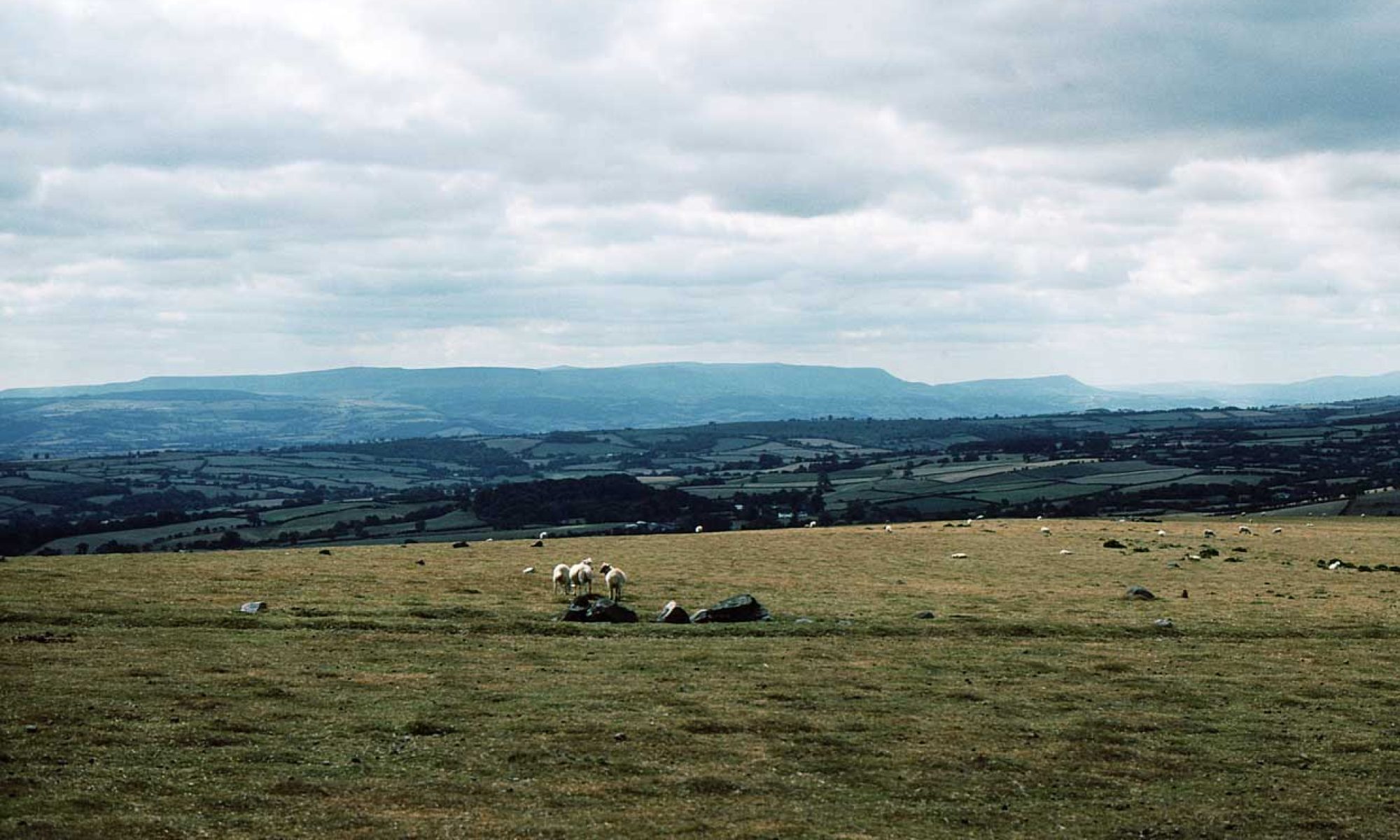
Sailing the Last Voyage with Newton and Pascal
 Positive Infinity