-
Modern Pentecost’s Use of an Anglican’s Missionary Method
In this interesting article about Assemblies of God missionaries to Latin America Melvin and Lois Hodges, this observation:
Melvin and Lois Hodges teamed with veteran missionary Ralph Williams, who practiced English missionary Roland Allen’s philosophy of indigenous principles. While ministering in Nicaragua, Hodges was given an opportunity to put into practice these principles, which Allen called “the missionary methods of St. Paul.” He established a Bible school in Matagalpa and ministered to native Nicaraguans.
Roland Allen’s work was, in my opinion, the single most important missiological work of the last century, and the churches that adopted it experienced growth whose effects can be seen at the present.
Although Allen’s idea is certainly rooted in the New Testament (including the day of Pentecost itself) Pentecostal churches took up his idea (consciously or not) out of necessity as much as anything else. Lacking the home base funding and infrastructure of churches such as the Presbyterian, Anglican/Episcopal, Baptist or even their near antecedents the Methodists, Pentecostal churches had little choice other than getting those in the field up to speed quickly and on their own resources.
It’s interesting to note that Allen died in 1947 in Nairobi, Kenya, which is the centre of the current controversy over women in the Anglican episcopate.
-
“I did not take pen in hand to teach you the thoughts of men…”
It’s one of Bossuet’s most famous quotations, and in my opinion his best. It comes from his discussion of the nature of the Magi, some of which is here:
The Magi, are they absolute kings or dependent on a greater empire? or are they only great lords, which gave them the name of kings, according to the custom of their country? Or are they only sages, philosophers, the arbiters of religion in the empire of the Persians or, as it was called then, in that of the Parthians, or in some part of this empire which extended by all the East? Do you think I am going to resolve these doubts and satisfy your curious desires? You are wrong; I did not take pen in hand to teach you the thoughts of men; I will only tell you that they were the scholars of their country, observers of the stars, whom God takes by their attraction, rich and powerful, as their presents make it appear; if they were among those who presided over religion, God had made himself known to them, and they had renounced the worship of their country.
Bossuet, Elevations on the Mysteries, XVI, 3 -
John Shelby Spong Goes to Meet God

It’s done, per the notice on the right.
Rather than endure the accusation that he can no longer defend himself, I’ll stick with stuff I’ve already posted, some of which goes back to the beginning of this website/blog.
I’ll start with John Shelby Spong, Surrender Monkey:
John Shelby Spong, retired Episcopal Bishop of Newark, is a surrender monkey. His “Call for a New Reformation” is really a call to wave the white flag, throw in the towel, and give up on the God revealed in both Jewish and Christian history. We need, he says, a new language for God because “most theological God-talk is meaningless.”…
From Bayard Taylor’s The Late Great Ape Debate
I’d go easier on Spong if he’d had a faith crisis, realised he could no longer affirm the basic biblical worldview and teaching, and then had the honesty and integrity to step down from his position of leadership. But that’s not what he did. Instead, he went on the warpath against anything that smells like traditional Christian faith, and he’s tried to take his whole church down his revisionist road. Christians who disagree with him he attacks as “fundamentalists,” and in his worldview, that’s about the worst insult you can utter. Spong ironically exhibits many of the worst attitudes he decries in others: narrow-mindedness, bigotry, and belligerence. He’s a first-rate fundamentalist for his own worldview. (pp. 109-10)From here we go to John Shelby Spong: Calling the Bluff of a White Supremacist:
Spong, as he likes to remind us, is a Southerner, and thus is a descendant of white supremacists of another era. (This is not an uncharitable generalisation; white supremacy was simply assumed by most people raised on that side of the racial divide in the South from the days of slavery to the 1960’s.) His transformation from that to radical is, in part, an attempt to achieve upward intellectual (and perhaps social) mobility. Unfortunately his attitude towards the Africans shows that he is all too willing to take a leaf from his ancestors’ playbook when it suits his purpose.
It’s worth noting that he died in the old capital of the Confederacy.
Then Those Vanishing Episcopal Parishes:
Part of Spong’s problem was that he was a Southerner in a Northern place. He thought that people would always go to church somewhere, no matter how stupid things got. This is a common mistake among our ministers. It simply doesn’t work that way in the Northeast.
Beyond that Spong was an old style radical; he thought that, if we completely changed what Christianity stood for, it would be more acceptable to the modern and post-modern world. That hasn’t worked out either. Today’s liberal, imbued with post-modernism, practices a form of deception (and self-deception) that rivals anything Islam can be accused of. They use words that mean one thing to others but something entirely different to themselves.Last and not least When Church Becomes Pointless, one of the first things I posted when this site began in 1997:
So let’s take this a step further; suppose you are sitting in an Episcopal pew listening to John Shelby Spong go on about why the basic truths of Christianity have no basis in reality and that those who teach them are a bunch of morons. Suppose that you finally realize that you think that Spong is right; that all that you’ve said when you’re repeated the Apostles’ or Nicene Creed is false and that the life you have is all you’re expected to get. What should you do? You should first realize that life is short and that, if you’re going to live you’d better hurry. So the sensible thing for you to do is to get up, gather your family, walk out of the church, get into your Lexus or Mercedes, and head to Atlantic City or Las Vegas or South Florida or wherever you need to go to live it up while you still can.
This illustration is to demonstrate a simple point. If Spong and the other liberals are right, they’re wrong, because the church is really unnecessary and the time we spend there is a waste. If they’re wrong, they’re really wrong, because they’re sending people to an awful eternity by the unbelief they spread.There’s more, but I’ll stop. All I have to say is that life for some of us would have been a lot sweeter and simpler without the likes of John Shelby Spong.
-
The Jawbone of an Ass
This morning’s devotional from St. Peter’s Anglican Church in Memphis features the following morning scripture reading, part of which is reproduced below:
14 When he came to Lehi, the Philistines came shouting to meet him. Then the Spirit of the LORD rushed upon him, and the ropes that were on his arms became as flax that has caught fire, and his bonds melted off his hands. 15 And he found a fresh jawbone of a donkey, and put out his hand and took it, and with it he struck 1,000 men. 16 And Samson said, “With the jawbone of a donkey, heaps upon heaps, with the jawbone of a donkey have I struck down a thousand men.” 17 As soon as he had finished speaking, he threw away the jawbone out of his hand. And that place was called Ramath-lehi…
Judges 15:14-17Every time I see that passage (the Authorised Version refers to it as “the jawbone of an ass”) I think of a story told by my second year Latin teacher, the Rev. Raymond O’Brien, a fine Episcopal minister. (My story about him, intiction and the French bread is here.)
He told the story of an Episcopal seminarian who informed his committee that he wanted to take his oral examinations as a fundamentalist. The committee was aghast; what self-respecting Episcopalian would want to do anything as a fundamentalist? So one of the committee members asked him, “Do you really think that Samson slew a thousand men with the jawbone of an ass?”
His response: “Well, when I consider the havoc the jawbones of some asses have wrought…”
When we consider the course of the Anglican/Episcopal world since then, the response makes much more sense.
Full disclosure: while pursuing my PhD, I successfully petitioned out of my oral examinations. I doubt I’d have a comeback quite as snappy as that one.
-
Elevations on the Birth of Jesus Christ
This is a “well worn” path for the Christmas season. In addition to that, there are two distinctly Catholic (well, at least one) themes that Bossuet explores: the perpetual virginity of Mary and the poverty of Jesus as an example to his followers. The elevations here are as follows: Elevations on the Birth of Jesus […]
Elevations on the Birth of Jesus Christ -
Bishop Gerry calls all Oratorians on the Feast of St. Gregory the Great to observe the 9 Character marks of faithful pastors. https://t.co/Mf70h6WPYU
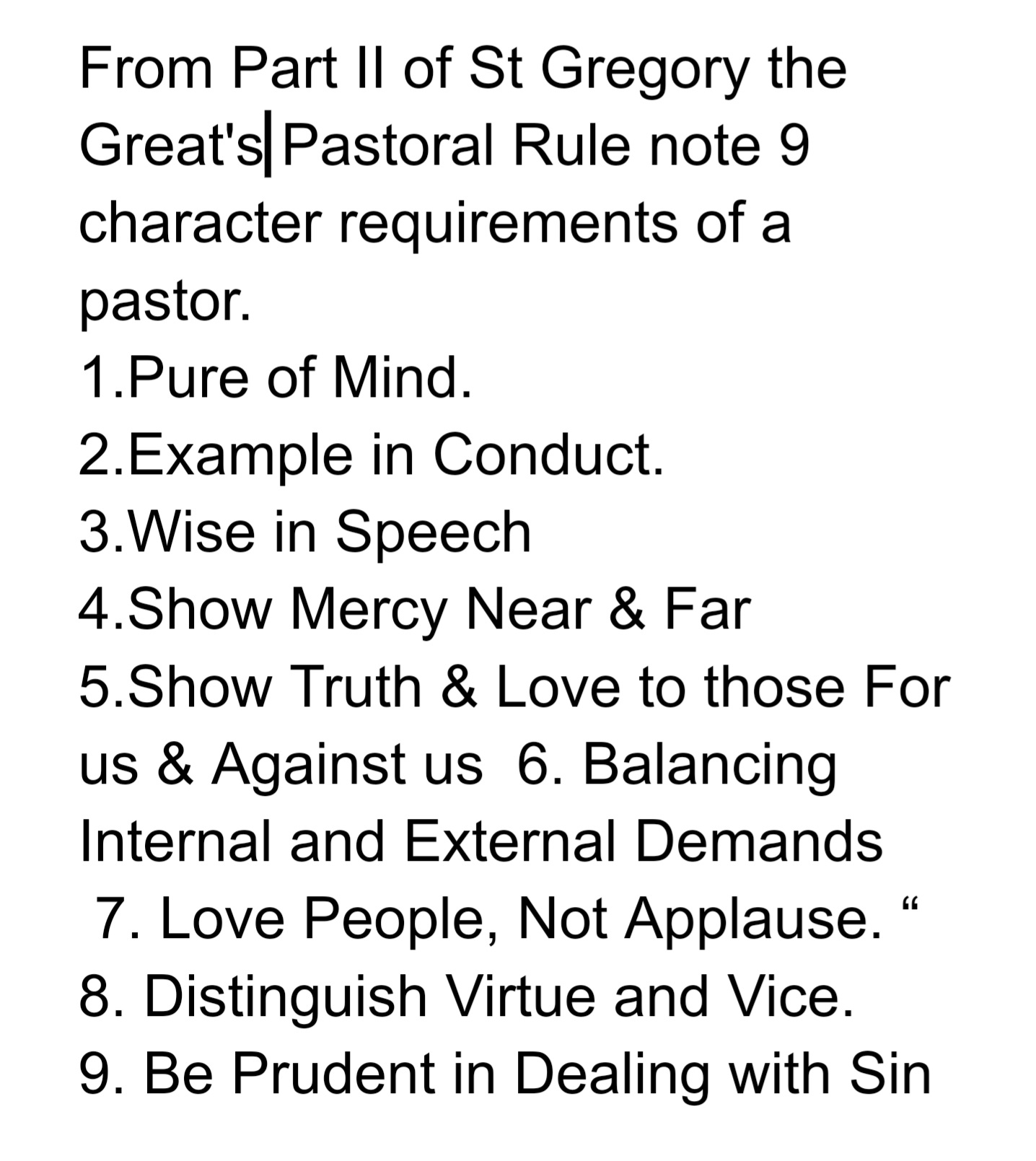
Bishop Gerry calls all Oratorians on the Feast of St. Gregory the Great to observe the 9 Character marks of faithful pastors.
Bishop Gerry calls all Oratorians on the Feast of St. Gregory the Great to observe the 9 Character marks of faithful pastors. https://t.co/Mf70h6WPYU -
When Labour believed in Brexit

In October 1980, the colourful trade union leader Clive Jenkins took to the podium at the Labour Party’s annual conference in Blackpool with a simple message: the British public had been deceived in the referendum on European membership held in 1975. Far from the economic uplands promised by those who campaigned to remain, British industry…
When Labour believed in Brexit

Sailing the Last Voyage with Newton and Pascal
 Positive Infinity