-
Making Canterbury Portable
Evidently Justin Welby stirred up more than this blog by his backhanded comments regarding the ACNA and the Anglican Communion. It’s unsurprising that some of the provinces at least have taken offence to them. In Australia, with their interesting system of provinces, dioceses and extraprovincial diocese (Tasmania) we have the Diocese of Northwest Australia warmly greeting the ACNA as part of the Anglican Communion.
The whole concept of Northwest Australia upstaging Canterbury is a heartening concept to those of us who like to remind the Brits that their isles are such as wonderful place they filled two continents with the people who wanted or had to leave. That said, not to be outdone by the western extreme of the country, the Diocese of Sydney’s Mark Thompson has weighed in on why ACNA is part of the Anglican Communion: because the Anglican Communion is confessional in nature, the ACNA confesses the faith (as opposed to some provinces that, ahem, don’t) therefore they are in the AC.
Thompson’s idea is no stranger to this blog: he’s at the centre of his diocese’s musings over the subordination of the Son to the Father. Like that theological adventure, his thesis that the AC is primarily confessional in nature is necessary but not sufficient; it needs some further thinking out to get Anglicans where they need to go and not to lead them once again to where they don’t need to go.
There are many denominational fellowships in Christianity. We think first of the National and World Councils of Churches, united in their unbelief. More germane to the topic are groups of denominations which are similar in their beliefs but not institutionally unified; Baptist fellowships, Pentecostal fellowships and the like. These have doctrinal statements and commitments of the organisations which are similar to their own statements; a kind of confessional unity can be seen in groupings such as these.
The Anglican Communion, however, implies something stronger than that. The obvious unity is communion itself, and we’ve seen that broken even at the primitial level for some time now. Beyond that, any group of churches which claim the Apostolic Succession in one form or another (and I’ve been round and round on that topic too) need to have some kind of institutional unity that reflects their common origin.
This is where things get tricky. We get back to the question that has haunted Christianity for centuries: what do we do when those who can trace their institutional lineage to those who walked the Earth with Our Lord depart from his teachings? In a sense the Reformation centres around this question, and the answers weren’t univocal then and aren’t now. The Anglican Communion is, in a sense, the gathering of those churches who believe that the results of the English Reformation were, and are, the optimal result.
Now we’ve seen further successors depart from the faith, and the same question comes back: what is to be done? Confessional unity is important, it’s something that Anglicans too often treat with benign neglect. We’ve never really been able to afford that luxury, we really can’t now. As things stand now, the Anglican Communion isn’t working, and pulling rank like Justin Welby is doing, with the state of the church in the Global North, will only put the Communion on hospice.
What Orthodox Anglicans need to do is to find a way to make Canterbury portable, whether the current occupant of that see likes it or not.
-
Pulling Rank on Who's in the Anglican Communion and Who Isn't
That’s apparently what Justin Welby is doing, or trying to do:
At the start of his 3 October 2014 interview with the Church of Ireland Gazette Archbishop Welby noted that he was surprised to learn that “virtually everywhere I have gone the analysis is that the definition of being part of the Anglican Communion is being in Communion with Canterbury … I haven’t faulted that [view],” he said adding that “most provinces of the Anglican Communion valued their relationship with Canterbury … [And that] there remains in the overwhelming parts of the Communion an attachment to Canterbury.”
I don’t think it’s much of a news flash that being in Communion with the see of Canterbury is the most important piece of the puzzle in being in the Anglican Communion. What Welby is doing is strengthening that relationship at the expense of the other pieces, i.e., the ACC and Lambeth (which has, for the moment at least, been cancelled). That’s something one would expect a business executive like Welby to do: set up clear lines of authority. And, if you’re at the centre of the spokes, all the better.
As far as churches such as the Lutheran “Porvoo Agreement” churches, Canterbury has a long history of being in communion with churches which it does not regard as part of the Anglican Communion because they are not Anglican in doctrine or worship. (For a slightly dated summary of that situation, click here).
The real “slap in the face” here is at the ACNA. Canterbury could extend communion in the same way it does with the Porvoo Agreement churches, but it won’t for two reasons. The first is that the ACNA, as its name indicates, regards itself as Anglican, and thus would want to be in the Anglican Communion. The second is not to antagonise TEC.
The whole idea of the ACNA being a formal part of the Anglican Communion has been a pipe dream from the very start, but one that has driven many North American Anglicans to put it together in the first place. As I’ve said before, it’s time to cultivate the relationships with the Global South and forget about Canterbury.
In addition to centralising what it means to be in the Communion, Welby, for his part, is probably stalling for time until TEC elects a new Presiding Bishop to replace Katharine Jefferts-Schori next year. While it’s unlikely that TEC will choose a less heterodox leader than KJS, their new choice may revert to a more traditionally Episcopalian mealy-mouth style and not KJS’s smash-mouth style. If they do that, Welby may try to achieve a reconciliation while “holding the keys” to the communion.
In addition to the doctrinal chasm that’s been ongoing in the AC, there’s another looming problem: the years of liberalism have run down the Global North churches (and that includes the CoE) to the point where their unfavourable demographics and financial woes will make communion with them progressively less valuable. The ACNA, for example, has already surpassed the ACoC in ASA; if they repeat this process with TEC, it will be clear to everyone (including Welby himself) that Canterbury has backed the wrong horse in the “colonies”.
-
Dedication and Consecration of the Anglican Church of the Redeemer
This evening I attended the dedication and consecration of this ACNA congregation in Chattanooga, Tennessee. Archbishop Foley Beach presided along with the Rector, the Rev. Brice Ullman.

The “new” building is an old Presbyterian church. The congregation is about ten years old; it is not a parish type of secession that has occupied this blog, but was started by a gathering of Episcopalians justifiably unhappy with the course of their denomination.

The interior of the church, before the service started. The “Anglicanising” and remodelling process was really nice, although would probably sour an SNP fan (they’ve got a lot to be sour about these days.)

Judge Sheridan Randolph prepares to operate the Provisional Belfry.


Although many came first to the nave, it was necessary to move them outside. The concept behind a dedication is that the Archbishop will dedicate things and places which have not been used before, so the congregation will follow the procession in as he dedicates the nave. After that he proceeded to dedicate the other items in the church, including the baptistery, altar, lectern, pulpit, and organ.

Archbishop Beach (in mitre,) the Rector and other clergy prepare to enter the nave and begin the dedication.
The agenda was definitely full; it included the dedication, Confirmation and reception, the reception of clergy from another Anglican church and the Holy Communion.
It’s been a long time since I’ve actually been to an Anglican service of any kind; some thoughts were as follows:
- I was surprised at the adult acolytes, both men and women. This was traditionally the preoccupation of young people. Part of the reason for that is the demographics of the parish; it struck me as “gap graded,” i.e., with older people and young couples but few in the middle. I think that time will remedy that.
- Having been raised in a 1928 BCP church and spent many years as a Roman Catholic in a 1970 NOM liturgy, getting used to yet another translation of the ancient antiphons is something of a chore.
- Speaking of prayer-book, I was surprised at the absence of same. They had hymnals and Bibles, but no Prayer Book. The ACNA is still in transition on this, and the “missalette” concept Roman Catholics use is always an option. (That’s what they basically did for the composite liturgy they celebrated today).
- I see that Anglicans still do their psalms antiphonally instead of responsorily.
- The sign of peace was the exuberant business that I hoped it would be and wrote about earlier this year.
- The music is really eclectic, ranging from Healy Willan’s “Agnus Dei” (which I was raised on at Bethesda) to a decidedly Charismatic rendition of “I Am the Bread of Life” and a couple of contemporary praise and worship choruses. The church actually has two music groups, one folk and the other traditional with a digital organ. Churches struggle with the issue of music style but this parish seems to have struck a very nice balance.
- Archbishop Beach strikes me as an honourable man without the affected pomposity that has traditionally plagued so many Anglican divines. That’s good; the down to earth approach will serve him well on the “Anglican frontier” he now presides over.
We were invited by the organist, who is an old friend of ours and whose husband operated the Provisional Belfry. They were in the Episcopal Church, and long ago I started to regale them with the strange doings of TEC. Now they are in the ACNA.
I’ve been in the Anglican/Episcopal blogosphere for over a decade now. If what I’ve done has helped to form, nurture and grow congregations like this, it’s all been worthwhile.
-
Beguiling the Left, One Charlatan and Crackpot Scheme at a Time
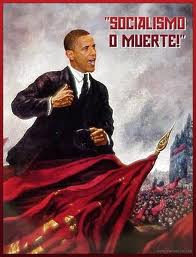 There was a time with the writings of “Karl and Fred” (Marx and Engels) were prominent on my reading list. During my growing up years, their followers controlled a third of the world’s population and most of its nuclear weapons. During my career in the family business I spent a great deal of time in countries which were (in theory at least) built on their idea, or coming off same (you can see this here and here and here.
So this piece from Philip Jenkins about Engels, Lucian and the danger of frauds and charlatans in movements caught my attention. The Roman satirist Lucian told the tale of one Peregrinus, who had conned (among others) a Christian church, and in doing so gave us an outside view of Roman Empire Christianity in its early years.
Engels, whose relationship with Christianity was more complicated than his professed atheism would admit, actually had a more sympathetic view of the Christian church than Lucian had. Why? Because he had seen the same types of con pulled on the left-wing movements of nineteenth century Europe. He and Marx laboured to keep the “main thing” (i.e., economics and the class struggle) the main thing, but even they fought an uphill battle. As he ruefully noted:
Today such extreme cases, at least in the large centers, have become impossible; but in remote districts where the movement has won new ground a small Peregrinus of this kind can still count on a temporary limited success. And just as all those who have nothing to look forward to from the official world or have come to the end of their tether with it — opponents of inoculation, supporters of abstemiousness, vegetarians, anti-vivisectionists, nature-healers, free-community preachers whose communities have fallen to pieces, authors of new theories on the origin of the universe, unsuccessful or unfortunate inventors, victims of real or imaginary injustice who are termed “good-for-nothing pettifoggers” by all bureaucracy, honest fools and dishonest swindlers — all throng to the working-class parties in all countries — so it was with the first Christians.
Most all the movements Engels decried in his stay are still, in one form or another, with us, and many with honoured place in the American Left. I used the “Obama socialism” poster at the start for a little fun, but the truth is that the communists, for all of their cruelty, built great industrial powers, even though their own theory in the end ran them down. Our left can only run down without building up, and they can’t even fix income inequality while they’re at it.
Comparing Obama and the American Left to communism is unfair. To the communists.
-
The Relationship Between Faith and Works
From St. Thomas Aquinas, Summa Theolgiae, Suppl., 89, 7:
The judgment as regards the sentencing to punishment for sin concerns all the wicked, whereas the judgment as regards the discussion of merits concerns only believers. Because in unbelievers the foundation of faith is lacking, without which all subsequent works are deprived of the perfection of a right intention, so that in them there is no admixture of good and evil works or merits requiring discussion. But believers in whom the foundation of faith remains, have at least a praiseworthy act of faith, which though it is not meritorious without charity, yet is in itself directed to merit, and consequently they will be subjected to the discussion of merits. Consequently, believers who were at least counted as citizens of the City of God will be judged as citizens, and sentence of death will not be passed on them without a discussion of their merits; whereas unbelievers will be condemned as foes, who are wont among men to be exterminated without their merits being discussed.
Roman Catholic teaching has been characterised as “works salvation” but this shows that isn’t the case. Faith–and love (charity)–are necessary prerequisites for whatever we do to amount to anything.
The problem with the medieval construct was that the Church–and to some extent Aquinas–got bogged down in the business of merits. Had they de-emphasised this, they would have avoided the business of indulgences, which in turn detonated the Reformation.
-
"Get Out of My Way!" Some Things Never Change
When Joseph was put in charge of Egypt by Pharaoh, the following happened:
He had him ride in the chariot of the second-in-command. Men ran ahead of him and shouted, “Make way!” Pharaoh put Joseph in charge of Egypt. (Genesis 41:43 GW)
This reminds me of the Canadian journalist John Fraser’s account of the departure of the Chinese author Mao Dun after an interview that fell flat:
As I went out to my car, he (Mao Dun) was escorted with suitable fanfare to his waiting Red Flag limousine. The vast and sinister automobiles the Communist state makes available for its leaders are far larger than any equivalent vehicle a “feudal comprador capitalist exploiter” could have had in Shanghai during the thirties. Mao Dun got in and closed the door of the roomy back-seat passenger section. His chauffeur wheeled out of the entranceway with the blast of the car horn. The driver, as is usual in Peking, never stopped to see if there were any oncoming bicycle traffic: the horn blast was sufficient to alert the masses that greatness was descending upon them. Mao Dun set bolt upright in the back seat, holding his cane in front of him. One could just make out his image when a shaft of sun shone through the heavily curtained windows. As I followed him along the street for about half a mile, the limousine belched out loud honks while humble cyclists and pedestrians hurried to get out of the way.
-
Latter Rain Christian Coffeehouse
Instead of an album from the “Jesus Music” era, this entry is a little different: a live recording of the Latter Rain Christian Coffeehouse in Garland Texas in July, 1977. Located in downtown Garland, the Latter Rain was active through most of that year.
As opposed to the other coffeehouse recording I offer here, I’ve decided to present the entire recording in one track. That will give you a better flavour of what it was like to be in a Christian coffeehouse like this one. It’s probably too much to say that it was “typical” (and that’s not a really informative term either) but here it is, with teaching as well. As was also the case with this, the recording was room ambient and not off of the board, which means that the room reverberation is there, although my equipment had improved in the two years that separated the sessions.

The tape recorder used to record the Latter Rain: a Tandberg TCD-310, with factory microphones. The Latter Rain’s musicians were skilful, tending to a more folksy style somewhat reminiscent of this but with a more distinctively Texas influence.
The Latter Rain Christian Coffeehouse:
- Archie and Cindy Lowe
- Todd and Terri Groo
- Mike and Luba Goolsby
- Tim and Margaret LaPrade
The songs are a mix of original compositions and covers; some of them are:
- This is the Day (Psalm 118)
- There Was Jesus
- These Are the Last Days
- I’ve Got the Lord on My Side
- Weeds
- Over There
- Since I Met Jesus
- Selah
- Ballad of Luke Warm
- The Second Coming Sunset
The subsequent history of the Latter Rain, and of Archie and Sindy Lowe, can be seen in this post.
I am indebted to Jen Lowe, Archie and Sindy’s daughter, for encouraging me to get this posted. It’s one of those things I have wanted to do for a long time but just haven’t gotten to it until now.
More Music
Sailing the Last Voyage with Newton and Pascal
 Positive Infinity